


Marco Koskas Interview | Alexandre Gilbert #344
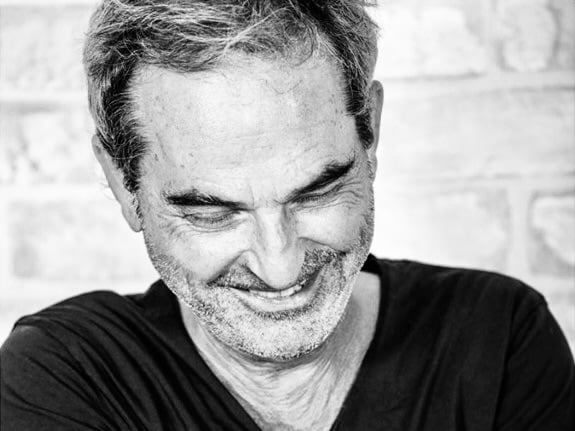
Marco Koskas (b. 1951, Tunisia) is a French-Israeli novelist first discovered by Erik Orsenna, who signed him at Grasset after reading his early manuscript pages. Celebrated from his 1979 debut Balace Bounel onward and a Villa Médicis resident (1980–1982), he spent 1998–2006 working as a private detective alongside his writing, before emigrating to Israel in 2012 and earning a surprise Prix Renaudot nomination in 2018 for Bande de Français.
October 7 was not only the date of an infamous pogrom. It also gave rise to an anthropological revolution that transformed the victims of this massacre into executioners, in the eyes of what is called “public opinion.” The Euro-American democratic world, still marked by the Shoah, suddenly invented the accusatory reversal, calling the State of Israel’s survival response to the aggression it suffered a “genocide.” And not a day goes by without attacks occurring here or there — in Spain or Croatia, in London as in New York — inspired by the new status of Jews as a “genocidal people.”
Cultural circles have not escaped the rule. Obeying the Palestinist doxa, they too began accusing Israel of genocide, most of the time while knowing nothing of the conflict, its history, or even its geography. Freshly Botoxed Hollywood celebrities could thus be heard placing Gaza to the east or north of Israel…
Israeli filmmakers dropped from this or that festival, Jewish intellectuals barred from speaking at this or that university — examples of this new McCarthyism abound, with the burlesque and pitiful low point being the misadventure of Nadav Lapid, an Israeli far-left director. Here is an anti-Zionist artist nevertheless asked to withdraw from the Marseille Festival for the very fact of being Israeli. Lapid, “lapidé” (stoned) like a common kibbutznik from Nahal Oz by Hamas’s terrorists, kicked out of the great far-left family despite his voluntary exile in France; despite his virulent criticism of Israel and his hollow dreams so hostile to his own people — Nadav Lapid has become the symptom and the scapegoat symbol of the new antisemitic conformism of cultural circles.
In Europe, Jewish creators and authors absorb the blows without truly grasping the existential stakes that all this hostility implies. They suffer, of course; and they try to defend themselves, even while declaring themselves hostile body and soul to Netanyahu. They give every possible token of political correctness, but nothing helps. Non-Jewish colleagues also denounce this new totalitarianism. The city hall of Marseille and CRIF, LICRA and all the humanists still standing rise up with petitions and solemn statements. But the wave keeps rising higher in an ever-rougher sea. The singer Amir, Joann Sfar, Barbara Buch — cases of Jewish artists and authors being excluded, attacked, or banned keep piling up, without any project of counter-power emerging within the community; a counter-fire that is nonetheless vital. Cultural krav maga is still not on the agenda. No doubt people still want to believe this is just a bad moment to get through. Wasn’t Dreyfus ultimately exonerated? Doesn’t justice always triumph over every totalitarianism?…
In the United States, things are very different. There, a number of authors have begun to band together within independent publishing houses, to break the relentless rise of cancel culture that is engulfing production in general, and Jewish production in particular. What is certain is that in the aftermath of October 7 a new atmosphere was born; a stench permeating the air of literary life across the Atlantic, with agents asking their authors to change a character’s Jewish surname, or editors suggesting relocating a novel’s setting to erase its Israeli topography.
Alerted, the NGO PEN America investigated. Founded in 1922, this organization has fought many battles for freedom of expression and freedom of the press, notably during the McCarthy era. Its final report acknowledges a “growing isolation” affecting Jewish authors. Its finding is even backed by statistics showing a clear decline in publishing contracts for Jewish fiction since 2023.
It is also known that this movement of rejection originates in American universities, and that it has been very largely funded by Qatar since 2011. The rogue emirate has poured billions of dollars into it so that Judeophobia would become, as in the Arab-Muslim world, an ordinary sentiment. And it has succeeded. The petromonarchy had only to reap the rotten fruit of its investments after October 7. Massive demonstrations pushed Jewish students into hiding, and only Trump’s return to power temporarily broke the wave — or is still holding it back for now.
How did things come to such a pass in the country blessed by Philip Roth and Saul Bellow? In the Yiddishland of Isaac Bashevis Singer! In the New York paradise of Paul Auster and Malamud! On the futuristic continent of Isaac Asimov! So many names inscribed in gold letters in the pantheon of twentieth-century American literature, across every genre. Would they still be published today? Could Portnoy still air his complex and thereby win over readers worldwide?
On the face of it, no. But Jewish resistance is organizing. Authors are regrouping under new publishing banners of their own.
The first to leave the American publishing system was Meg Keene, little known in France but a bestseller in the States. Keene is not a great writer either, let’s admit it. Having written a first novel after selling hundreds of thousands of women’s books of the “A Practical Wedding” type, she saw her manuscript rejected by Balance/Hachette Books, her publisher, on the grounds that the themes and situations of this fiction were “too Jewish, too Israeli, too difficult to publish in the current climate.” Still according to the PEN America report, a similar setback is said to have happened to more than thirty Jewish or Israeli (English-language) authors. The decline in publications of a specifically Jewish character is even said to run between 30 and 50 percent, again according to the PEN America survey.
Moreover, in the American publishing landscape, one can also observe that the most popular Jewish authors, also the biggest sellers, have published nothing over the past three years. Nicole Krauss’s last novel came out in 2020, Jonathan Safran Foer’s in 2019, likewise Nathan Englander, and Michael Chabon (nothing since 2016 as far as he’s concerned). Does this mean that major American publishers now favor “universal” narratives? “Safe” themes?
In any case, agents for Jewish authors keep being told that the “timing is unfavorable,” or other pretexts of the same kind, to reject the works they submit to publishers. Nor should one underestimate the harassment from cancel culture’s foot soldiers who, even within American publishing houses, voice “political reservations” about Jewish authors — underlings who take the word “Zionist” for an insult and refuse to work on titles deemed “Zionist”…
Meg Keene understood clearly that the quality of her manuscript was not in question, and that she simply had to accept that the American publishing landscape had changed radically after October 7, such that a publisher would rather forgo a lucrative readership than court trouble. Meg Keene concluded that her own status had to change as well. So she became an editor within Wicked Son Press, a house founded five years ago, and her literary imprint modestly bears her own name: Meg Keene Books. She hopes to publish five to six books a year, but above all to revive a Jewish literary life reduced to whispers, bordering on the clandestine. It should be noted, however, that David S. Bernstein, CEO of Wicked Son Press, has required that authors published by Meg be Zionist. Pro-Israeli, in any case.
Another author venturing into the dual role of author/publisher: Howard Lovy, founder of Canary Publishing. A company name that recalls the role of the canary in coal mines, warning of a coming firedamp explosion with its chirping: “The way a society treats its Jewish population is always a signal of a threat to everyone’s freedoms,” he says. Howard Lovy hopes to publish one novel a month under his new imprint, and to launch specialized collections with the robust financial backing of Scott Shay, a pro-Israeli philanthropist.
Yet another situation is that of Dory Manor and Moshé Shakal, Israeli authors writing in English, who moved into the diaspora out of… anti-Zionism. Refugees in Berlin, they believed they were carrying the voice of a “complex” Jewish condition by founding the Altneuland publishing house. Dory Manor is the renowned translator of Baudelaire, Rimbaud, and Mallarmé into Hebrew. Though he was Israel’s most important “language ferryman,” the distance he sought to put between himself and his country of origin did not spare him the same banishment as Nadav Lapid at the hands of his American publishers — a case of the waterer watered, reduced to his status as a Jew by a Euro-American cultural sphere gripped by the most delirious Palestinism imaginable.
What Jewish authors have been going through since October 7, and the defenses they are trying to mount against the new forms of censorship, are nothing new in the history of print. Since Richelieu’s and the Sorbonne’s fussy controls over Hebrew texts, it is always the same story starting over — the same attempt to cast the People of the Book out of the Gutenberg galaxy. It was also the Goyim (nations, in Hebrew) who created the concept of the ghetto. But the editorial ghetto now taking shape on the other side of the Atlantic is something new in itself, because it is being created by Jews themselves.
Yet a writer does not write to keep his peers warm or to stay among friends, but to reach others. This is the impasse in which Jewish American authors who have chosen to leave the system now find themselves. But do they have a choice?
Still, the broken bond with the Other will have to be repaired, even if no one today can say how this will be achieved. We can already see that in reality too, the unheard-of has happened, with the election of an antisemitic mayor in New York, the largest Jewish city in the world. But the Jews of New York largely took part in electing him, and this is not the least astonishing twist in this story.