
Martin Luther King Jr. Answered the Question: Anti-Zionism Is Antisemitism
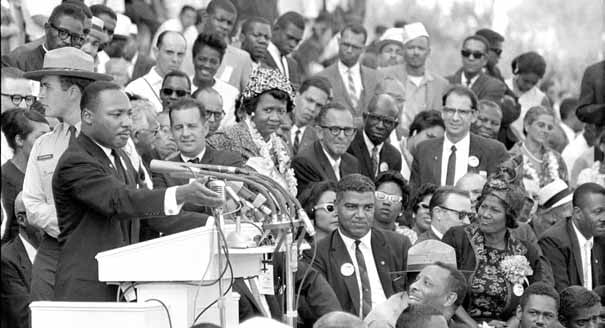
We are often asked what Dr. Martin Luther King Jr. would say if he were alive today. The question itself is a form of avoidance. Martin Luther King Jr. already answered it. The real question is whether we are prepared to listen.
Dr. King did not speak ambiguously about antisemitism, nor did he shy away from defending the legitimacy of Israel. He understood hatred not only in its overt forms, but in the ways it disguises itself as moral critique. He recognized that bigotry often reinvents itself using the language of justice and he warned against it, especially when that language is weaponized against a single people.
That is why Dr. Martin Luther King Jr. stated plainly: “When people criticize Zionists, they mean Jews. You’re talking anti-Semitism.” This was not a casual remark or a historical footnote. It was a warning rooted in lived experience about how easily prejudice reshapes itself to survive.
King understood that Zionism is the Jewish people’s movement for self-determination, born out of centuries of exile, systemic persecution, and ultimately genocide. For Jews, sovereignty was not an abstraction it was survival. To deny that right to Jews alone, while affirming it for every other people, is not progressive. It is discriminatory. It is not justice. It is prejudice.
Martin Luther King Jr. stood shoulder to shoulder with the Jewish community during the Civil Rights Movement. Jewish leaders marched with him in Selma. Rabbis were beaten, jailed, and murdered alongside Black activists. Jewish organizations helped fund the struggle for civil rights when many others remained silent or hostile. King never forgot that alliance, and he never betrayed it when political pressure mounted.
He understood that the struggle against antisemitism and the struggle against racism are inseparable, because hatred never confines itself to one target for long. Once a society excuses bigotry against one group, it creates permission to spread.
Today, however, we are witnessing a dangerous moral unraveling.
The Jewish state is uniquely singled out for condemnation. Israel’s right to exist is treated as debatable. Terrorist organizations that openly call for Jewish annihilation are reframed as “resistance.” Jewish students are harassed on university campuses. Synagogues require armed security. And when Jews speak out, they are accused of silencing debate rather than defending their dignity.
Dr. Martin Luther King Jr. would have rejected this inversion outright. He believed that moral consistency is the foundation of justice. He believed that human rights are universal or they are meaningless. And he believed that movements which excuse hatred against one group inevitably collapse under their own hypocrisy.
King never argued that Israel was beyond criticism. No democracy is. But he knew the difference between criticism and delegitimization. Between protest and erasure. Between accountability and collective punishment. When rhetoric crosses that line, it ceases to be moral and becomes destructive.
Chants calling for Israel’s elimination are not calls for peace. They are calls for disappearance. Martin Luther King Jr., who spent his life resisting the erasure of an entire people, would have recognized that language immediately—and condemned it without hesitation.
The tragedy of our time is not ignorance. It is selective listening. We quote Martin Luther King Jr. when his words flatter us. We ignore him when his words challenge our politics or our alliances. But moral leadership is not something you edit for comfort.
Dr. King believed that silence in the face of hatred is complicity—and that justice without truth is hollow. He already answered the question. Anti-Zionism that denies Jewish self-determination is antisemitism. The only question left is whether we are willing to hear Martin Luther King Jr. now.