
May 8th – Richard von Weizsäcker and a Palestinian Liberation Day
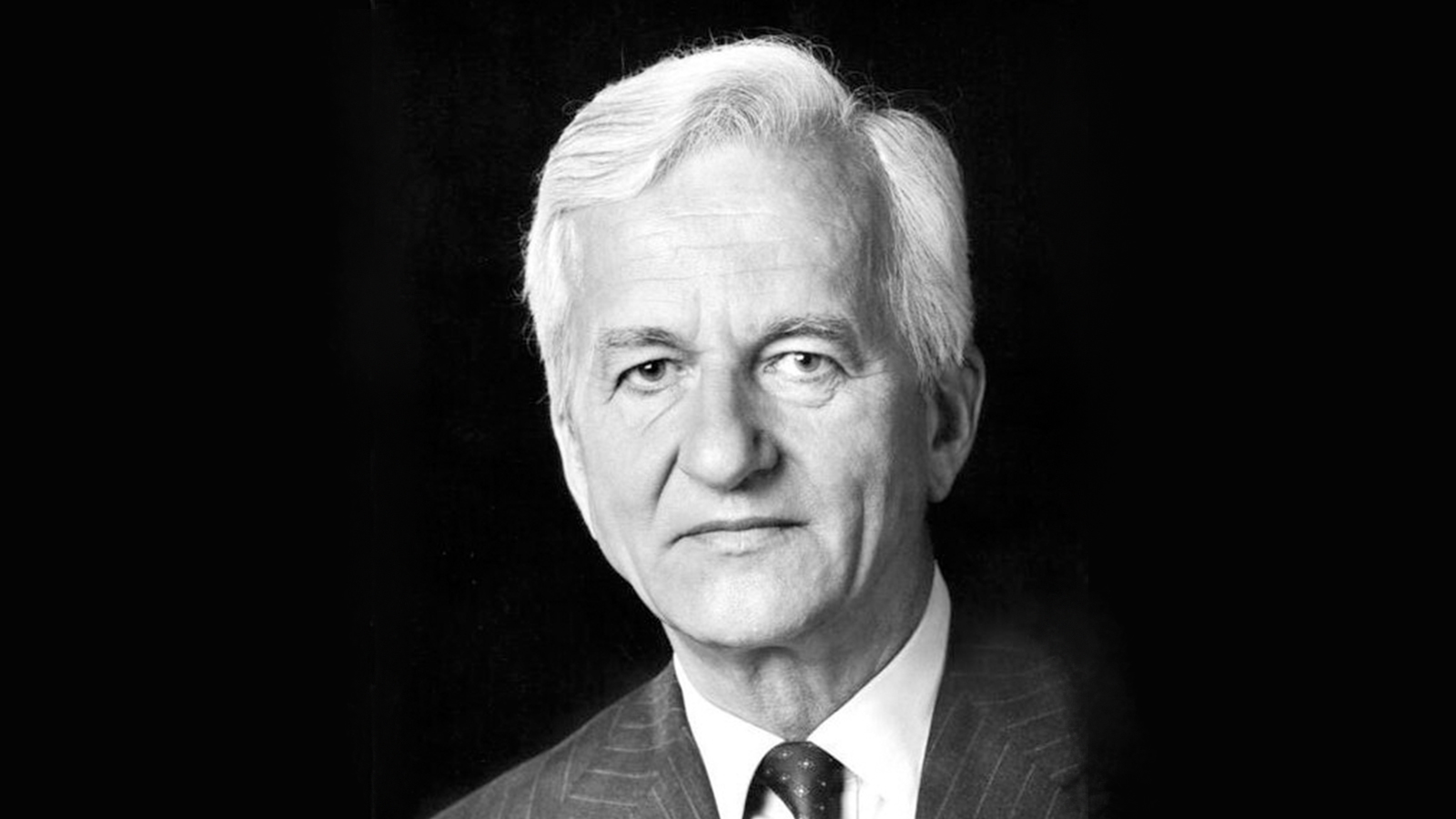
May 8, 1945 marks the end of World War II in Europe. For most Germans at the time, it meant total defeat. The state had collapsed, its future determined by victorious Allied powers. Yet over decades, the meaning of that day changed profoundly.
In West Germany, the interpretation of May 8 was long contested: was it a national catastrophe or liberation from a criminal regime? A decisive turning point came in 1985, when President Richard von Weizsäcker declared before the Bundestag in an emotional speech: “May 8th was a day of liberation.” These words reshaped German historical consciousness.
Today, this understanding is widely accepted: Germany was not foremost defeated – it was freed from its own tyranny.
This transformation of memory was not symbolic. It was foundational.
The Battle Over Narrative
The events of October 7, 2023 have been framed by Hamas and countless useful fools around the globe as “resistance.” This narrative illustrates a familiar historical pattern: the moral inversion of violence.
Totalitarian regimes have repeatedly portrayed aggression as defense. Nazi Germany justified its war of annihilation and the mass murder of millions of Jews and Slavs as preemptive self-defense. Such narratives are not incidental – they are strategic. They legitimize violence and embed it into political identity.
The decisive battlefield is not only military but historical. The long-term trajectory of Palestinian society will depend on how October 7 is ultimately understood.
Germany offers another lesson here. After World War I, the “stab-in-the-back” myth reframed military defeat as betrayal from within. This narrative undermined democracy and helped pave the way for the rise of National Socialism in 1933.
Berlin, 1945 – Abraham Pisarek / Deutsche Fotothek / CC BY-SA 3.0 DE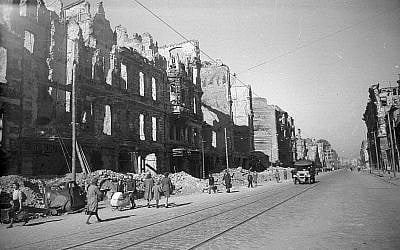
Lessons for Gaza
Historical analogies are always imperfect, but they can reveal structural insights. Post-war Germany and post-war Gaza differ fundamentally. Yet one parallel deserves attention: both the Nazi regime and Hamas rose to power through formal political processes.
After 1945, the Allies pursued a comprehensive strategy codified in the Potsdam Agreement: demilitarization, denazification, and institutional reconstruction. The goal was not only to defeat Germany militarily, but to dismantle the ideological and institutional foundations of twelve years of Nazi rule. Therefore, denazification targeted an entire ecosystem – education, media, judiciary, and administration.
In Gaza, Hamas has similarly embedded itself across governance, education, and social structures. Any meaningful transformation would therefore require more than military defeat. It would involve dismantling governing and security structures, reforming education, and rebuilding institutions under credible supervision.
Yet post-war Germany also illustrates a dilemma. The Allies quickly realized that running a modern state required administrative continuity. Many lower- and mid-level officials who had served under the Nazi regime were gradually reintegrated. The priority shifted from absolute purification to functional stability.
A failure to strike this balance can be destabilizing. In post-2003 Iraq, sweeping de-Baathification dismantled state capacity and contributed to prolonged instability. The lesson is not to abandon ideological reform, but to sequence it carefully. Overreach risks chaos; underreach risks the return of the old system.
The Role of External Actors
Germany’s transformation was shaped not only by defeat, but by the nature of the occupying powers. In the Western zones, democratic states guided reconstruction toward pluralism and rule of law. In the Soviet zone, one authoritarian system replaced another.
The implication is clear: the character of external actors matters. Any post-Hamas framework in Gaza will reflect the principles of those who shape it. Stabilization that substitutes one form of authoritarianism for another may produce short-term order, but not long-term legitimacy.
This is a crucial lesson for the prospective composition of the International Stabilization Force to Gaza and its contributors.
A Unique Strategic Window
Gaza differs from Israel’s other arenas. The West Bank remains a fragmented and managed conflict; southern Lebanon involves a heavily armed non-state actor within a sovereign state; Iran represents a broader geopolitical confrontation.
Gaza, by contrast, may – after the degradation of Hamas – enter a phase where a full political and institutional reset becomes conceivable. There is no entrenched sovereign structure that must be preserved, and no hybrid governance system that constrains radical restructuring.
This creates a narrow but potentially decisive window for comprehensive transformation.
A Palestinian von Weizsäcker?
In 1945, few could have imagined that a German leader would one day describe defeat as liberation. Yet in 1985, Richard von Weizsäcker did exactly that, reflecting a generational shift in political identity.
It is not inconceivable that, decades from now, a Palestinian leader could stand before his people and say:
“What followed October 7, 2023 was a process of liberation. It freed us from the tyranny of Hamas.”
Today, such a statement may seem unrealistic, just as in the late 1940s did the idea of a democratic Germany embedded in a peaceful European order.
Transformation, however, is not the product of hope alone. It requires structural change, sustained enforcement, and generational investment in education and governance. It also requires the emergence of new political narratives – ones that redefine identity away from violence.
Structural Clarity or Strategic Drift
Germany’s post-war transformation rested on interlocking pillars: ideological dismantling, demilitarization, institutional redesign, and integration into a broader regional order. None would have sufficed alone.
The central risk in Gaza is strategic drift – focusing on short-term stabilization without a coherent long-term framework. Reconstruction without institutional reform risks reproducing the same dynamics.
The German case demonstrates that transformation requires clarity of outcome, sustained external commitment, and generational patience.
The decisive question is not whether Gaza can become “another Germany.” It cannot. The real question is whether the post-war order will be constructed with the same uncompromising structural rigor – or whether a lack of it will predetermine failure.
The narratives, institutions, and political frameworks established now will determine whether future leadership draws legitimacy from coexistence (Post-WW II Germany) – or from the perpetuation of grievance and violence (Post-WW I Germany).
History offers no guarantee. But it does show that even deeply radicalized societies can change – if the conditions for transformation are created and sustained.
The choice between those trajectories is being made now.