Mayor-Elect Mamdani: A Test for New York City — and Its Jews
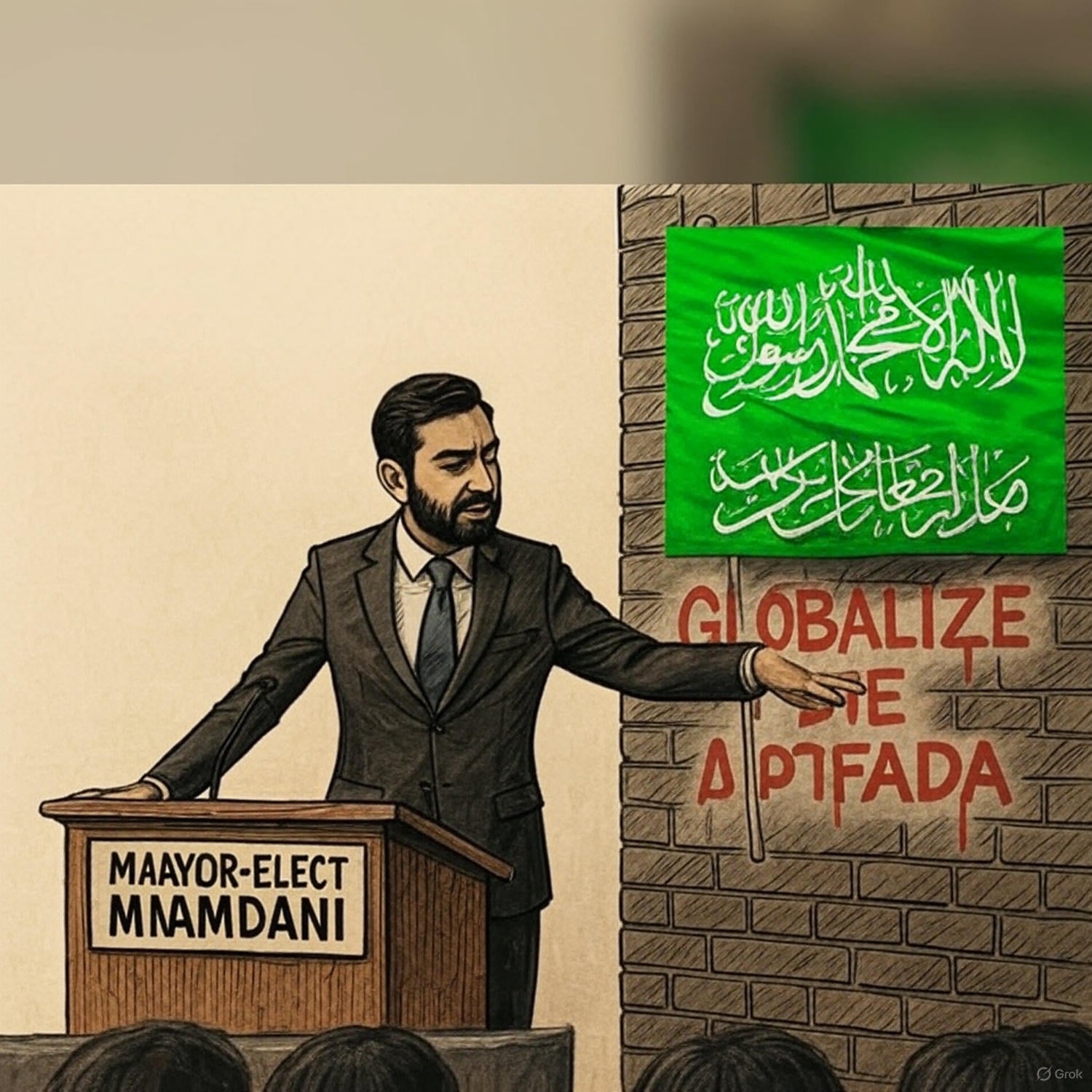
Zohran Mamdani is New York City’s first Muslim mayor.
But this isn’t about faith; it’s about record, rhetoric, and what those reveal about the kind of leadership he intends to bring to America’s largest and most diverse city.
He won on November 4, 2025, with a platform promising rent freezes, steep taxes on the wealthy, and expanded public services. Those policies now meet a city defined by both diversity and division — and a Jewish community watching closely.
When Rhetoric Reveals Leadership
From the start, Mamdani refused to condemn the chant “Globalize the Intifada,” calling it “an expression of a desperate desire for equality and equal rights… a call to stand up for Palestinian human rights.” — Jewish Insider, June 2025
“I see ‘Globalize the Intifada’ as an expression of a desperate desire for equality and equal rights.”— Zohran Mamdani, Jewish Insider
Pressed again, he equated the term Intifada with “struggle,”citing the Holocaust Museum’s Arabic translation of the Warsaw Ghetto Uprising — a comparison the Museum swiftly rejected.
When asked about “From the River to the Sea,” he again declined to condemn, saying the mayor’s role is “not to police speech.”
In a city with the largest Jewish population outside Israel, such evasions are not rhetorical; they are consequential.
The Company One Keeps
In October 2025, Mamdani’s father, the Ugandan scholar Mahmood Mamdani, joined the “Gaza Tribunal” in Istanbul — an event featuring multiple speakers with Hamas and Hezbollah ties. Among them was Ramzy Baroud, editor of The Palestine Chronicle, which had faced a U.S. lawsuit over alleged Hamas links later dismissed for lack of evidence.
A leader who cannot draw a line against open antisemitism in his own circle is unlikely to draw one in City Hall.
Despite repeated opportunities, Mayor-elect Mamdani has never condemned either his father’s participation or his description of Zionism as “a form of apartheid.” His answer remains unchanged:
“I don’t believe the role of the mayor is to police speech.”
This is no longer a matter of familial distance; it’s a test of moral alignment.
When Words Become Signals
Within twenty-four hours of his election, a Brooklyn yeshiva was vandalized with swastikas. Mamdani condemned the attack — as he should have — but the irony was hard to ignore.
Silence at the top often becomes permission at the bottom.
No one can draw a straight line between words and actions, yet leadership is measured precisely by how clearly one draws moral boundaries when they are most blurred.
The Policy Trap
Mamdani’s economic agenda mirrors experiments that failed elsewhere. Rent freezes, public takeovers, and punitive tax hikes have historically reduced housing supply, driven out employers, and stifled innovation.
When I asked Xai’s Grok about whether there is any proof that Mr. Mamdani’s policies would work, he responded:
“No factual evidence supports Mr. Mamdani’s socialist policies succeeding in New York City.”—X’s AI Grok
Research from respected economists confirms that rent control may help some tenants briefly — but worsens affordability citywide over time. The same logic applies to his push for a $30 minimum wage without corresponding productivity gains: well-meant, but economically reckless.
The Moral and Civic Consequence
For New York’s Jewish community — and for every citizen who values pluralism — Mamdani’s combination of ideological rigidity and moral silence presents a dual threat.
Economically, his policies risk choking the lifeblood of a dynamic city. Morally, his evasions risk normalizing hostility toward one of its most visible communities.
“When a leader refuses to condemn hate speech, he invites its echo. Silence is never neutral — it’s endorsement by omission.”
New York doesn’t need perfection; it needs moral courage.
The next four years will reveal whether its first Muslim mayor governs as a unifier or merely as a symbol — and whether Jewish New Yorkers will find in City Hall a defender or only a distant observer.