


Mehdi Pârsâ, Jacques Derrida and the Crisis of Modernity V
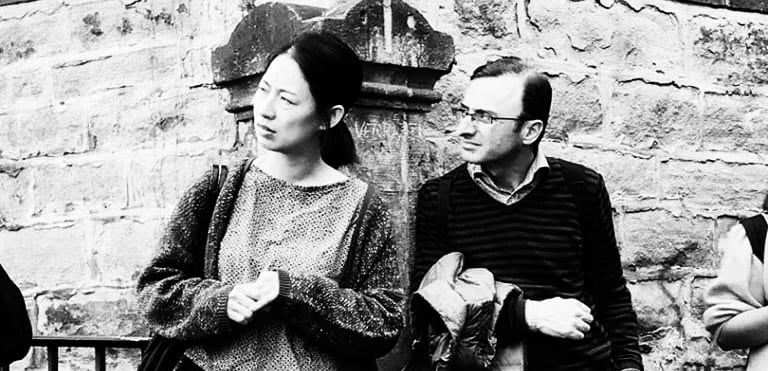
Mehdi Pârsâ is the most prolific Persian translator of Jacques Derrida, having rendered eight of his works into Persian. He holds a first PhD in philosophy from Allameh Tabataba’i University in Tehran, where his dissertation examined Derrida’s reading of Plato and Hegel, and a second PhD from the Universität Bonn’s Institut für Philosophie, with a thesis on the problem of ontology and epistemology in contemporary European philosophy. He is the author of Derrida and Philosophy (2014), Derrida and Media (2012), A Reading of Gilles Deleuze’s Logic of Sense (2022), and, most recently, Machinic Ontology (Palgrave Macmillan, 2025).
An unlikely encounter
There is something almost providential about the way a French Jewish philosopher’s most notoriously untranslatable idea found a second life in the seminaries and university corridors of the Islamic Republic. Jacques Derrida, who spent a career unsettling the metaphysical certainties of the West, has become, since the 1990s, one of the most quietly influential thinkers in Iranian academic life. A study by Rouhollah Hosseini and Somayeh Ahmadi of the University of Tehran, published in Recherches en Langue et Littérature Françaises, traces this itinerary. Derrida’s prose is famously resistant even to native French readers, and his signature term “déconstruction” itself refuses translation: German, English, and Italian all simply absorbed the French word, whereas Persian coined its own term, vâsâzi (واسازی), deliberately set against bâzsâzi (بازسازی, “reconstruction”).
A genealogy by relay
Bâbak Ahmadi’s Modernity and Critical Thought and Rezâ Barâheni’s Waking Dream introduced fragments of Derridean vocabulary in the 1990s as refracted echoes rather than scholarship proper. It was only in 2004, with Payâm Yazdândjou’s Persian rendering of Positions, that Derrida acquired a direct textual presence in Persian. Pârsâ’s own itinerary condenses this larger pattern: a Tehran doctorate on Derrida’s reading of Plato and Hegel, followed by a second, in Bonn, on the wider question of European ontology and epistemology. Mohammad Zeymarân, of the Iranian Academy of Arts, produced in 2007 what Hosseini and Ahmadi treat as the most serious Iranian engagement with Derrida’s “metaphysics of presence,” a book reprinted six times in three years. Abdelkarim Rashidiân’s 2016 translation of Writing and Difference stands, in their account, as one of the rare translations handled with real philosophical competence. Amir-Ali Nodjoumiann, a scholar of English literature, remarked at a 2005 memorial conference that Derrida’s prose is a nightmare for any translator.
The Heidegger precedent
Derrida’s reception did not arrive on virgin soil. Decades earlier, Ahmad Fardid, the first Iranian to engage Heidegger, popularized gharbzadegi, “Westoxification,” fusing Heideggerian critiques of technology with a nativist call to return to an authentic, pre-Western essence. Fardid’s encounter with Heidegger owed much to Henry Corbin, who had studied under Heidegger and built a bridge between German phenomenology and Islamic mystical traditions.
(Editor’s note : Corbin founded the French Institute of Iranology in Tehran, which merged in 1983 with an older French archaeological mission to form the Institut Français de Recherche en Iran (IFRI), later a CNRS research unit under the French Foreign Ministry, before being closed in 2023 in retaliation for Charlie Hebdo’s caricatures of Khamenei, amid the crackdown following Mahsa Amini’s death, and followed most recently by Tehran’s September 20, 2026 shutdown of the affiliated Centre de Langue Française on “illegal activities” charges.)
Reza Davari Ardakani, one of Fardid’s disciples, later turned this into something close to a philosophical justification for the Islamic Republic’s suspicion of the West, while Daryush Ashuri spent much of his career dismantling gharbzadegi as an incoherent slogan. Bijan Abdolkarimi, author of Heidegger in Iran, has excavated the same terrain. Next to it, Pârsâ’s own field looks comparatively sedate, carried by translators rather than figures close to power, but Hosseini and Ahmadi read it as running on the same underlying logic.
Deconstruction and the Qur’an
The tension surfaces most explicitly around Qur’anic exegesis. Amer Gheitouri argued in his 2003 book The Qur’an: Deconstruction and the Return of Signs that deconstruction need not erase meaning nihilistically and could illuminate the Qur’anic text’s own potentialities; others have drawn analogies between Derrida’s dismantling of authorial intention and the “Qur’an by the Qur’an” hermeneutic tradition associated with Allâmeh Tabâtabâyï. A 2022 article on the Surah of Tawhid makes the incompatibility explicit,: a philosophy of multiplicity applied to a theology of the One.
Beyond theology, Hosseini and Ahmadi’s own breakdown of 250 articles on Derrida in Iran finds the bulk concentrated in art and literature (37%) and general presentations of his thought (31%). Comparative philosophy proves especially fertile: scholars have paired Derrida with Rumi on the instability of signs, though Rumi appeals to the heart’s revelation as an alternative route to truth that Derrida never takes; a similar pairing with Mollâ Sadrâ founders on Mollâ Sadrâ’s transcendent wisdom refusing to treat death as the horizon of meaning. Isâ Amnkhâni, meanwhile, argues that Iranian literary critics routinely invoke “binary opposition” language while missing that real Derridean oppositions are hierarchical, the symmetrical clashes of fate in Ferdowsi’s Shahnameh, Rostam against Esfandiyâr, are not structures of domination at all.
A second act: the machine as first philosophy
It’s against this backdrop, two decades spent inside someone else’s vocabulary, that Machinic Ontology reads as Pârsâ’s attempt to build a metaphysics of his own. The premise: the concept of the machine has become so pervasive across biology, technology, politics, and neuroscience that it now needs a proper ontology rather than scattered metaphorical use. Reviewing the book for Theory, Culture and Society, Paul Haynes describes its guiding conceit as a parallel between books and brains, with Pârsâ modeling the text on a brain understood as a network of problems, the book itself treated, in Deleuze and Guattari’s terms, as a little machine.
Each central chapter pairs a named machine with its thinker. Pârsâ opens with Descartes, or rather Georges Canguilhem’s reading of Descartes’ attempt to treat the living body mechanically: Canguilhem finds in Descartes a unity between organism and artifact where the same mechanical laws hold for both, before showing how a “living machine” starts to look pathological, even monstrous, nature itself becoming a monstrous living being once organism and mechanism collapse into one another.
From Canguilhem, Pârsâ moves to Gilbert Simondon and the concept of the transindividual, Simondon’s account of individuation, where life generates technics and technics generate the human, treating the technical object as a genuine machine rather than a mere tool. Pârsâ calls this the ultimate goal of Simondon’s entire ontological project.
Haynes judges the fourth chapter ; on Catherine Malabou’s “plastic machine”, her parallel between neural plasticity and the structure of political life ; to be the weakest: Malabou’s argument barely surfaces until halfway through, and her Hegelian commitments sit uneasily beside the Deleuzian ontology of creative force anchoring the rest of the book. The strongest chapter, by Haynes’s account, is the fifth, on Deleuze and Guattari’s “abstract machine,” where Pârsâ traces how Anti-Oedipus and A Thousand Plateaus treat desire, affect, and politics as different scales of one machinic process, desiring machines, war machines, social machines running on the same logic regardless of scale, which Pârsâ takes as the load-bearing claim of a machinic ontology as such. A sixth chapter turns to Michel Foucault and Giorgio Agamben on biopolitics, though Haynes notes the machinic vocabulary itself thins out here, crowded by more familiar Foucauldian themes like resistance and the dispositif.
Where the synthesis strains
Haynes’s overall verdict is that the project is compelling even where its execution wavers. He flags an introduction that reviews four additional theorists, Jane Bennett, Levi Bryant, Arjen Kleinherenbrink, Audronė Žukauskaitė, before the main argument gets underway, and two lengthy appendices, one on the painter Max Ernst (adapted from a 2024 Epoché Magazine piece) and one on the filmmaker Béla Tarr’s cinema of political resistance, neither of which Haynes finds well tied back to the book’s central claim. He also notes a curious absence: Bernard Stiegler, whose techno-informational work is arguably the most developed existing bridge between Deleuze and Simondon, never appears, nor do Pierre Klossowski or Maurizio Lazzarato beyond a passing mention. The book’s exclusively francophone cast, Haynes adds, leaves out the anglophone strand of machinic thought running through Nick Land‘s writing on machinic desire, territory Land was already mapping three decades ago, toward much darker ends.
A mirror, twice over
What ties the two projects together is less doctrine than temperament: a willingness to sit inside a difficult, foreign body of theory long enough to reconstruct its internal logic rather than simply importing its vocabulary, the same discipline Hosseini and Ahmadi find lacking in the young Iranian scholars who return from brief stints abroad eager to apply fashionable methods without absorbing what those methods demand. Where Pârsâ’s Derrida work asked what happens when deconstruction crosses into Persian intellectual life, Machinic Ontology asks a structurally similar question of a different concept: what happens when “the machine” stops being a borrowed metaphor and starts being treated as first philosophy. Two doctorates, two continents, two half-finished syntheses, Tehran to Bonn, Derrida to Deleuze, and, in both cases, a mirror held up rather than a foreign curiosity absorbed.
(Derrida)’s deconstructionist ethics can be construed as an embodiment of immanent ethics. To achieve this goal, it commences with Friedrich Nietzsche’s articulation of immanent ethics, drawing a contrast with formalist and conformist accounts of morality, exemplified in Kant. (…) As a result, Derrida’s formulation of ethical challenges within the context of aporias, impossibility, and responsibility can be understood as a call for resistance against conformity to established forms of life. This imbues deconstruction with an intrinsic ethical-political character. (Immanent Ethics and Deconstruction, Mehdi Parsa)