Memories of Rav Aharon Lichtenstein, zt”l: An Interview With Rabbi Nathaniel Helfgot
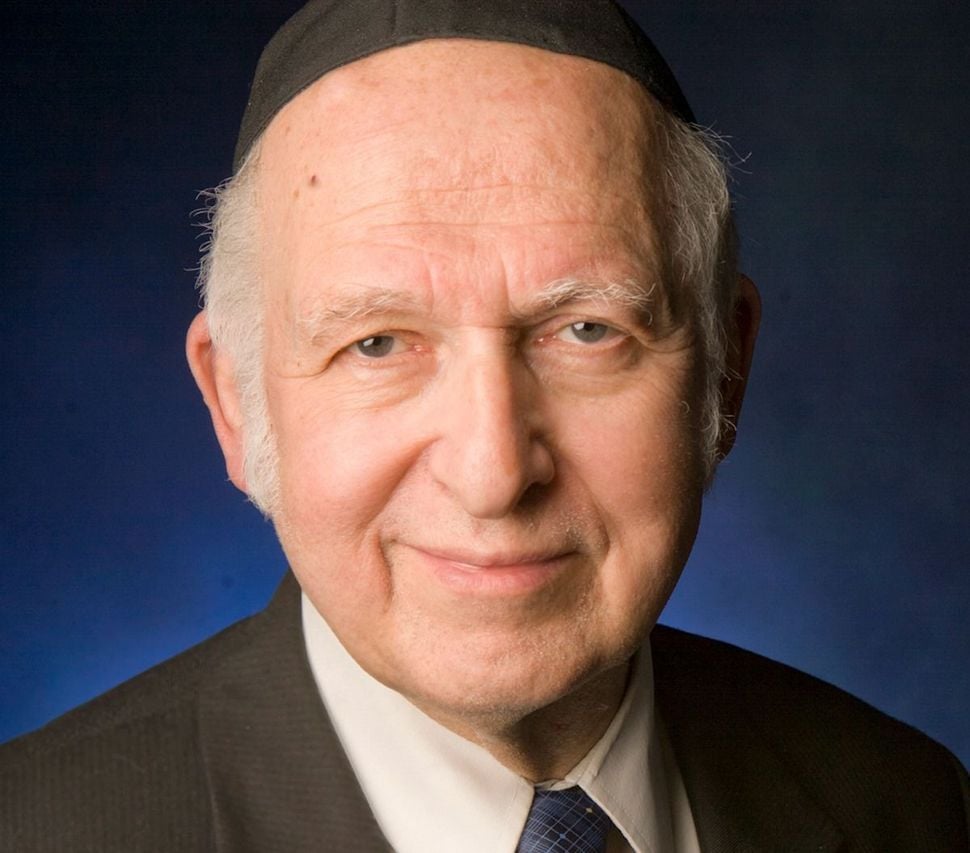
A few months ago we marked the 10th yahrzeit of Rav Aharon Lichtenstein, zt”l, Rosh Yeshiva at Yeshivat Har Etzion and one of the greatest modern-day Torah sages.
He embodied an extraordinary blend of intellectual rigor, spiritual depth, and moral clarity. Several key characteristics made him so unique and influential: immense Torah scholarship … integration of Torah and Western thought … uncompromising ethical integrity … modesty and humility … complexity and nuance … personal piety … and a deep commitment to klal yisrael.
I have admired Rav Aharon’s essays for many years. I only heard him give a shiur once – the class was way over my head, but I knew at the time I was in the presence of greatness.
Fortunately, there are others who knew him much better than me – and who are able to reflect on his gadlus. So that I could learn more about Rav Aharon and why he was such an important figure, I interviewed Rabbi Nathaniel Helfgot, spiritual leader of Congregation Netivot Shalom in Teaneck, NJ, and faculty member at SAR High School, who was a close student in Rav Aharon’s shiurim in Israel for several years. Rabbi Helfgot continued his relationship with R’ Lichtenstein throughout the decades, including helping bring some of his Hebrew writings to publication.
Below is a transcript of the interview:
Can you share your earliest memory of meeting R’ Aharon Lichtenstein and what initially drew you to him as a teacher and mentor?
When I was in 11th grade in MTA, I had a group of friends who were already into serious learning. We started speaking about where we would go to learn in Israel after high school, which by that time had become an increasingly popular option. There were not as many choices then as there are now, so we were choosing between just a few institutions. We had heard about Gush and R’ Lichtenstein from friends and older students in the beit midrash, and many of us were curious to find out more. Rav Aharon would come each year to test the boys for the next year and would spend a shabbat at YU with the alumni. I decided to stay at school for that Shabbat, and I was blown away by the depth of the various presentations, the total mastery of the issues he discussed, and the force of his personality. He was different from anyone I had ever met or heard. I became enchanted.
What aspects of R’ Lichtenstein’s Torah learning or methodology most deeply influenced you during your time as his student?
In terms of learning gemara, the most important thing about Rav Aharon’s teaching is that he systematically tried to guide you to “learn how to learn.” He helped you develop a clear and replicable method of approaching every sugya so you could become an independent high-level learner of gemara and rishonim. He did not come in and try to impress you with his chiddushim (though you were often wowed by his awesome mastery of all of shas and rishonim, and from time to time you were awed by the chiddushim that he proposed while he was teaching you to unpack and master a sugya). Instead, he guided you with mekorot and taught you what kind of questions to ask, what the primary questions and secondary questions were, what sources you should look at, how to become more sensitive to differences in formulation, and how to summarize a sugya and its key elements.
He was rigorous and thorough, and he taught you to think and analyze and not simply amass opinions and facts without categorizing and putting them into perspective. While his shiur began on the daf and continued that way, you were really using the daf to explore the topic in its broadest terms and be able to understand a legal subject in its fullest sense.
In terms of learning Tanach and machshava, which by the nature of a classical yeshiva is less prevalent, he approached the texts with great reverence, yet with deep human sensitivity, literary tools, and psychological insight that delved into the depth of the soul and meaning of the texts. We examined Biblical characters with the goal of understanding, empathizing, and growing in our connection to God and spiritual values.
R’ Lichtenstein often spoke about the integration of Torah and general culture. How did he model this synthesis in his own life, and what can we learn from that today?
To use a celebrated phrase from Matthew Arnold, a 19th-century writer and thinker that R’ Aharon admired, R’ Aharon lived his life “steady and whole.” He was not a conflicted personality torn between various aspects of his learning and education. He was a deeply religious person who integrated his secular learning, particularly literature, into his full spiritual life. He was at his core a religious humanist for whom literature helped him deepen his connection to God. It also helped him understand the human being, which was the pinnacle of God’s handiwork in the world, the tzelem elokim, and appreciate human nature and the strivings of the human being to develop and reach their potential as ovdei hashem.
For R. Lichtenstein, engaging in secular studies — and particularly the humanities — was not primarily about earning a degree and making money, nor was it simply to understand the physical world of the sciences. It was something much deeper and richer that helped one live a more profoundly noble and enriching religious life. He was and would have continued to be saddened by the retreat away from the study of humanities in general. In particular, he would not have been pleased about how certain Modern Orthodox institutions have reduced general studies to a purely instrumental goal of making money and/or enjoying the best of modern creature comforts with its concomitant mores of materialism and enjoyment and pleasure, which have seeped so deeply into much of frum religious life.
His essays—particularly By His Light and Leaves of Faith—are widely studied. Which themes from his writings do you find most essential, and why?
For me personally, Rav Aharon’s constant striving to uphold the highest standards of morality, integrity, and ethics in personal and communal life was most essential. His lifelong project of learning and developing a world in which halacha and ethical impulses were not in conflict was inspiring and a lodestar for me to this day.
How did R’ Lichtenstein navigate the tension between strict halachic observance and sensitivity to human needs and dignity?
As Rav Aharon taught and wrote many times, sensitivity to real human needs and dignity, along with important concepts like shalom, kavod habriyot, pain, and meta-halachic and ethical concerns like ve’asita hayashar ve’hatov, are all an inherent part of the halachic system. They have manifested themselves in many ways in the psak of gedolei yisrael throughout the ages, and they need to be at the center for any serious posek, together with great erudition and mastery of the corpus of halachic texts. A wonderful example of this approach is the following quote from his seminal and critically important essay, The Human and Social Element in Halakha: “What we do expect of a posek is that he walk the extra mile, wherever, for him, it may be-harnessing knowledge and imagination, in an attempt to abide by his responsibility both to the Torah with which he has been entrusted and to his anguished fellow, whose pangs he has internalized. For insensitive pesika is not only lamentable apathy or poor public policy. It is bad halacha. To the extent that kavod habriyot permits a ‘violation,’ be it a rabbinic injunction, actively, or of a biblical injunction, passively, failure to act on that principle undercuts a spiritual ideal.”
What kind of leader was he in the beit midrash and in the broader religious Zionist world? How did he balance strength of conviction with genuine humility?
Rav Aharon, first and foremost, led by example. He demanded us to put it in long hours in the beit midrash and at other tasks, but he first and foremost demanded that from himself to an even greater extent. He was constantly in the beit midrash or in his office preparing for another shiur or engaged in discussing learning or important issues with others. He would never miss a shiur. He would get off a plane from the States after a long recruiting trip and immediately head to the yeshiva to give his shiur. From his prime years of activity well into his late 70’s he kept a rigorous schedule of learning and teaching that would have tried and exhausted people half his age.
He also was not a cloistered ivory tower intellectual, neither in his decade of teaching in the United States nor during the 45 years he lived in Israel. He wrote essays in the Israeli press, both the general and religious ones, on important topics like land for peace, the role of women in religious life, the study of Talmud in the yeshiva high school system, Talmud study for women, yoatzot halakha, geirut issues, and the entire panoply of concerns that confronted the Israeli polity and religious Zionist community from the mid 1970’s through the first decade of the 21st century.
He articulated a robust, non-messianic religious Zionist vision and approach that offered a serious alternative to the religious Zionism of Rav Kook that came to dominate the world of the dati le’umi community in Israel.
He sat on many commissions, boards, and caucuses, contributing his insight and wisdom and writing major essays on challenging issues, including sexual abuse in the religious Zionist world, attitudes to the Arab minority, secular studies, the Tanach revolution, abortion, relationships to non-Orthodox Jews, and many other current issues.
Can you describe what it was like to be his student? Was there something unique about the way he related to his talmidim?
As a young student, you were in awe and a bit frightened, especially if he called on you in shiur to read and explain a piece of gemara. At the same time, he never got angry or impatient in his shiur and saw his role as a teacher and mentor. He had high standards and demanded hatmada and hard work, but you enjoyed the experience and felt you were constantly growing. You always felt that you had truly merited the opportunity to learn with him and from him – and that you were in the presence of greatness. That certainly made you a bit reluctant to go up to him and bother him, which sometimes meant that there wasn’t an easygoing relationship as you might have with other mentors. However, he cared deeply about his talmidim and how they were doing, even years after they left the yeshiva.
As one got older, and if one merited to continue to interact with him, the relationship turned from the awestruck youngster to a more mature rebbe-talmid relationship. I never lost an ounce of the recognition of his greatness in Torah, middot, yirat shamayim, and insight, and I always felt a great mutual love in which he truly valued my opinions, thoughts, life experiences, and perspectives. To this day, I often feel like Rav Aharon was like a second father to me. (Indeed, I had the great merit and honor that Rav Aharon served as the sandek at the brit of my second son, Ephraim, born about two years after the death of my father, Salomon David Helfgot, z”l.)
Though based in Israel, R’ Lichtenstein had a profound impact on diaspora Jewry. How do you explain the breadth of his reach?
Since his days as a young rabbi at YU until his last days teaching at Yeshivat Har Etzion, Rav Aharon saw one of his main missions in life as encouraging the best and brightest in the Modern Orthodox community to go into Jewish education, the rabbinate, and Jewish communal service of some form. He attempted to instill in his students an ethic of the responsibility to serve the klal at this juncture in history and make an impact.
Rav Aahron was at the right place at the right time. In the decade after he made aliyah, the phenomenon of learning in Israel after high school for one, two, or three years took off to become a major part of the experience of every post-yeshiva high school student. Being in a yeshiva in Israel is a 24/7 experience, and thousands of students that Rav Aharon interacted with were deeply impacted by him. Since many of those students returned to study at YU and other universities, and later played critical roles in chinuch, the rabbinate, and as ba’alei batim in Jewish communal institutions and communities, Rav Aharon’s impact trickled down into much of the Modern Orthodox mainstream.
In addition, Rav Aharon — to his great credit — did not just make aliyah and abandon the diaspora community. He often came back to lecture and teach when he was visiting, participated regularly in the annual Orthodox Forum sessions from which many of his seminal articles of the 1980’s-2000’s emerged. Communal leaders, institutions, and organizations in the United States would regularly consult him, especially after the Rav retired from public life. Many yeshiva high schools and camps in the United States often turned to him as their posek on important issues. He was seen as a gadol of extraordinary proportions who was deeply committed to the best values of Modern Orthodoxy, and he understood the community, its challenges, and its needs.
What is the one teaching, phrase, or example from R’ Lichtenstein that you find yourself returning to most often in your own life and rabbinic work?
There are so many phrases, shiurim, or incidents that I recall that it is hard to whittle it down to one example or phrase. I guess the one that many of us remember with great emotion is Rav Aharon’s passionate sicha (versions of which he gave at various times over the decades) on Ta’anit Esther, where he spoke of Mordechai’s plea to Esther not to hide behind her royal trappings but to put herself out to help her brethren. The question, as he put it in his booming voice, was איכפת לך או לא איכפת לך. Do you truly care or do you not? He then went on to describe the absolute necessity for mechanchim, rabbis, and Jewish communal workers. And where do you as an individual fit in? When I sometimes get tired or frustrated, the words of Rav Aharon and his sterling model of commitment and devotion come back to haunt my thoughts, and they give me chizzuk and support.