Published author, Jewish educator and scholar
What Are We Really Celebrating on Sukkot?
ChatGPT
The strangest thing about Sukkot is that we do not really know what we are celebrating.
The Torah tells us: “You shall live in huts seven days… in order that future generations may know that I made the Israelite people live in huts when I brought them out of the land of Egypt” (Leviticus 23:42–43). Yet nowhere in the Exodus narrative does it say that God made the Israelites live in huts. Why, then, does the Torah institute a seven-day festival commemorating something that does not appear in the actual story of the Exodus?
The Rabbis offer two very different answers. According to Rabbi Eliezer, the sukkot were the clouds of glory; according to Rabbi Akiva, they were actual booths (Sukkah 11b). Their disagreement may represent two fundamentally different ways of understanding what Sukkot celebrates.
According to Rabbi Eliezer, sukkot is not to be understood literally. It refers to the divine cloud that accompanied Israel through the wilderness, guiding and protecting the people on their journey toward the Promised Land. Sukkot therefore complements Pesach: on Pesach we thank God for taking us out of Egypt; on Sukkot we thank Him for protecting us afterward.
Rabbi Akiva’s interpretation raises a different question. If the sukkot were ordinary huts that the Israelites themselves built, why does the Torah say that God “made the Israelite people live in huts”? They built the huts. What exactly did God do?
Perhaps Rabbi Akiva is teaching a profound religious idea. God’s gift was not only miraculous intervention from above. God liberated a nation of slaves and gave them the freedom, ability, and responsibility to begin caring for themselves.
The Israelites who had depended upon Egyptian masters now had to construct shelter, organize a camp, defend themselves, and eventually build a society. Their dependence upon God did not disappear, but God’s providence increasingly operated through human agency. The ability to build the sukkah was itself a divine gift.
This interpretation points toward the future life of the Jewish people in their Land. Once they crossed the Jordan, there would be no manna falling from heaven and no miraculous cloud directing every step. They would have to plant crops, build cities, establish courts, fight wars, care for the vulnerable, and assume responsibility for their own national life.
The two interpretations therefore offer complementary models of faith. Rabbi Eliezer reminds us to be grateful for what God does for us. Rabbi Akiva reminds us to be grateful that God enables us to do things for ourselves.
The events of the past three years have made both ideas extraordinarily real.
On Simchat Torah 2023, Israel experienced a day of horrifying helplessness. Terrorists poured across the border while civilians in southern communities desperately called for help. For hours, many Israelis experienced something Jewish sovereignty was supposed to have ended: Jews facing murderous enemies with no one there to protect them.
But the story did not end on October 7.
Israel possessed something Jews in so many earlier periods of persecution did not possess: the ability to mobilize an army, defend its cities, strike those attacking it, and make decisions about how to secure its own future. The years since then have exacted a terrible price in lives, injuries, displacement, reserve duty, and national strain, while Israel has confronted threats from several directions.
Jewish sovereignty has not created the miraculous cloud of Rabbi Eliezer that shields us from every danger. No army, however powerful, can guarantee complete security. Israel remains vulnerable, as every sovereign nation ultimately is.
But that is precisely why Rabbi Akiva’s interpretation matters.
The great achievement of Jewish sovereignty is not that Jews no longer face enemies. Jewish history never promised that. The achievement is that we are no longer condemned to wait helplessly for others to decide whether or not to defend us.
We have soldiers, intelligence services, doctors, scientists, emergency workers, and citizens capable of organizing themselves when disaster strikes. We possess the means to defend ourselves, rebuild what has been destroyed, and shape our national future.
And with that power comes responsibility.
If we control our own army, then the way that army uses force becomes our responsibility. If we govern ourselves, then the character of our government becomes our responsibility. If we possess political and economic power, then the kind of society we create becomes our responsibility.
Sovereignty means that we can no longer attribute our fate entirely to Pharaohs, kings, czars, or foreign governments.
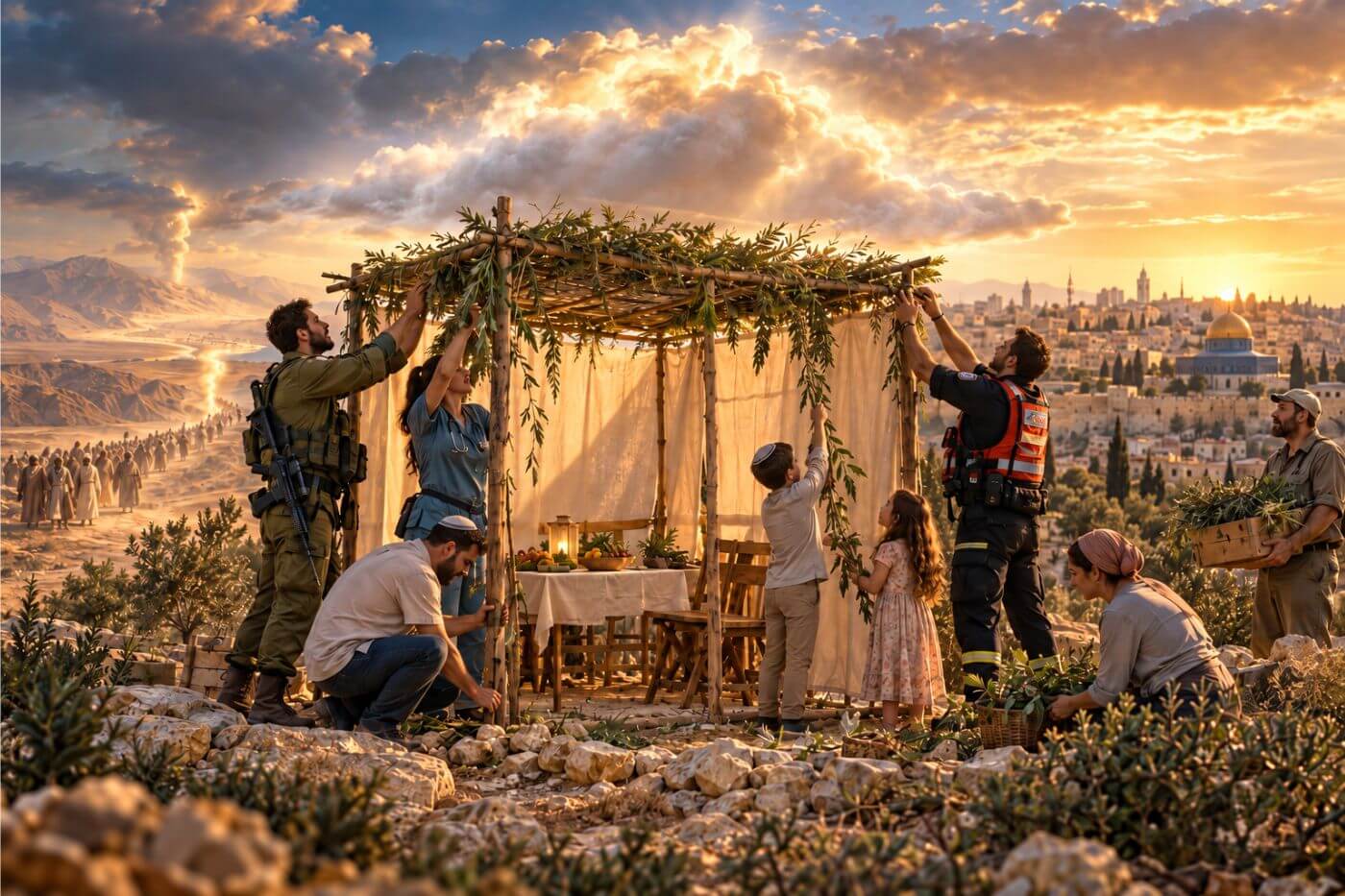
We build the sukkah ourselves.
And yet every year we sit beneath its fragile roof and thank God.
That is the beautiful tension at the heart of Sukkot. Rabbi Eliezer teaches us never to forget the divine cloud above us. Rabbi Akiva teaches us never to forget the human hands building beneath it.
Perhaps Sukkot 2026 gives us special reason to appreciate both. We pray for God’s protection because we know how vulnerable we remain, but we also thank God for giving the Jewish people something our ancestors dreamed of for nearly two thousand years: the ability to assume responsibility for our own fate.
Chag Sameach.
For more insights on the Jewish holidays and current events, visit
https://davidharbater.com/holidays-others/
Related Topics