

Michel Gad Wolkowicz Interview | Alexandre Gilbert #298
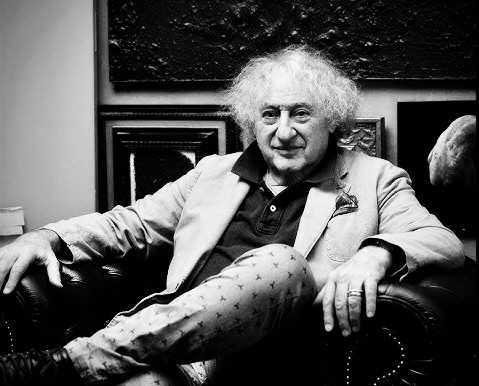
Michel Gad Wolkowicz, psychoanalyst and director of the Institut Schibboleth, will host the conference “Sous le signe de Sion – Makom: Identité Humaine / Identité Juive” at the Menachem Begin Heritage Center on October 29, 2025.
Michel Gad Wolkowicz: Yes, we talked about it very often. You know, Michael was like a brother to me. We were inseparable, so I knew everything. It was always difficult for him to explain his relationship with Boutang, especially in the beginning. Later it became simpler, but at first it was hard to put into words.
We had been friends since middle school, since sixth grade. By the time we reached senior year, in 1968, he had chosen philosophy while I pursued science with the intention of studying medicine. That year, each of us had a different philosophy teacher: mine was a Marxist from Guadeloupe, while Michael had Pierre Boutang.
We were already politically engaged, leaning mostly in the same direction. Boutang, at the time, was widely considered a fascist—that was the word everyone used. But in reality, it was our Marxist teacher who proved more proselytizing and totalitarian, though we didn’t yet see it that way.
So yes, they were two radically different teachers. Michael was intrigued by Boutang from the start, though not yet deeply attached; that came later, when a true reciprocal bond developed. Boutang marked Michael profoundly, not only through teaching but also by his personality and intellectual path. And I believe the reverse was true as well: Boutang himself changed through Michael. He even acknowledged that through Michael, he ceased to be antisemitic. Psychically and intellectually, he was transformed, even if he still held onto certain positions.
Michael’s strength—his chance, but also his talent—lay in his ability to connect deeply. His curiosity, his rigor, his relational gifts allowed him to engage fully with Boutang while also being a student of Lévinas, as you know.
Lévinas helped Boutang re-enter the university.
Michel Gad Wolkowicz: Absolutely. Michael built a way of being that mattered greatly to him. When he defined Zionism, he would say it transcended ideology—it was first and foremost a way of being.
He developed a mode of existence both free and rigorous, firm yet attentive to others. He inspired not only his friends and students but also his teachers. Boutang’s publisher, Les Provinciales, was himself a former student of Boutang. Michael’s commitment to the idea of reciprocal transmission—between students and teachers, between generations—was not just a belief but something he enacted consistently.
You wrote: “The Jew would no longer be a luftmensch, a man who stirs the air, but a builder.” The Luftmensch, popularized by Sholem Aleichem, predates the “atmosphere” concept, found in Kepel, Sloterdijk, Schmitt and even Heidegger.
Michel Gad Wolkowicz: I’ll admit something. I’m not a philosopher—I’m a psychoanalyst. I borrow freely from many fields, much as Freud did. He used whatever material he could, like metaphors in a child’s play.
I knew “luftmensch” was a well-worn expression, though I couldn’t recall precisely from where. For me, it held a creative ambiguity: someone rooted in reality, yet drawn to transcendence; someone who “breathes in” atmospheres and ideas, transforming them into something personal.
It also recalls the figure of the wandering Jew. But I am no fetishist of exile—this is why I am a Zionist. So the luftmensch, to me, is no longer a passive wanderer at the mercy of the wind, but a builder of time, in Heschel’s phrase.
You argue that after the Shoah, Jews no longer accept being a “host people,” in Weber’s sense, a “hostage,” as in Lévinas—or, following him, Derrida, who even spoke of “hostage to the other.”
Michel Gad Wolkowicz: I would say the opposite. For me, it’s not about renouncing the relation to the other but about refusing dependency on the other.
Freud’s phrase has always guided me: “What you inherit, make it your own, so that it becomes truly yours. What you cannot take in will remain a burden.” That is the essence of transmission—working through what others give us until it becomes part of ourselves.
The idea of being “hostage to the other” has always disturbed me. Fédida—one of my own teachers—repeated Derrida’s reading of Lévinas, but I found it a distortion, a regression into a kind of Christian martyrdom. For me, relation is reciprocity, not subjugation. The word “hostage,” especially today, is unbearable.
Lévinas’ notion of the infinity of the Other is considered by some a form of idolatry, and his concept of the “hostage”, can be particularly troubling today, in light of current events.
Michel Gad Wolkowicz: That’s very interesting. Yes, the notion of idolatry of the other resonates. This links directly to contemporary debates on identity, which I’ll be addressing at the colloquium I’m organizing.
We live with two caricatural extremes. On the one hand, in the woke discourse, identity supposedly does not exist—one simply chooses, disregarding reality. On the other hand, some brandish identity as a fetish, almost like a phallus. Both are distortions, opposite but equally flawed.
Idolizing the other, as you said, is just the same mechanism: the self becomes nothing, dissolved in the other. Freud already described this in terms of narcissistic love and analytic love—where the subject either idealizes the other and mirrors them, or effaces themselves entirely before the object of love. I see something similar in Derrida’s interpretation of Lévinas: a tendency toward self-annihilation before the other.
Can we speak of “transmission of transmission,” a desire rather than a narcissistic projection of the same ?
Michel Gad Wolkowicz: Yes. Transmission is a desire, not a narcissistic projection. It is not about expecting our children to continue our unfulfilled dreams. It is about allowing them to follow their own paths—even against our wishes—and being proud of it.
There is a Jewish anecdote that captures this:
Jonathan wins the Nobel Prize in physics and invites his parents, Moshe and Rachel, to Oslo. After his speech, his father asks: “But what do you actually do?” Jonathan explains, “I continued Einstein’s work on relativity. Imagine: half an hour with Scarlett Johansson feels short, half an hour with Aunt Rachel feels endless. That’s relativity.” The father beams: “Wonderful, my son! I’ll tell this to my friends. But is this really how you make a living?”
The beauty lies in the father’s joy at being surpassed—even humiliated—by his son. He doesn’t understand, but he delights in being overtaken. Pride and envy coexist; ambivalence is accepted. That is true transmission.
Michael Bar Zvi reminded us that ben, the Hebrew word for “son,” shares its root with libnot, “to build”, and using Derrida’s term relève (relay, succession) to replace Nietzsche’s “overcoming” (Aufhebung), a translation Heidegger himself found misleading.