


Clarity for Leaders in Law, Policy, Finance, and Covenant
Michigan’s Democratic Revolt and the Price of Jewish Loyalty
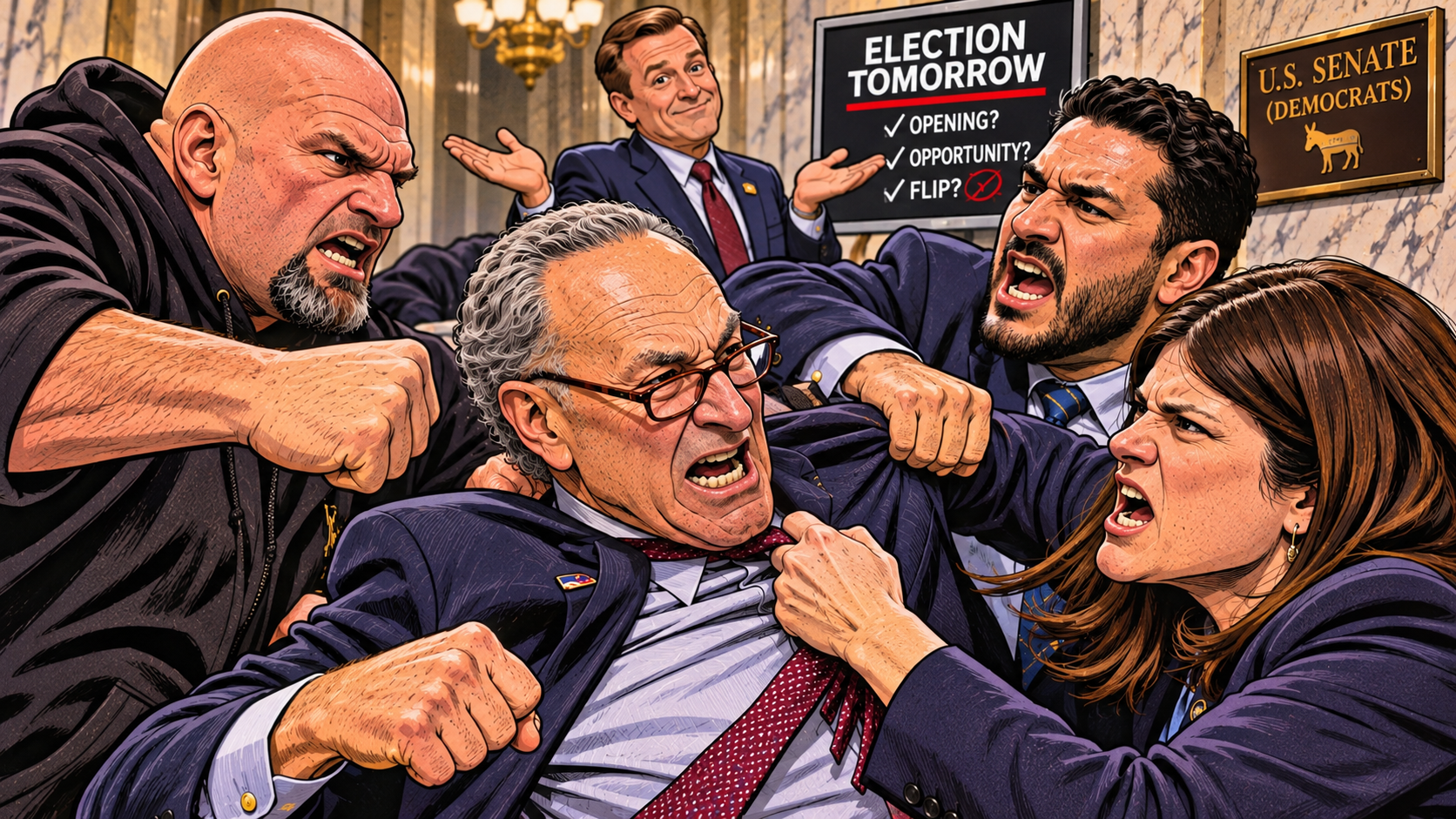
Chuck Schumer has called Haley Stevens’s endorsement of Republican Mike Rogers a “despicable betrayal.” The accusation carries particular weight from the Senate’s most prominent Jewish Democrat, whose commitment to combating antisemitism has long been a feature of his public identity. Yet, Schumer’s indignation raises a question he may find considerably less comfortable: why has a Democratic congresswoman’s rejection of her party’s nominee provoked greater outrage than the antisemitism concerns underlying her decision? John Fetterman has challenged Abdul El-Sayed’s rhetoric about Jewish financial influence. Elissa Slotkin has defended Democratic solidarity. Rogers, meanwhile, has received an extraordinary endorsement less than 48 hours before Michigan’s Senate election. The political rupture has exposed competing priorities within a party that has traditionally counted Black and Jewish Americans among its most dependable constituencies.
Stevens initially endorsed El-Sayed after narrowly losing August’s Democratic primary. Their reconciliation deteriorated over his association with streamer Hasan Piker and an independent advertisement connecting American assistance to Israel with rising grocery prices. Stevens condemned the messaging as antisemitic, arguing that El-Sayed had repeatedly invoked similar arguments concerning Israel. Although, he disavowed the advertisement and denied involvement, their dispute escalated when his campaign excluded Stevens from a planned unity appearance with Congressman Jim Clyburn. On November 1, she endorsed Rogers at Detroit’s Perfecting Church. Her announcement followed a blunt explanation: “I don’t belong in Abdul’s campaign.” Democratic leaders were stunned, particularly because Stevens had assured colleagues of her continued support only days earlier. Her decision transformed a dispute over political rhetoric into a crisis of party cohesion.
Schumer’s condemnation becomes more striking alongside the responses of Fetterman and Slotkin. Fetterman defended Stevens, accusing El-Sayed of a “fixation with Jewish money” and criticizing his treatment of his former rival. Slotkin, Michigan’s Jewish Democratic senator, questioned Stevens’s conduct, arguing that politicians should consider “whether they are serving the greater good.” Stevens, a Protestant, made concerns about antisemitism central to her decision to cross party lines. Slotkin has maintained her support for a Democratic nominee whose rhetoric has generated substantial objections among Jewish constituents. The contrast invites an uncomfortable examination of political allegiance: why did a non-Jewish congresswoman consider those objections sufficient grounds for an extraordinary partisan break, while a Jewish senator reached a different conclusion about her obligations to the party? Slotkin has argued that Jewish voters hold diverse priorities. Her position nonetheless warrants scrutiny alongside the concerns that prompted Stevens’s departure.
Schumer’s response also recalls an earlier dispute over congressional priorities. At a September 2024 Senate Judiciary Committee hearing, Republican senators Lindsey Graham and Ted Cruz challenged Democratic Chairman Dick Durbin’s decision to examine hate crimes broadly rather than devote the proceedings specifically to antisemitism. Democrats defended the wider inquiry. The episode illustrated a disagreement over congressional emphasis that continued into the following year, when Republicans convened a dedicated antisemitism hearing. Schumer has himself condemned antisemitism repeatedly. His treatment of Stevens now raises questions about how that public commitment influences his response when allegations involve his own party’s nominee.
The setting of Stevens’s endorsement was politically consequential. Perfecting Church, led by Bishop Marvin Winans, brother of BeBe and CeCe Winans, is an influential institution within Detroit’s Black Christian community. The church did not formally endorse Rogers, but Stevens’s appearance beside him exposed the complexity of Democratic relationships with Black voters. Democrats have long relied on Black churches as centers of electoral organization, yet Michigan’s primary revealed considerable differences within that electorate. Stevens defeated El-Sayed in Detroit by 28 percentage points, while several Black residents questioned his engagement with their communities. The Michigan Chronicle documented a generational divide, with older Black voters favoring Stevens and younger progressives demonstrating greater enthusiasm for El-Sayed. Those primary differences did not necessarily translate into Republican support, but they revealed a constituency whose political preferences could not be reduced to progressive ideology.
Black and Arab-Muslim relations supply additional context. In September 2024, the University of Michigan’s Black Student Union withdrew from the pro-Palestinian TAHRIR coalition, alleging “pervasive” anti-Black discrimination within an organization led predominantly by Arab and Middle Eastern activists. The Black students described being marginalized and mistreated despite their contributions to the coalition. Their allegations concerned specific activists, not Muslims collectively, but the incident exposed tensions often absent from conventional accounts of progressive solidarity. Such concerns are not confined to campus activism. In an October 2026 discussion of Detroit’s Black electorate, El-Sayed himself acknowledged that some Black residents had experienced mistreatment in Arab-American-owned businesses, conceding that encounters with people resembling him had sometimes left a damaging impression. These are local experiences with political consequences, particularly when candidates seek the confidence of communities whose histories and interests differ from those of their own constituencies.
Black public discourse on antisemitism is equally varied. Kareem Abdul-Jabbar and Jemele Hill publicly challenged anti-Jewish stereotypes in 2020, while Stephen A. Smith has likewise criticized antisemitic rhetoric among prominent entertainers and athletes. More recently, Van Jones warned at an October 2026 gathering that “Jew hatred is poison that is being put into my community.” Their interventions reflect a conversation about Black-Jewish solidarity that cannot be reduced to the positions of any single activist movement. They also challenge the notion that concern for Black political interests necessarily conflicts with recognition of Jewish vulnerability.
As a ethnically Jewish Black woman, I regard that distinction as fundamental. If a candidate repeatedly employed rhetoric Black Americans considered hostile to their community, party leaders would face legitimate scrutiny over their response. Jewish Americans deserve comparable consideration. Liberal convictions do not require indifference toward antisemitism, nor does historical loyalty confer unlimited political entitlement. Conspiratorial accusations and blood libels concerning Jewish donors, voting blocs and organizations such as AIPAC deserve particular scrutiny when they reproduce established prejudices about Jewish influence. Comparable suspicions have emerged within the nationalist right, prompting Ted Cruz to challenge antisemitism among conservative figures, particularly following Tucker Carlson’s engagement with Holocaust denier Nick Fuentes. However, notice the distinction, Carlson and Fuentes are commentators not political leaders. The credibility of political leadership depends partly upon whether comparable conduct receives comparable scrutiny across partisan boundaries.
For Rogers, Stevens’s endorsement creates an unusual opportunity among voters dissatisfied with El-Sayed, although its electoral effect remains uncertain. The controversy has already displaced the campaign’s intended closing argument with a dispute over antisemitism, political representation and party discipline. El-Sayed won the nomination, but the primary did not settle the disagreements among Democrats whose confidence he subsequently sought.
Michigan’s election will determine the Senate seat, but the underlying disagreement will outlast the result. Schumer’s condemnation expresses the institutional consequences of Stevens’s decision without resolving the objections that preceded it. Fetterman’s criticism and Slotkin’s response expose competing priorities within the Democratic leadership, while Stevens’s endorsement has given Republicans a political opening. For Jewish Americans, the controversy raises enduring questions about the relationship between communal concerns and partisan allegiance. For Democrats, it demonstrates the difficulty of preserving a coalition when its members disagree over the principles their leaders are expected to defend.