A Mermaid in Jerusalem
Featured Post
‘Missiles are raining down on Israel! When are you coming home?’
They mean the US, my friends and family who worry about me, but, despite the missiles, I am already home
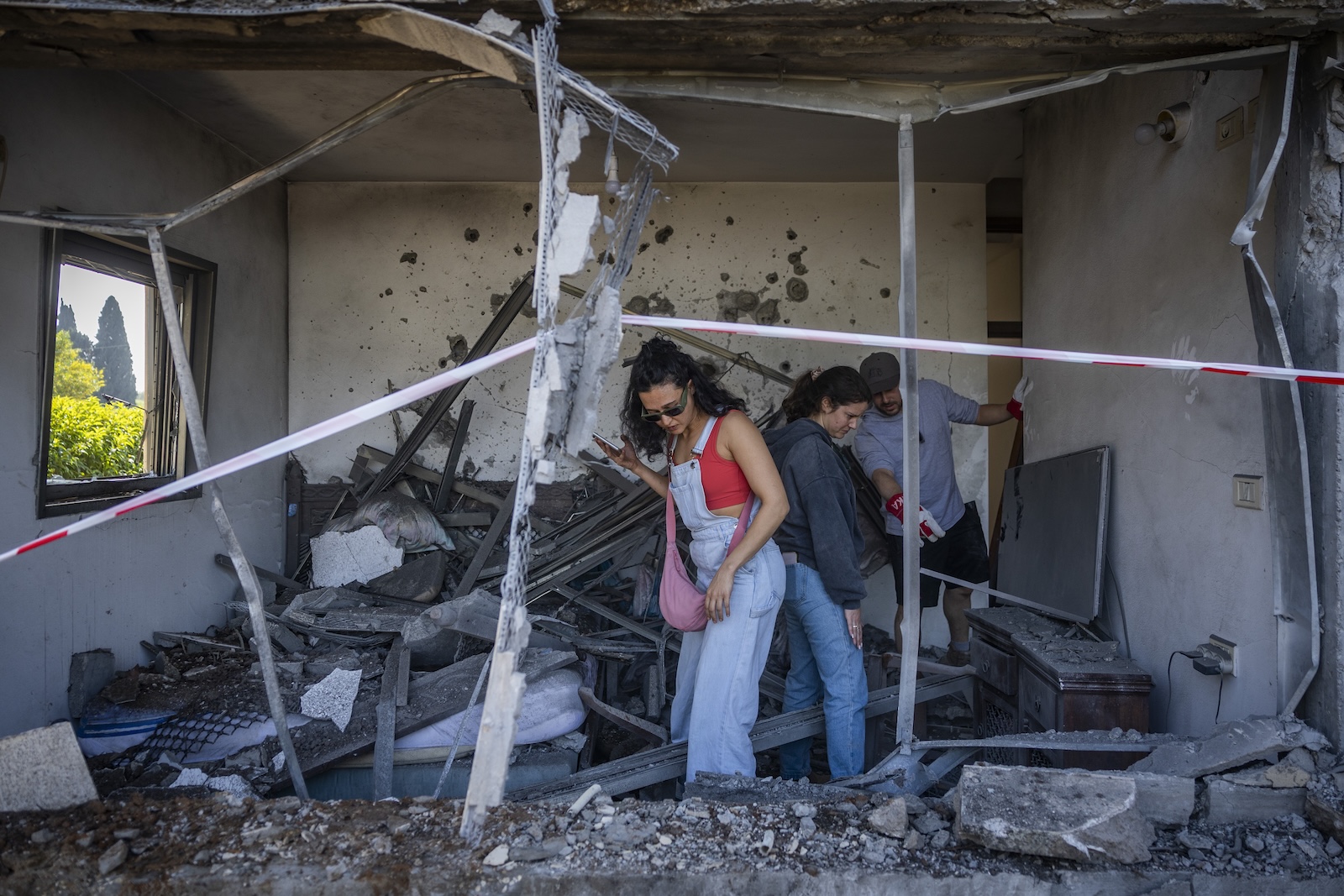
People at the scene where a house was hit by a missile fired toward Israel overnight in Moshav Hani’el, March 12, 2026. (Chaim Goldberg/Flash90)
It’s that time of the war again when friends — and some family — keep asking if I’m going to come back home.
They mean America.
They say it gently, the way people do when they’re worried about someone they love. They see the missiles and the sirens and the constant drip of uncertainty here, and they imagine safety somewhere else.
“Just come home,” they say.
But the truth is complicated.
I loved the first 29 years of my life in America and America felt like a safe place to be Jewish.
I grew up in Los Angeles, where in certain neighborhoods Hanukkah decorations lit up entire streets — not instead of Christmas lights, but right alongside them. Being Jewish wasn’t a liability. Kids who weren’t Jewish would thank us when school closed for the High Holy Days.
I remember a guy named Jose — born in Mexico, giant silver cross around his neck — who set Hava Nagila as his ringtone because, as he explained very seriously, “It’s my jam.”
That was the world I grew up in. It wasn’t perfect. But it was easy to believe that Jews had finally found a place where we could live without constantly looking over our shoulders.
I don’t think that’s true anymore.
When I saw the news about the synagogue attack in Michigan — the car ramming, the terrified families — I felt something cold settle in my stomach. Because what frightened me wasn’t just the attack itself.
It was the recognition.
Every synagogue in America now knows that feeling.
It’s no longer a question of if.
It’s a question of when.
And where.
That realization breaks my heart.
A few years ago, my two older children traveled to the United States. Before they went, I caught myself saying something I never imagined I would say.
“Maybe dial back the Hebrew a little,” I told them. I hated myself for saying it. I hated even more that I felt I had to explain why.
My daughter had a friend there whose mother had a big “Free Palestine” sticker on the back of her car. Normally that might just be another political opinion in America’s loud and chaotic marketplace of ideas. But this was during the war. My kids had already buried people they knew. They’d been to funerals. They’d watched friends and family get called up to reserve duty. And suddenly their identity — just being Israeli, just being Jewish — had become a political statement in someone else’s driveway.
They handled it with a shrug, the way kids do when they grow up here.
My children are resilient.
But sometimes I wonder why their Israeli identity has to be something debated, explained, defended. I can’t think of many other kids in the world who grow up carrying that weight.
And yet — for all of this — the truth is that safety isn’t the only thing that determines where home is.
Because whether America feels safer or not, it isn’t home for me anymore. I love my family there. I love my friends there. Parts of that country shaped me in ways I’ll always carry. But my life — the messy, complicated, beautiful reality of it — is here.
Here, where sirens interrupt dinner.
Here, where strangers argue politics in line for coffee and then help each other carry groceries.
Here, where the ground itself holds the stories of thousands of years of people who refused to disappear.
Israel is not an easy place to live. But it is my home. And home, by definition, is the place you stay — even when the world tells you it would be easier to leave.
Related Topics