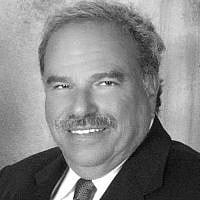
"I'm the spokesman for the OK Boomer generation"
MLK day in the United States, 2026
Photo: Tony Senatore: all rights reserved
In an emotionally charged political essay on his Substack account, rather than honor the memory of Black America’s most outstanding leader, Robert Reich defiles it and uses Martin Luther King Jr.’s legacy to legitimize contemporary resistance to the MAGA movement, portraying Trump (Bull Connor) and his allies as authoritarian, lawless, and morally equivalent to historic segregationists. It blends grief, outrage, and fear to argue that neutrality is impossible and that only mass protest, economic disruption, and institutional defiance (“good trouble”) can defend democracy. As we enjoy this day to celebrate the life of Reverend Martin Luther King, I would like to remind the world what he stood for, what he did not, and why Robert Reich should be ashamed of himself for invoking Dr. King’s agenda to support his ill-advised call for civil disobedience against the Trump administration.
Anyone who has been paying attention realizes that MLK’s legacy gets less attention with each passing year, because the prevailing narrative about race relations, and the future of Black Americans has slowly but steadily taken a one hundred and eighty degree turn. We are moving in the opposite direction from what King intended. King’s most famous line about people being judged by the “content of their character” was not rhetorical- it was foundational, and the most critical aspect of his philosophy.
Thus, we have seen the shift from universalism, the idea that injustice is wrong because it violates universal law, to what modern-day politicians prefer: injustice as inherent and permanent, tied to racial identity itself. King also favored equality of opportunity to equality of outcome. King aspired to remove barriers, legal segregation, voter suppression, and discrimination. He believed dignity came from citizenship and responsibility, not perpetual victimhood. Modern political rhetoric focuses on statistical disparities as proof of systemic injustice, and policy solutions based on race-conscious redistribution.
King wanted a society where race mattered less over time. Left-leaning politicians, activists, and academics treat race as something that must matter forever. Rather than reducing racial salience over time and uniting poor and working-class people across racial lines, today’s politicians (as well as Robert Reich) reify race, deepen mistrust, and fragment coalitions. King sought to heal the division. Reich and his progressive cohorts aspire towards managed division because if racial tension ever truly disappeared, entire bureaucracies would become unnecessary, so they favor continuation over resolution. By managed division, I mean that race is treated as a permanent organizing principle; where racial division is not being healed, it is being “managed” by DEI departments, mandatory training, etc. As a result, racial division and conflict become a career ecosystem in which sowing racial discord is glamorous, virtuous, and lucrative all at once.
My biggest issue with Robert Reich is his idea that MLK’s moral framework can be mapped onto modern immigration enforcement. It is not only unfair, but it is historically sloppy to weaponize MLK’s legacy as a blanket weapon against the Trump-era immigration enforcement, even if one despises President Trump. The Civil Rights Movement addressed Black Americans denied constitutional rights, targeted legal racial segregation enforced by the government, and fought for equal protection under the law. On the other hand, immigration enforcement concerns noncitizens who entered or remained in the United States unlawfully. It applies rules that exist before race is even considered, and does not deny citizenship rights; it presumes non-citizenship. Conflating the Civil Rights Movement and immigration enforcement treats citizen law as equivalent to Jim Crow, which it is not. The civil rights movement was about the denial of citizenship rights by law. Immigration enforcement is about noncitizens subject to the law. Treating them as morally identical empties MLK’s legacy of meaning. His legacy deserves to be understood in context, not repurposed as a rhetorical bludgeon for every modern political fight. Reich’s misuse of MLK’s legacy is also unfair because MLK is treated as a floating moral mascot. On this day, January 19th, 2026, let’s honor Dr. Martin Luther King with words befitting of his memory. Moreover, when it comes to racial justice, let’s not forget the giants upon whose shoulders we stand: Jesse Owens, Joe Louis, Jackie Robinson, and Muhammad Ali. They did more for racial justice simply by being who they were in the time they lived than any journalist, politician, or protester.
Related Topics