
Author and Global Affairs Commentator
Modi’s India: The Rise of a Civilizational State
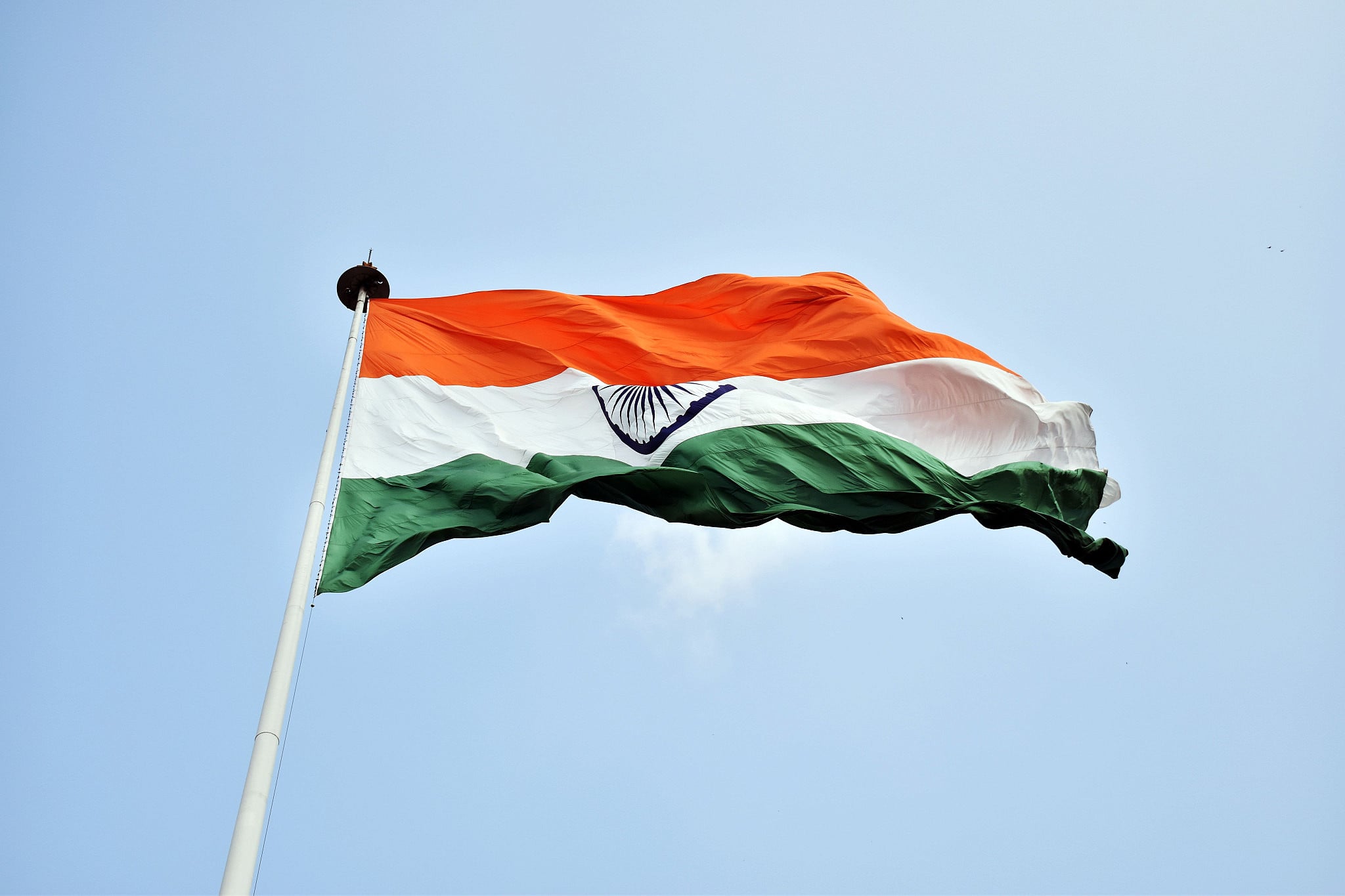
Twelve years after Narendra Modi entered office, India is no longer defining itself through the institutions of the post-colonial era. (Pexels)
Twelve years after Narendra Modi entered office, India is no longer defining itself through the institutions of the post-colonial era. Instead, it is pursuing a more ambitious project: marrying economic modernization, strategic autonomy, and civilizational identity into a new vision of national power, one that will always have Israel as a natural friend and ally.
On June 10, Narendra Modi surpassed Jawaharlal Nehru as India’s longest-serving continuously elected prime minister, marking a political milestone that is as symbolic as it is historic. Yet the significance of the moment lies less in longevity than in what it reveals about the transformation of the Indian state. Over the past twelve years, India has undergone a profound shift in how it sees itself, how it engages the world, and how it defines its national interests.
For much of the post-independence era, India’s governing elite viewed nation-building through a Nehruvian lens: secular socialism, centralized planning, and a cautious foreign policy rooted in non-alignment. That framework helped stabilize a newly independent republic, but it also produced an enduring tension between India’s civilizational heritage and its modern political identity.
Modi’s project has been to resolve that tension.
From Post-Colonial Republic to Civilizational Power
The most consequential change of the Modi era has not been economic or diplomatic, but conceptual. His government has advanced the idea that India is more than a nation-state born in 1947. It is a civilization with millennia of historical continuity, cultural influence, and intellectual traditions that predate the modern international order.
This perspective has reshaped the language of Indian politics. Concepts once confined to cultural discourse—civilizational identity, Sanatana Dharma, Bharat, and cultural renewal—have moved to the center of public life. Supporters view this as a long-overdue correction to decades of historical self-doubt. Critics see it as a departure from the secular consensus established after independence.
Regardless of where one stands, the shift is undeniable.
The construction of the Ram Mandir in Ayodhya became the most visible symbol of this transformation. Beyond its religious significance, it represented the broader political message of the Modi era: that modern India would no longer separate its future from its civilizational past.
The government’s promotion of Yoga, traditional knowledge systems, and India’s spiritual heritage follows the same logic. The successful campaign to establish International Yoga Day at the United Nations in 2015 illustrated how cultural influence could become a component of statecraft, extending India’s soft power far beyond conventional diplomacy.
Economic Scale as Strategic Power
Civilizational confidence alone, however, cannot elevate a nation into the ranks of major powers. Economic strength remains the ultimate foundation of geopolitical influence.
Here, the Modi years have been marked by a dramatic expansion of India’s economic footprint. Since 2014, India has emerged as one of the world’s fastest-growing major economies, attracting hundreds of billions of dollars in foreign investment while undertaking an unprecedented infrastructure buildout.
The country’s transformation is visible in highways, airports, digital infrastructure, manufacturing corridors, and logistics networks that did not exist a decade ago. What was once viewed primarily as an emerging market is increasingly being discussed as a central pillar of the global economy.
The broader strategic implication is clear. Economic growth has provided New Delhi with greater diplomatic flexibility and international leverage. Countries that once regarded India as a promising future market increasingly view it as an indispensable present-day partner.
Yet challenges remain. India’s trade relationship with China highlights the complexity of its rise. Bilateral trade has expanded significantly even as strategic competition between the two Asian giants has intensified. The result is a paradox familiar to many great powers: economic interdependence coexisting with geopolitical rivalry.
Managing that contradiction may prove one of the defining tests of India’s next decade.
The Architecture of Strategic Autonomy
Perhaps the most distinctive feature of Modi’s foreign policy has been the institutionalization of strategic autonomy in a multipolar world.
India has deepened defense and technology partnerships with the United States while maintaining longstanding ties with Russia. It has strengthened relations with Europe, expanded engagement across Africa, cultivated new partnerships in the Indo-Pacific, and simultaneously managed an increasingly complex relationship with China.
Rather than choosing sides in an emerging great-power competition, New Delhi has sought to maximize flexibility.
To many Western observers, this approach initially appeared contradictory. In practice, it has become one of India’s greatest diplomatic assets. The ability to engage competing powers without becoming dependent on any single one has provided India with room for maneuver during periods of international turbulence, from the Ukraine conflict to shifting dynamics in the Indo-Pacific.
What began as a policy preference is increasingly becoming a doctrine.
The Global South and India’s Expanding Influence
Another hallmark of the Modi era has been India’s growing role as a voice for the developing world.
The inclusion of the African Union in the G20 during India’s presidency was more than a diplomatic achievement. It reflected New Delhi’s broader ambition to position itself as a bridge between advanced economies and emerging nations.
Initiatives ranging from vaccine diplomacy to development partnerships and renewable energy cooperation have strengthened India’s standing across Africa, Southeast Asia, and Latin America. The International Solar Alliance and the Voice of Global South summits have further reinforced India’s claim to leadership among emerging economies.
This approach serves both idealistic and strategic purposes. By championing issues that resonate across the developing world, India expands its influence while building coalitions that support its broader geopolitical ambitions.
A New National Consensus
Perhaps the most enduring legacy of the Modi years will not be any individual policy, infrastructure project, or diplomatic breakthrough. It may instead be the emergence of a new national consensus about India’s place in the world.
A generation ago, debates focused on whether India could become a major power. Today, the discussion increasingly centers on how that power should be exercised.
The idea that India should pursue strategic autonomy, expand its global influence, strengthen its economic base, and draw confidence from its civilizational heritage is no longer confined to a single political movement. Elements of that vision have become embedded in the country’s political and strategic establishment.
That is why June 10 matters.
The milestone is not merely a record of political longevity. It marks the consolidation of a governing philosophy that has reshaped India’s domestic identity and international posture. Whether future leaders embrace or modify Modi’s approach, they are likely to operate within a framework he helped define.
In that sense, Narendra Modi’s most significant achievement may not be that he outlasted his predecessors. It is that he has altered the assumptions under which India now understands itself—and the role it intends to play in the twenty-first century.
Saurav Dutt is a TIME magazine featured Author and Global Affairs Commentator. He is the Author of Modi and Me: A Political, Cultural, and Religious Reawakening, and Balance of Power: US-India Ties in the Epoch of Trump and Modi. His forthcoming book, In Defence of Hindutva, will be released Summer 2026.
Related Topics
Related Posts