
Connecting Israel to the world through language, culture and technology
More Than a Meal: Finding Life, Loss, and Connection in a Druze Family Restaurant
Some places we visit simply to satisfy our hunger, while others leave an indelible mark on our souls.
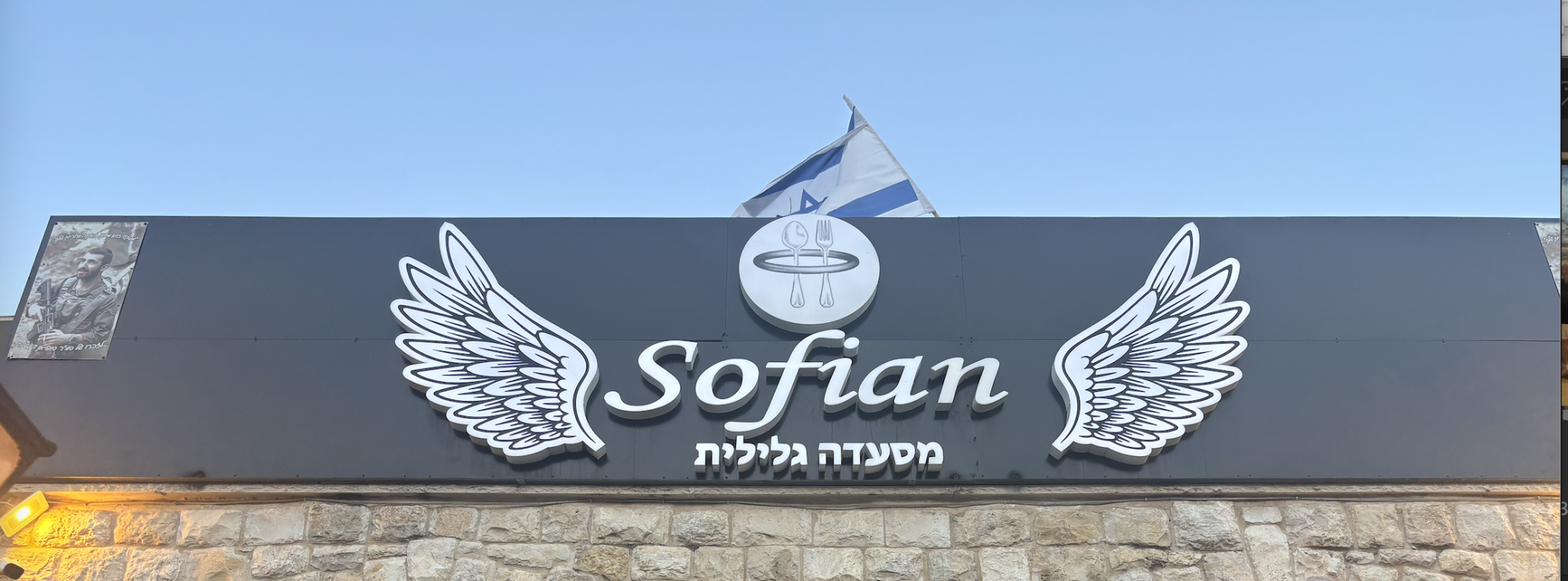
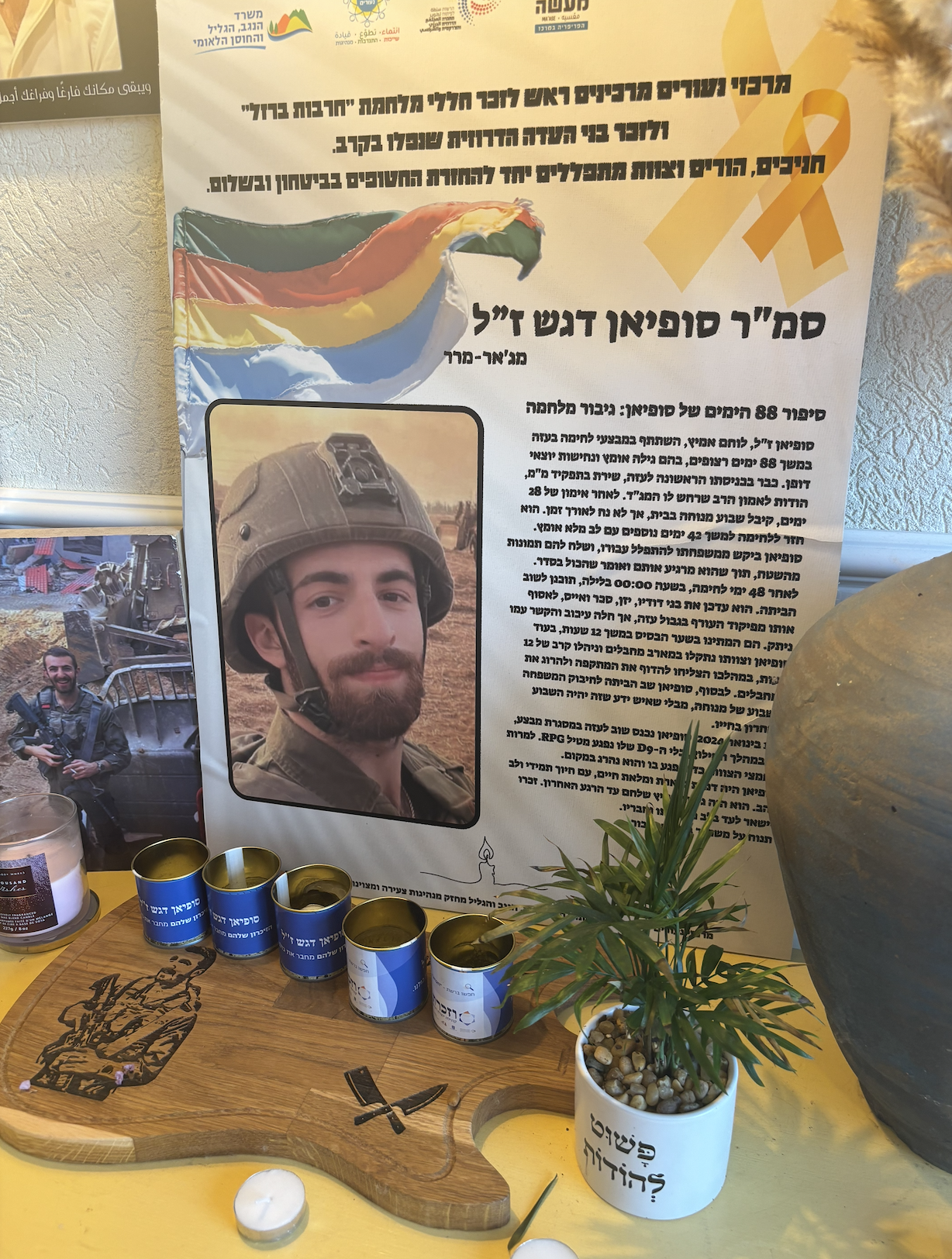 For nearly two decades, my return trips to my homeland were dedicated to typical vacations, spending time with family, catching up with friends, and touring historic landmarks. But everything changed after October 7; now, these journeys are permanently shaped by a need to learn, remember, show appreciation, and extend a warm embrace to families experiencing profound grief. It was this new purpose that led our family to stop at “Sufian,” a restaurant in Maghar. We weren’t drawn there solely by its exceptional culinary reputation, but because we wanted to pause, offer our deepest gratitude, and honor a family whose world was shattered by loss, yet who continue to demonstrate remarkable resilience.
From the very first moment, we felt that we were not merely customers, but rather guests in someone’s home. Sufian’s father welcomed us with a smile, the kind of smile that only someone carrying immense pain knows how to wear. He sat beside us and began to talk about his son, as his tears mingled with our own.
Sufian Dagash was a combat engineering soldier. He was a young man with a bright future ahead of him. He was offered a spot in the officers’ training course, and he had dreams of studying, integrating into the tech world, and building a life for himself. Alongside these dreams, he also planned to be a partner in his parents’ family restaurant.
Then came January 2, 2024. It was supposed to be a day of celebration, marking the grand opening of the restaurant. On that exact day, the family received the most devastating news imaginable, learning that Sufian had fallen in combat. I tried to imagine that moment: the incomprehensible shift from the excitement of a grand opening to the greatest tragedy a family can endure.
For those unfamiliar with the intricacies of Israeli society, the relationship between the Jewish majority and the Druze community is historically described as a “covenant of blood” (Brit Damim / ברית דמים). For decades, Druze citizens have served in the Israel Defense Forces, fighting and tragically falling shoulder to shoulder with Jewish soldiers. Yet, sitting in that restaurant in Maghar, it becomes clear that this bond goes far beyond a shared fate on the battlefield; it is a profound “covenant of life” (Brit Chaim). It is a partnership forged in shared dreams, mutual respect, and around tables laden with food, where tears and hopes are shared as one extended family.
As the father shared his story, I looked around. The restaurant was full of people, plates were coming out of the kitchen, children were laughing, and waiters were rushing between tables. Suddenly, I realized that this place is so much more than a restaurant. It is a daily choice to live. It is a way to wake up every morning despite everything, and a way to carry on Sufian’s dream, not instead of his memory, but together with it.
Later, we walked to the nearby square, just a few dozen meters from the restaurant, where Sufian’s name is honored. His father shared that a tennis court and a monument in his memory will soon be built there. This will be another place where people will stop, read his name, and perhaps ask who this young man was, allowing a new story to begin.
The food was also an integral part of this story. I have eaten in quite a few Druze restaurants over the years, but here we experienced one of the most delicious meals I have ever had. The house salad, a simple yet brilliant combination of parsley, pepper, onion, raisins, and cashews, was the kind of dish you just cannot stop eating. The vine leaves were absolutely perfect. The four fatayer pastries, baked in a taboon oven with four different fillings, provided a wonderful conclusion to a meal that felt like dining with a family you have known for years.
However, as I thought about this visit on the drive home, I understood that it wasn’t the flavors that would stay with me. What will remain are the eyes of a father talking about his son, and the gentle way he speaks of him in the present tense. I will remember the family’s choice to open the door every morning, to host, to cook, to smile, and to continue moving forward despite a longing that never fades.
We live in an era where it is all too easy to scroll past these stories without stopping. Another name, another photo, another bereaved family. But behind every name, there is an entire world that will never return.
This ‘Covenant of Blood’ between the Druze and the Israelis reminded me of the famous Israeli song ‘Brit Damim’ (Covenant of Blood), which tells the heartbreaking story of two 19-year-old soldiers named Yuval Harel who died in the First Lebanon War. The song recounts how one family’s initial relief, after being wrongly notified of their son’s death, turned to devastation just two days later when they learned their own son had indeed fallen. https://youtu.be/Wpz2lPeAj44?si=3keF6Xh71wXk10OF
The lyrics weave together profound cultural references, including the Binding of Isaac and the Kol Nidrei prayer, to capture the heavy price of life in this land. The title, ‘Brit Damim,’ is the same term used to describe the historic bond between the Jewish and Druze communities. Today, these words resonate deeply with the pain of Sufian’s family and the eternal covenant that binds us all together.
Related Topics
Related Posts