
The views expressed herein are solely mine.
Mossad Should Aid Bukele and Smash Haiti’s Gangs
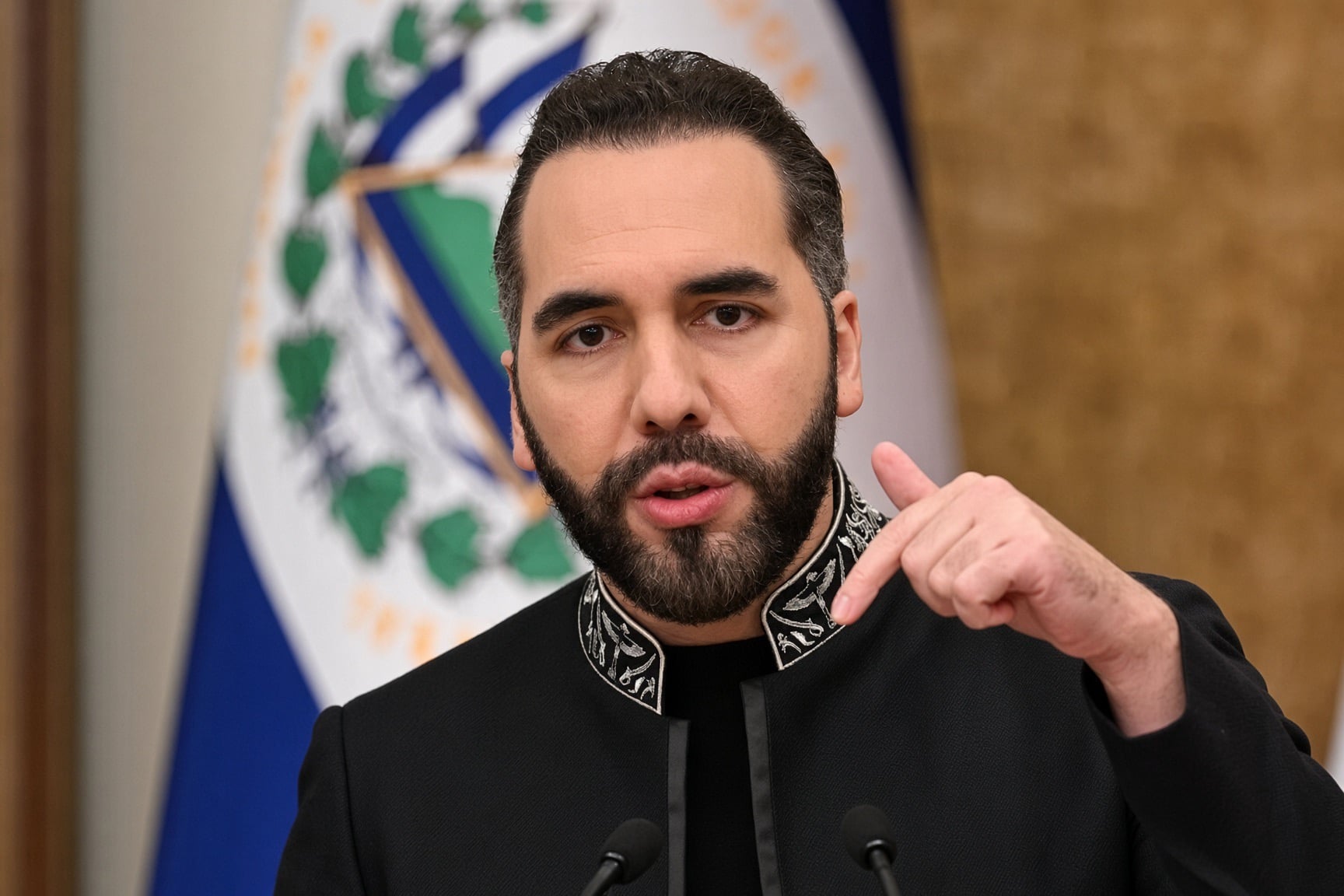
El Salvador's President Nayib Bukele has pursued a sweeping crackdown on gangs in his home country. Source: Marvin Recinos / AFP.
Following the high-profile ambush of four Salvadoran aviation technicians in Haiti just days ago, President Nayib Bukele ordered a targeted military operation this week to recover his citizens. The crisis erupted on October 18, 2026, in Croix-des-Bouquets, where local gangs swarmed the technicians’ armored vehicle with heavy small-arms fire and explosives. Forced to flee on foot, the men inadvertently retreated into territory controlled by the Chen Mechan group. Recent reports indicate that Claudy Célestin—the gang’s longtime leader and a former employee of the Haitian Interior Ministry—personally approved and directed the abduction. While Bukele responded swiftly by deploying Salvadoran special forces and issuing public warnings, conventional pressure has utterly failed to secure the men’s release.
To break this deadlock, Israel’s Metsada special-operations element supplies the exact capabilities required for such a high-stakes rescue. As the Mossad’s covert-operations wing, Metsada specializes in insertions, extractions, and precision targeting within hostile environments. This surgical approach mirrors the legendary 1969 Cherbourg Project, in which Israeli naval and intelligence officers extracted 5 missile boats from a French shipyard despite an active arms embargo. By leveraging commercial cover, precise timing, and immediate departure, those operators moved high-value assets out of hostile control without leaving a sustained footprint. Today, these same tactical principles are needed to save the four technicians held captive in the Port-au-Prince suburbs.
Executing such an operation, however, requires overcoming the formidable weaponry fielded by Haitian gangs. In the same Cul-de-Sac plain where the ambush occurred, Haitian police have previously seized Barrett M82 anti-materiel rifles and surplus .50-caliber ammunition originating from the Dominican Republic. Compounding this firepower, gangs now routinely deploy commercial drones for tactical reconnaissance—a trend underscored by separate reports documenting over 2,000 weaponized drone strikes in the capital region by private contractors. Because an open assault would expose rescue forces to these lethal systems and trigger catastrophic escalation, a more sophisticated approach is vital.
Fortunately, Metsada planners can neutralize these technological advantages by deploying advanced Israeli electronic-warfare systems. Specialized jamming packages can instantly disrupt gang communications, while counter-drone sensors and interceptors deny aerial reconnaissance during the critical operational window. Concurrently, SIGINT can pinpoint both the hostages and the command node that ordered the ambush. Once localized, operators utilizing short-duration commercial cover—such as technical assistance or marine logistics—can extract the four men via small boat or helicopter. Just as the Cherbourg teams sailed their boats out the moment a window opened, the same dynamic of immediate departure applies here.
Letting this rescue serve as a catalyst, the extraction can generate the precise targeting data needed to eliminate the ambush’s architects. Célestin’s Chen Mechan group operates inside the broader Viv Ansanm coalition led by Jimmy Cherizier, a warlord for whom the U.S. State Department has offered a $5 million reward. A successful recovery operation would yield invaluable location and network data on both Célestin and higher-tier Viv Ansanm figures, advancing the U.S. reward program while protecting international personnel. Through this cooperation, Israel would demonstrate its operational competence in the Western Hemisphere, while El Salvador—already a consistent security partner that uses Israeli hardware—would gain a proven method for safeguarding its deployed personnel.
To convert this single rescue into a standing, long-term capability, the two nations should first establish a dual-use marine-research and logistics platform on Dominican territory near the Hispaniola channel. Hosting Metsada liaison officers, Salvadoran special-operations personnel, and Israeli electronic-warfare assets, this platform would operate under the cover of providing coastal security assistance to Dominican authorities. From this hub, operators could launch rapid extractions, map gang networks, and interdict the flow of arms and drone components from Dominican sources, all while maintaining a small, deniable footprint.
Simultaneously, the two governments should launch an Extraction and Rewards Pact, with participation from the U.S. Rewards for Justice program. Under this initiative, Metsada would supply targeting packages and extraction planning against specific high-value figures targeting international personnel. Confirmed locations or captures would trigger existing U.S. reward mechanisms, creating a self-reinforcing loop in which Salvadoran forces provide local knowledge and post-extraction custody. By limiting the compact to discrete operations, the partners preserve the core Cherbourg principle of minimal footprint.
Haitian gangs have already proven their capacity to ambush and hold international personnel, and conventional responses have yielded no results. The Cherbourg model, backed by Metsada’s specialized systems, offers a definitive alternative rooted in commercial cover, electronic suppression, and rapid extraction. By implementing these measures, leadership can turn an isolated crisis into a durable security tool—one that serves El Salvador, advances U.S. counter-gang objectives, and positions Israel as an effective partner where broader international missions have struggled.
Related Topics