
New Blood Test Detects Early Breast Cancer, Predicts Recurrence
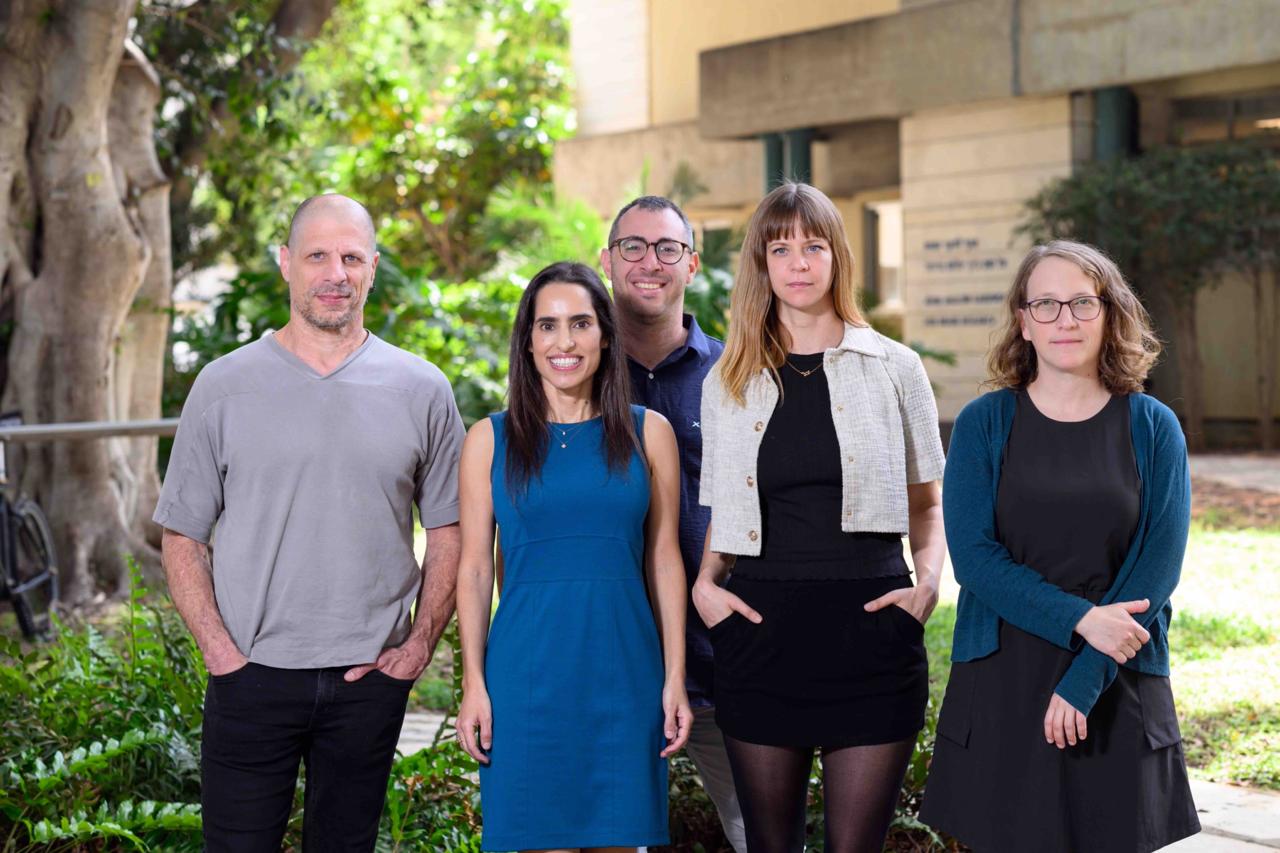
Researchers from the Weizmann Institute of Science and the Hebrew University decode the epigenetic signatures of breast tumors, including those associated with hidden populations of aggressive cells.
One of the greatest hopes in oncology over the past decade has been a simple blood test capable of detecting cancer at its earliest stages, helping physicians select the most appropriate treatment, and even assessing the risk of recurrence. Known as liquid biopsies, these tests work by identifying traces of cancer cells circulating in the bloodstream. While they are already being used to personalize treatment for some patients, they still face challenges in detecting cancer early in the general population or predicting whether the disease will return after treatment. One reason is that, in the earliest stages, cancer-related genetic material in the blood is extremely scarce and difficult to detect without generating false positives, results that suggest cancer is present when it is not.
Now, researchers from the laboratories of Professor Efrat Shema of the Weizmann Institute of Science and Professor Guy Ron of the Hebrew University of Jerusalem have developed a blood test capable of distinguishing women with early-stage breast cancer from healthy women with a high degree of accuracy. The test also outperforms conventional tissue biopsies in assessing the risk of recurrence after treatment. The findings, published in Nature, are the result of a collaboration with physicians at Kaplan Medical Center in Rehovot. Together, the researchers decoded the characteristic epigenetic signatures of breast tumors and identified a particularly aggressive population of cells hidden within them.
If DNA is the recipe book that every cell in the body keeps on its shelf, epigenetic marks are the sticky notes and bookmarks that tell the cell which recipes to follow and how often to use them. In cancer cells, problems can arise both in the recipes themselves, through genetic mutations, and in the instructions for using them. Although breast tumors are already classified and treated according to their gene-expression patterns, the epigenetic marks that help regulate these patterns have not yet been fully mapped. In the new study, Dr. Noa Furth and Dr. Christina Riemenschneider from Shema’s laboratory, together with Yishai Arieli from Ron’s group, set out to decipher the epigenetic signatures of breast tumors.
We recruited 12 women who were scheduled to undergo surgery to remove their tumors, Furth recalls.
After a tumor is removed, there is only a short window of opportunity before its epigenetic marks begin to deteriorate. As soon as each surgery started, the physicians would notify me. I would quickly transport the tissue sample from the hospital to our laboratory on ice, and we would begin analyzing it that very day.
After mapping the epigenetic signatures of breast tumors from several women, the scientists looked for a way to detect these signatures in blood samples to enable early diagnosis. They built on a technology developed by Shema that takes advantage of a natural process: when cells die, they release nucleosomes, segments of DNA wrapped around proteins, into the bloodstream. Cancer cells are no exception.
Using single-molecule microscopy and fluorescent markers that recognize dozens of different epigenetic marks, the technology can map epigenetic changes across millions of nucleosomes. In fact, in a 2022 study, the team had already demonstrated its potential to detect early-stage colorectal and pancreatic cancers through a blood test.
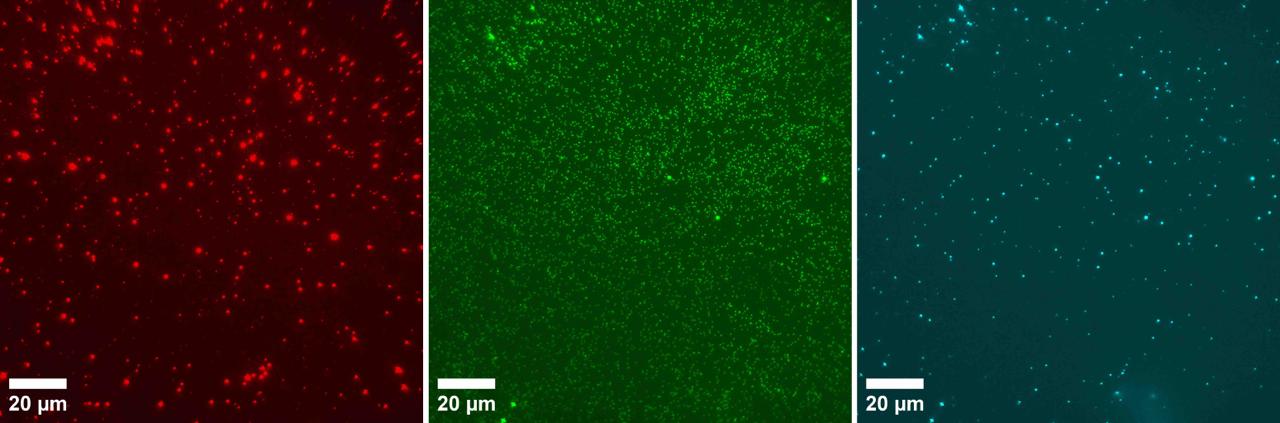
Shown in the image are circulating nucleosomes in the bloodstream (green, center) and two different types of epigenetic marks present on the nucleosomes (red, left, and blue, right).
Importantly, collecting all these molecular measurements represented only half the challenge. The researchers also needed to identify meaningful patterns hidden within the vast amount of data. This is where Shema’s expertise in epigenetics and single-molecule technologies intersected with the quantitative approach of Ron’s physics group. The latter tackled the challenge as a problem in experimental physics, using computational analysis to identify patterns that could help detect cancer and assess the likelihood of its return.
The scientists tested their new method on blood samples from 77 breast cancer patients who had been followed for at least five years at Mayo Clinic in Florida, along with samples from 30 healthy women. They trained artificial intelligence models to distinguish between the two groups, achieving 95% accuracy in detecting early-stage breast cancer, when tumors were still confined to the breast and measured no more than two centimeters.
Breast cancer screening saves lives,” says Shema. “Regular mammograms reduce the risk of dying from the disease by 22%, but the denser the breast tissue, the easier it is for a tumor to ‘hide’ on the image. Our blood test performed strongly regardless of breast density. It worked equally well across different types of breast cancer and continued to perform strongly when we expanded the patient sample size to 188 blood samples, with the assistance of Sheba and Kaplan Medical Centers.
Tracking Aggressive Cells
Even when breast cancer is detected early and treatment appears successful, the disease returns in 20% to 40% of cases. One possible reason is that not all tumor cells are the same. Treatment may eliminate the majority of cancer cells while leaving behind a small population capable of driving recurrence.
During the study, the researchers discovered that even breast tumors not considered particularly aggressive can harbor a rare population of highly aggressive and invasive cells with a distinct epigenetic signature. This raised a fundamental question: How can cells with such different characteristics coexist within the same tumor? Do the aggressive cells carry genetic mutations that distinguish them from their neighbors, or can ordinary tumor cells acquire aggressive traits solely through epigenetic changes?
The differences appear to be primarily epigenetic,” explains Shema. When we grew breast cancer models in the laboratory from non-aggressive cells, an aggressive population invariably emerged.
The scientists suspected that these aggressive cells might be among the main drivers of cancer recurrence.
When we searched for their epigenetic signature in blood samples, we found that the more prevalent it was, the greater the risk that the disease would return,” says Ron. “Using this signature and additional epigenetic markers, we were able to distinguish, with 81% accuracy, between patients whose cancer recurred during follow-up and those who remained recurrence-free. The test even identified recurrence risk in patients considered low-risk by conventional measures.
There is growing evidence that cancer cells exploit their epigenetic flexibility to change their behavior, become more aggressive, and evade treatment,” Shema adds. “The methods we developed allow us to track aggressive cell populations across different types of cancer. In the future, they may help us not only predict recurrence but also find ways to prevent it. We are now searching for treatments that could deprive cancer cells of their epigenetic flexibility and perhaps even encourage cells that have already become aggressive to adopt less aggressive characteristics.
About the Weizmann Institute of Science
The Weizmann Institute of Science is one of the world’s leading multidisciplinary research institutions. Located in Rehovot, Israel, it ranks sixth worldwide in the Leiden Ranking for research impact. With more than 5,200 scientists, laboratory technicians, and students, the Institute fosters a vibrant international culture characterized by scientific excellence, interdisciplinarity, and collaboration among researchers from around the globe.
Follow the Friends of Weizmann
Website: www.amigosdoweizmann.org.br
Facebook: Friends of Weizmann – Brazil
Instagram: @weizmann_brasil
LinkedIn: Weizmann LATAM