
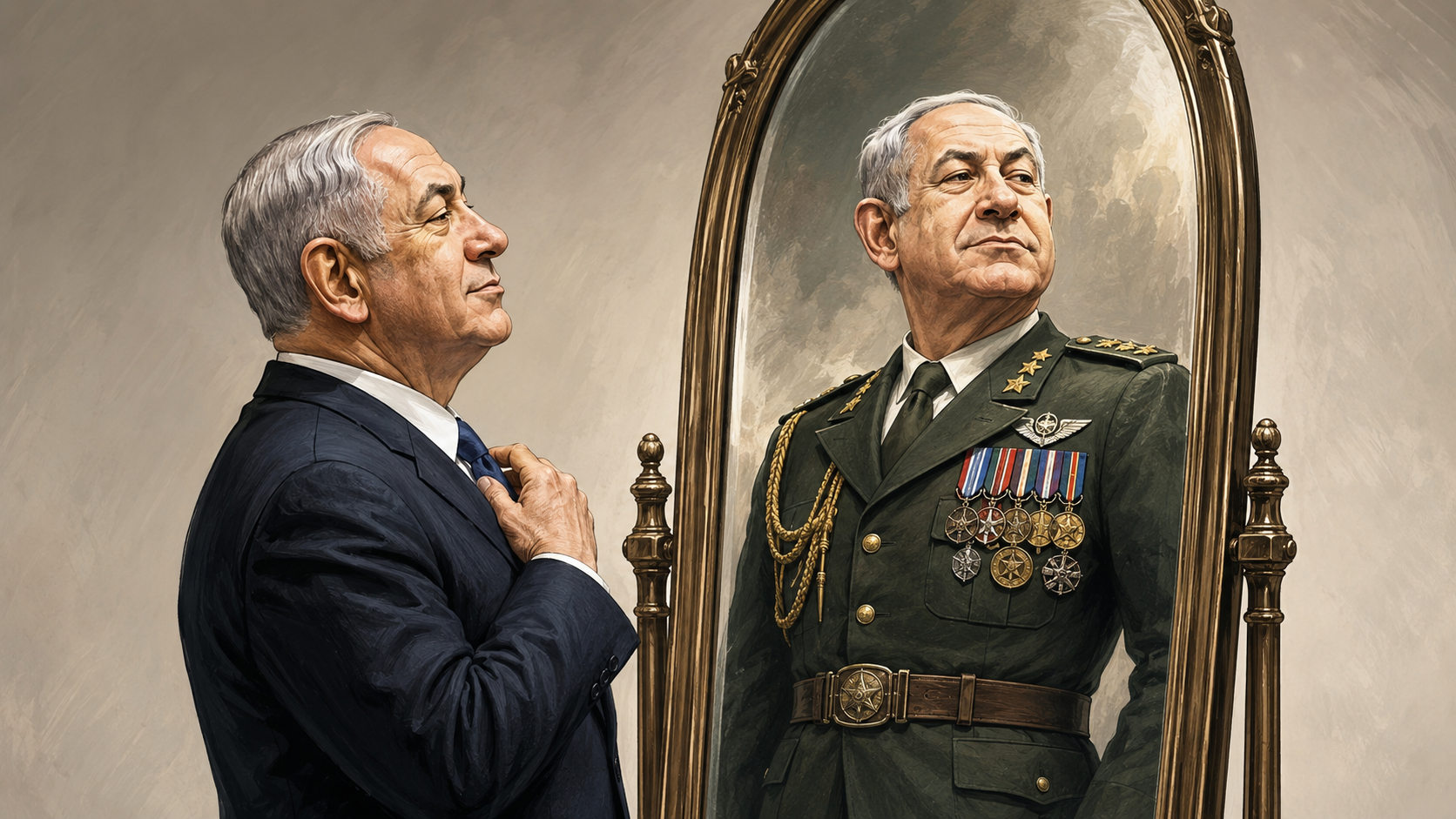
Mr. Security, or Mr. Self-Confidence?
Nearly three years after October 7, it is still too early to summarize, but not too early to see patterns.
Wars have no winners, only those who lose less. But they have objectives. And in democracies, the government and the prime minister are ultimately responsible for these objectives. Netanyahu said so himself. Several times.
So let us apply the least ideological test there is to the man who labeled himself “Mr. Security” for years. Only what was promised versus what was achieved.
Regarding the hostages, the declared strategy was clear: only military pressure would bring them home. That claim justified rejecting deals, dismissing critics, and branding compromise as surrender. In the end, the decisive returns came through agreements. Only eight living hostages were rescued by the IDF over two years of fighting.
But the sadder reality is that hostages were killed in failed rescue attempts, as troops closed in, in Israel’s airstrikes, murdered in captivity, while the government assured that pressure is the only way to save them. Military pressure may have mattered at the margins. But the central claim, that pressure itself was the path, was not vindicated. The strategy’s price was paid in human beings, while an earlier deal sat on the table.
Behavioral science calls this trap escalation of commitment. Once leaders invest lives, reputation, and national identity in a strategy, negative feedback does not make them update. It makes them double down. The more painful the cost, the more unbearable it becomes to admit that an earlier alternative might have been better.
Then there is Hamas. Israel inflicted devastating damage, no doubt about it. But this is far from the “total victory” we were promised. Eight months into the ceasefire, Hamas refuses to disarm or even discuss it. It has consolidated control over nearly half the Strip while Israel holds the other half. And the technocratic committee meant to govern Gaza has yet to arrive. That is not total victory. And don’t even mention Hamas in the West Bank.
Iran tells a similar story. Two rounds of war produced impressive blows: leaders eliminated, facilities struck. But a strike is not a strategy. The aim was to neutralize the nuclear threat and overturn the regime. The threat is live and kicking, and the regime still stands. Iran’s stockpile of highly enriched uranium has not been handed over. The IAEA admits it has lost track of it and can only “estimate” that it still sits at Isfahan, uninspected for nearly a year. More of a slap on the wrist than a victory.
Qatar makes the same point in miniature. The strike on Hamas figures in Doha, in the middle of ceasefire talks, was sold as boldness. The main targets survived. Netanyahu apologized for violating Qatari sovereignty, and within days, Trump signed an executive order declaring that an armed attack on Qatar would be treated as a threat to the peace and security of the United States. The country that bankrolled Hamas for years, with the blessing of Netanyahu’s own governments, became a protected American asset.
A clear strategic gain. For Qatar.
We were promised a “new Middle East.” We got an unfinished war in Gaza, a third Lebanon war, two rounds with Iran, and threats from the Houthis, Iraq, Syria, and the West Bank. If this is the new Middle East, the old one is starting to look almost nostalgic.
And here is the pattern: Eliminate a commander, declare a turning point. Hit a facility, call it historic. Kill a leader, wait for the replacement, repeat. Hamas and Hezbollah have been “defeated” twice. Iran once and a half. The Houthis – we lost count. As if we were inside a video game where every eliminated enemy simply respawns for the next round.
In decision science, this is the difference between local and global optimization: winning the battle but losing the war. Each operation can look rational in isolation. But strategy is not a collection of impressive actions; it is the disciplined connection between action and outcome. Besides, if the achievements were so immense, there would be no need to manufacture narratives.
This is called overprecision: excessive certainty that our reading of reality is the correct one. Power makes it worse, because it removes the friction that forces recalibration. A confident leader can be useful in a crisis. A leader who cannot update is dangerous.
The fairest version of the argument gives Netanyahu full credit: Hezbollah was badly hurt, the axis weakened, the nuclear program delayed, and some operations extraordinary. Still, the strategy failed. After so much time, so much loss, and so many declarations of historic victory, the central threats are still here, the hostages came home mainly through deals, Hamas and Hezbollah are not eliminated, and Iran is not neutralized.
In any serious organization, a CEO who repeatedly missed the targets he himself set would have to explain the gap. Somehow, when the stakes are human lives and national security, the rules relax. But without accountability, leaders who err cannot learn from their mistakes.
The problem is not that Netanyahu made mistakes. Everyone does. The problem is that after the longest war in Israel’s history, we have yet to hear our leader say, “I was wrong”. Maybe it is because Israel’s “Mr. Security” is actually “Mr. Self-Confidence”. And self-confidence without accountability is not a national security doctrine. It is a cognitive risk factor.
Maybe Israel does not need another leader who promises total victory. Maybe it just needs one capable of saying, “I don’t know. Let’s reassess”. In our current reality, that alone would be a major upgrade.