Mr. Trump, the Weapons Are in Safe Hands
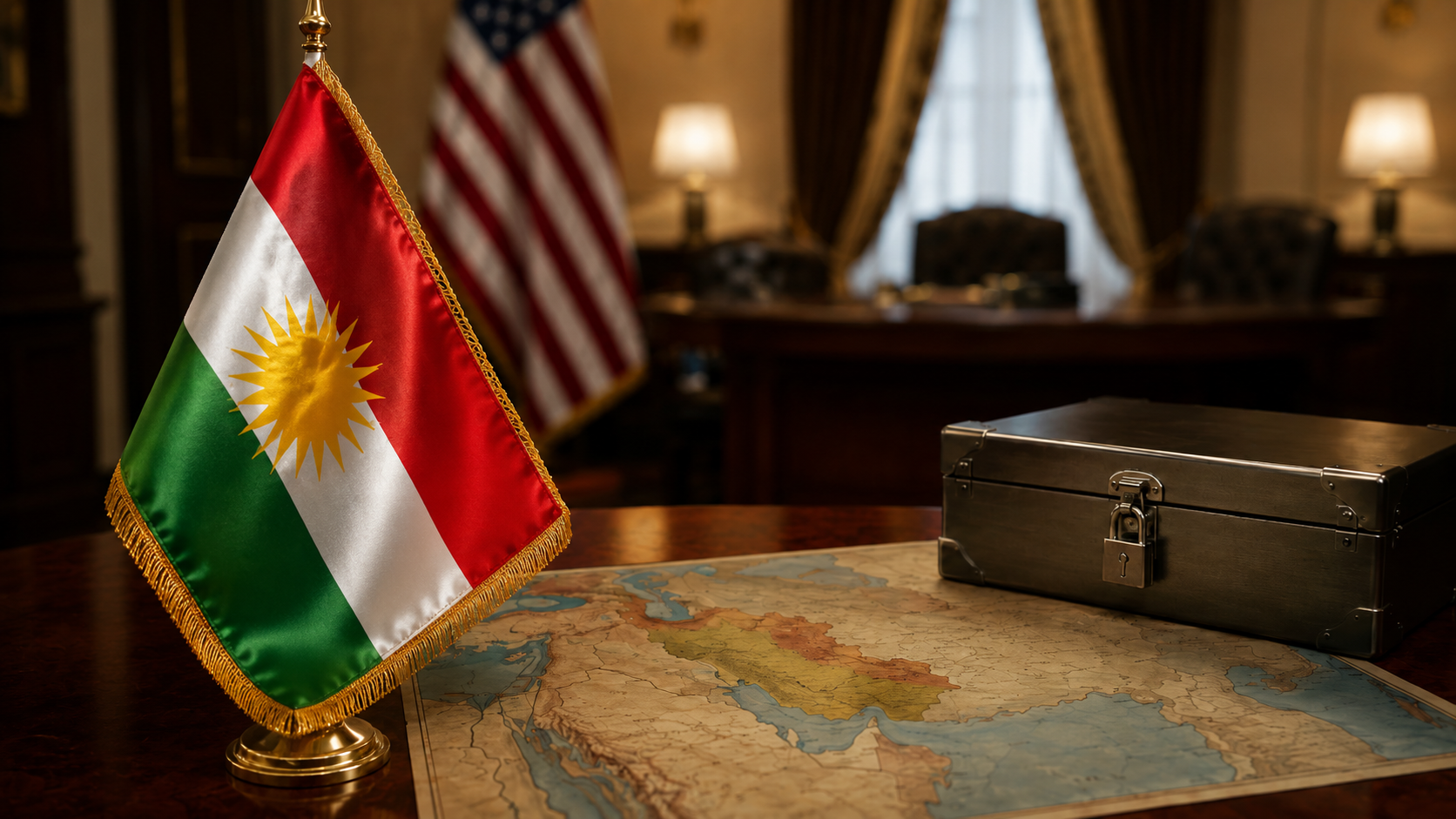
Kurds Are Not a Bargaining Chip; Kurds Are an Equation
A Political Response to Donald Trump on the Kurds, Weapons, Present-Day Iran, Turkey, and the Region
President Donald Trump’s remarks about the Kurds, weapons, protests inside present-day Iran, and Kurdish forces’ possible role in regional equations cannot be ignored. When the President of the United States says he is “disappointed in the Kurds,” claims that weapons intended for Iranian protesters through the Kurds did not arrive, and says the Kurds “take, take, take,” a clear, political, and direct response is necessary.
This response is not written out of hostility toward America or Israel, nor in denial of shared interests. It comes from a nation that has stood for decades against terrorism, tyranny, the Islamic Republic of Iran, ISIS, and Turkey’s expansionist policies — a nation repeatedly used as an ally, yet sacrificed at decisive moments because of great-power calculations and regional pressure.
Mr. Trump, I heard your words and understood their message. But much of this is meant for media consumption. In politics, what is said publicly is not always the real policy. Often, real policy is what remains unsaid: what is discussed behind closed doors, in security meetings, strategic calculations, and confidential contacts. Therefore, I do not view your words merely as an attack. They may also contain a message, pressure, a political test, or preparation. But one thing must be clear: the Kurds cannot be pushed away from their historical path through media pressure, public blame, or humiliating language.
Mr. Trump, you know, and I assure you, that the place of what you refer to as America’s weapons is safe. Those resources, whatever they were and however they were defined in your calculations, are in trustworthy, responsible, and aware hands. What is entrusted to the Kurds will not disappear, fall into irresponsible hands, or be diverted from its historical path. Any capacity placed in Kurdish hands will be used at the proper time, within the framework of Kurdish national interests, legitimate defense, and the struggle against tyranny, terrorism, and the enemies of freedom.
The Kurds are not rootless, irresponsible, or aimless. Their strategic position, political memory, and field experience cannot be dismissed by one accusation or moment of dissatisfaction.
But the main question is this: if there truly was a plan in which Kurdish forces, alongside American and Israeli air pressure, were to play a decisive ground role in weakening or ending the Islamic Republic of Iran, why did you step back at the last moment? Why was the green light suddenly turned off? Did the reality on the ground change, or was it pressure from Turkey? Was the retreat caused by concern for the Kurds, or by fear of Ankara’s anger?
Should America, with all its global power, allow Turkey to hold veto power over its Kurdish policy and the future of present-day Iran? If America submits to Turkish pressure at a historic moment instead of trusting the Kurds, not only will an opportunity for change in present-day Iran be lost, but a dangerous message will be sent to the region: that Turkey can hold America’s Kurdish policy hostage.
We do not speak to you in the language of hostility, nor portray America as the enemy of the Kurds. On the contrary, the interests of the Kurds, America, and Israel intersect: containing the Islamic Republic, confronting terrorism, preventing extremism, supporting oppressed nations, defending a new regional order, and creating a new balance in the Middle East.
I believe America’s overall and final policy, if shaped according to Washington’s long-term interests, must be to support the Kurds in the region. This is not emotional rhetoric; it is the result of geography, security, history, and shared interests. America may hesitate, delay, retreat tactically, or face regional pressure, but the strategic reality does not change: the Kurds are among the most natural, serious, and reliable allies of America and Israel in the Middle East.
Yet real alliances are not built by blaming allies. They are built through respect, clarity, courage, and consistency. One cannot expect the Kurds to fight in the hardest battlefields and then abandon them at the last moment under Turkish pressure. One cannot ask the Kurds to be part of a historic plan while leaving their future unclear.
The Kurds are not a tool, a temporary card, rented forces, or a bargaining chip. The Kurds are an equation. A deal can be signed, hidden, changed, or canceled. But an equation cannot be ignored. In Iraq, Syria, Turkey, and present-day Iran, the Kurds are a living, organized, rooted, and decisive geopolitical reality. Any power that understands the Kurds can change the regional balance in its own favor; any power that ignores them will eventually pay the price.
Mr. Trump, the Middle East is not managed by speeches, but by equations, and the Kurds are one of its most important pillars. Against ISIS, in Syria and Iraq, Kurdish forces and the Peshmerga paid a price many states avoided. In present-day Iran, the Kurds have faced repression, execution, assassination, discrimination, imprisonment, and war since the first days of the Islamic Republic.
Your view of the Kurds has had two faces. On one hand, you have described them as brave fighters, effective forces, and important allies against ISIS. This is true. On the other hand, when the issue moves beyond the battlefield toward political rights, self-determination, the future of the Kurds, and America’s relationship with Turkey, support often becomes limited, conditional, or suspended. This duality is the core problem of American policy: the Kurds are praised on the battlefield but left alone at the political table.
You once said that the Kurds fight for their own land. Yes, they fight for their land, people, freedom, and future. But that statement also suggested that America sees their war as ultimately their own, without accepting full political responsibility for their future. You also said, “The Kurds are not angels.” For many Kurds, this was bitter, because it seemed to reduce the moral burden of America’s retreat.
This logic is familiar to the Kurds. When they appear as security partners, they are praised; when they demand political status, they face caution, silence, or retreat. This is not only about you personally. You may express it more directly and bluntly, but the same logic existed before you. Great powers have often valued the Kurds as an effective security force, but when the issue becomes self-determination, self-administration, or guarantees for the Kurdish national future, support becomes limited and subject to larger geopolitical deals.
Your political character also matters. You came from the world of business, deals, cost, profit, and bargaining. But nations cannot be judged only through deals. The Kurds are not a temporary contract or a short-term security project; they are a historic nation with geography, memory, sacrifice, flag, culture, language, aspiration, and political rights. Reducing them to a tactical security partner is exactly the view we reject.
If the goal is to end the Islamic Republic of Iran, reality must be accepted: it cannot be defeated only from the sky. Airstrikes can destroy infrastructure, disable defense systems, target military centers, and weaken repression. But the overthrow of a security-based, ideological regime requires ground forces, social forces, political forces, internal networks, popular will, and rooted actors within the geography of present-day Iran.
In this equation, the Kurds are not marginal. From the west of present-day Iran, Kurdistan can be one of the most important fronts against the Islamic Republic. The Kurds have experience, geography, organization, motivation, political memory, and knowledge of the enemy. But this capacity can succeed only if treated with respect and political guarantees, not with a temporary and instrumental view.
Mr. Trump, you said the people of Iran wanted to come into the streets but had no weapons. But was the absence of weapons the only obstacle? Or were the lack of a clear political plan, lack of trust, lack of guarantees for oppressed nations, and retreat at the critical moment also part of the problem? Can one ask a nation to enter a historic war without telling it what place it will have after victory? Can one expect the Kurds to shed blood while denying them a seat at the decision-making table?
With the beginning of the Iran war and the entry of America and Israel into direct confrontation with the Islamic Republic, the Kurdish issue again entered regional calculations. Media reports spoke of plans in which the Kurds could play a decisive ground role alongside American and Israeli airstrikes, followed by contacts, preparations, concerns, and then suspension or veto of the plan. If these reports are true, one must ask: why was the political burden of this retreat placed on the Kurds?
If Washington first gave a green light and then stepped back because of regional considerations, especially Turkish pressure, the Kurds should not be presented as responsible for stopping the plan. If Mossad, America, security circles, and regional actors discussed it, and if Washington’s calculations changed, then the final decision was made in Washington, not in the mountains of Kurdistan.
If the Kurds hesitated, that hesitation was not irresponsibility; it came from historical memory. The Kurds have repeatedly entered the field, sacrificed, and then been left alone at negotiating tables. No nation should risk its future in plans without clear political guarantees, especially plans that could be stopped tomorrow by a phone call, Turkish pressure, a change in Washington, or a diplomatic deal.
Turkey’s role must be viewed frankly. Turkey today is not merely a NATO member; it is a state with imperial ambitions, neo-Ottoman policies, influence in Syria, Iraq, the Caucasus, Libya, the Balkans, and the Eastern Mediterranean, and deep hostility toward every Kurdish political project. Turkey does not want the Kurds anywhere in the region to achieve power, autonomy, federalism, or independence, because Kurdish success in one part of Kurdistan changes the equation of the whole region.
If the Islamic Republic destabilized the region by exporting revolution, Turkey may follow a similar path through neo-Ottoman expansion. A Turkey that becomes too powerful will not be controllable for America or Israel. For Israel, this must also be taken seriously: anti-Israel rhetoric, closeness to political Islam, support for extremist groups, attempts to lead the Islamic world, and hostility toward the Kurds are all part of a larger picture. If Israel is serious about long-term security, it must know that the Kurds are among its most natural, stable, and sincere allies.
It would be a grave mistake for America or Israel to sacrifice the Kurds to appease Turkey. Turkey is not a reliable long-term partner, not a real friend of the Kurds, and not a guarantor of regional stability. Such a state must not have veto power over America’s Kurdish policy.
Alongside the Kurds, the role of other oppressed nations in present-day Iran must not be ignored. The Ahwazi Arabs in the south have faced structural discrimination, confiscation of resources, imposed poverty, security repression, and demographic engineering, despite living on lands rich in oil and gas. The Baloch in the east and southeast also face economic deprivation, religious discrimination, executions, security repression, and structural poverty. Balochistan is not merely a deprived region; it is a political, social, and human geography under pressure from the central state, and it can play an important role in any real plan for change.
Any plan for the future of present-day Iran that sees only Tehran and ignores Kurdistan, Ahwaz, Balochistan, and other oppressed geographies is incomplete from the beginning. Present-day Iran is not only its capital or Persian-centered centers of power; it is a collection of nations, geographies, identities, and historical pains. If the Islamic Republic is to end, oppressed nations are not the margins; they are pillars of change.
You cannot speak of the people of Iran while ignoring the nations inside present-day Iran. You cannot speak of freedom while postponing the right to self-determination of the Kurds, Ahwazi Arabs, Baloch, and others. You cannot speak of overthrowing the Islamic Republic while preserving the same centralized, denialist, and repressive structure for the day after.
The Islamic Republic is not merely a government; it is the extreme form of a structure that denies nations. If it falls but the same centralist, security-based, anti-Kurdish, anti-Arab, anti-Baloch, and anti-non-Persian mentality remains, the crisis will not end. Real change requires recognition of national rights: self-determination, administration of one’s own land, language, culture, security, and political participation.
For this reason, the Kurds cannot be merely the ground force of a plan. They must be political partners in the future. If you expect the Kurds to play a historic role, you must recognize their historic status. If you expect them to enter the field at a moment of danger, you must seat them at the moment of decision-making.
The Syrian experience proves this lesson. In Rojava, Kobani, Raqqa, and northern and eastern Syria, Kurdish forces were America’s main partners against ISIS and fought not only for themselves but for the world. Yet after ISIS weakened, their political future again entered a gray zone. In 2019, America’s withdrawal from parts of northern Syria and the opening of the way for Turkey’s attack left a deep wound in Kurdish political memory. The question today is the same: are the Kurds wanted only for security needs, or will they be recognized as political partners?
The pattern must end: during war, Kurds are called extraordinary fighters; during politics, they are told to wait for others’ decisions. Even the Islamic Republic sometimes calls the Kurds “brave border guardians,” and some foreign powers highlight them as “good fighters” against ISIS. In both views, the danger is the same: the Kurds are seen through their security role, not their political rights.
The main Kurdish issue is transforming security role into political status. Military capability alone cannot guarantee a political future. If Kurdish security cooperation is not connected to a clear political program, active diplomacy, internal unity, international legitimacy, and a formal demand for national rights, the danger of being traded will remain.
Mr. Trump, you said you were disappointed in the Kurds. But who retreated at the last moment? Who turned off the green light? Who changed calculations under fear of Ankara’s reaction? Can anyone expect the Kurds to risk an entire nation without guarantees for their rights afterward?
If a plan failed, one must ask why. Blaming or insulting the Kurds is not the answer. If the truth is to be told, the whole truth must be told: What was the plan? Who accepted it? Who stepped back? Who applied pressure? What role did Turkey play? What guarantees were given to the Kurds, and what guarantees were denied?
The Kurds do not expect miracles from America or Israel. We expect respect, partnership, transparency, and consistency. We expect America’s Kurdish policy not to be written in Ankara. We expect Israel to take the Turkish threat as seriously as the Iranian threat. We expect the world to understand that the Kurds fight not only for themselves, but also for regional stability.
We are not enemies of the Turkish, Arab, Persian, or any other people. Our enemy is the policy that denies the Kurdish nation, the regimes that suppress nations, the Islamic Republic that has shed the blood of Kurds, Baloch, Ahwazi Arabs, and freedom-seekers, and the mentality that wants the Kurds during war but forgets them during politics.
The Kurds stood against ISIS. They sacrificed against the Islamic Republic. They paid the price against Turkey. They have stood against denial, discrimination, assassination, execution, and exile. Such a nation cannot be humiliated with a few sentences, wanted in moments of need, and set aside at moments of decision.
If America wants to contain the Islamic Republic, it needs the Kurds. If Israel wants long-term security against Iran and Turkey, it needs the Kurds. If the Middle East is to leave behind terrorism, imperial ambition, and the suppression of nations, it needs the Kurds. If the future of present-day Iran is to be democratic, decentralized, and free, it cannot be built without the Kurds, Ahwazi Arabs, Baloch, and other oppressed nations.
Our message is clear: do not blame the Kurds; understand them. Do not bargain with them; recognize them as partners. Do not abandon them at the last moment, because without the Kurds no great plan in present-day Iran or the Middle East will be complete.
We are ready to stand alongside any force that seeks to end the Islamic Republic, terrorism, extremism, Turkey’s expansionism, and the suppression of nations. But such cooperation must be based on respect, political guarantees, strategic partnership, and recognition of the rights of the Kurdish nation.
The lesson for the Kurds is also clear. We must not rely only on foreign praise for Kurdish courage. Military praise, if it does not become political commitment, is not enough. Security cooperation, without a clear political project, can again become a behind-the-scenes bargain. The Kurds must transform their security role into political status through national unity, a clear program, effective diplomacy, serious organization, and an independent definition of Kurdistan’s interests.
Powers usually want the Kurds when they are part of the security equation. The historic duty of the Kurds is to become part of the political equation of the region’s future: through conscious, respectful partnership conditioned upon the political rights of the Kurdish nation.
The future of the Middle East will not be written without the Kurds. Whoever understands this reality will stand on the right side of history. Whoever ignores it will repeat the mistakes that great powers have made in the Middle East.
The Kurds are not tools for others. They are a nation with land, history, blood, a flag, and a future. They are ready to play their historic role — not as unnamed soldiers in the plans of others, but as official partners in the future order of the region.
The Kurds are not a bargaining chip; the Kurds are an equation. Any regional equation that ignores the Kurds is doomed to fail.