Bridging faith. Defending truth. Confronting hate
Munther Isaac and the Theology of Moral Certainty

This image was created by Tim Orr using ChatGPT.
Western Christianity today listens most closely to voices that speak with moral certainty. This is what attracted so many to Charlie Kirk. Every podcast I can think of displays rhetoric marked by absolute confidence. This is not because those voices are always the most careful or the most theologically serious. It is because they sound confident at a moment when many churches do not. When institutions stop trusting their own foundations, they start looking for certainty elsewhere. Only later does it become clear that the confidence was borrowed—and that something important was given up in return.
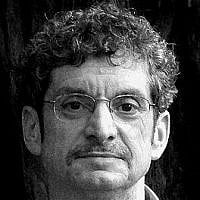
This piece isn’t about Munther Isaac as a private person, or as a stand-in for a distant conflict. It’s about him as a theological voice, and about what his influence shows about changes happening in Western Christianity. He matters because his work brings together moral certainty, hard political positions, and a form of theology that has lost much of its depth. Israel and Palestine provide the setting in which this convergence becomes visible, but the argument here is not finally geopolitical. It concerns the kind of theology now doing the church’s moral work.
Anyone familiar with contemporary Western church life will recognize the scene. A conference hall fills with pastors and activists. The language of lament, justice, and solidarity fills the room. Bethlehem, the cross, and suffering are spoken of in the same breath. The audience responds in a way that feels like worship. Yet no creed is spoken, no sin confessed, no prayer offered for enemies. The moment feels sacred, but it is no longer shaped by Christian form.
The system taking shape in these moments can be named. Call it Palestinianism. This is not Palestinian identity, Palestinian suffering, or legitimate political advocacy—all of which are real and morally serious. Palestinianism refers instead to a moral framework that functions like a religion. It names who is righteous and who is guilty, grants moral authority, and offers its own ways of seeking redemption. It presents itself as justice. Disagreement within it is not treated as error, but as moral failure.
Precision matters here. Palestinianism does not describe Palestinian Christians as such, nor does it exhaust the theological reflection emerging from Palestinian churches. There are Palestinian theologians and pastors who resist this framework, complicate it, or reject its asymmetries altogether. The term names not a people, but a moral system—one that has traveled especially well in Western church settings.
You can recognize Palestinianism by how it works in practice. One side is always treated differently from the other. Blame is spread across whole groups instead of being tied to individual actions. In essence, what has taken place is that the Christian idea of original sin has been replaced. The primary source of sin is no longer the human heart. Now this source of sin is in systems, and those systems are created by the oppressor. Once sin is located there, some people are no longer understood as fallen, but as morally innocent by definition. Disagreement stops being disagreement and starts being treated as guilt. Public shaming begins to feel like a way of fixing things. When all of this shows up together, a belief system is already doing its work, whether people realize it or not.
In practice, this system is rarely held with much clarity. Many people fall into it without quite realizing they have. Confusion at the level of belief does not prevent formation; it often makes formation easier. Moral systems usually do their work quietly. The real question is not whether people can explain the framework, but whether it keeps leading them to the same judgments, the same exclusions, the same exemptions.
Munther Isaac matters not because he invented this framework, but because he gives it a clear and widely heard voice. He talks about the conflict in simple moral terms in sermons, speeches, and public statements, saying that right and wrong have already been decided. It is clear that Christ is on one side, with one people and one story. People no longer see the cross as a place where everyone is judged and brought back together. Instead, they see it as a symbol for a political position that has already been chosen.
Isaac’s location as a Lutheran pastor in Bethlehem does more than just place him there. Bethlehem itself starts to have moral weight. It gives authority before any argument has been made. In a Western moral culture shaped by guilt and historical unease, a Palestinian Christian from Bethlehem who expresses articulate activist theology is difficult to scrutinize. Isaac is important not because of who he is, but because of the way he talks and what that way of talking lets him do. Isaac’s significance lies less in who he is than in how he speaks—and in what his way of speaking makes possible.
He has seen that much of Western Christianity is no longer looking for theology in the classical sense. It wants absolution without change, righteousness without discipline. It wants the urgency of prophecy without the limits of doctrine, moral clarity without metaphysical cost. More than anything, it wants permission to replace belief with posture. Isaac offers that permission, while quietly swapping in a different theological engine beneath familiar Christian language.
Classical Christianity works in the opposite direction. It begins with God and moves outward through incarnation, crucifixion, resurrection, and reconciliation. Ethics follow theology, not the other way around. Political judgments, when Christians make them, are meant to remain provisional—held under judgment themselves. In the framework Isaac represents, this order is reversed. Political commitments come first. Theology is reconstructed to support them. Christian vocabulary remains, but Christian reasoning no longer governs its use.
Within this framework, Christ slowly comes to mean something else. He is no longer the Logos who stands in judgment over every people and power, but a symbolic victim tied to one side of a historical struggle. The cross no longer points beyond history. It becomes a sign of present grievance. Sin is no longer universal but distributed along political lines. Salvation becomes correct alignment with a cause. Resurrection is not denied; it simply recedes from view.
That drift matters. A system built around permanent struggle has little room for an ending. Palestinianism offers no picture of history brought to rest, only resistance carried forward. Christianity’s insistence that history ends in reconciliation begins to feel less like a promise and more like an obstacle. Grievance takes on sustaining moral weight.
Like any religion, Palestinianism answers basic questions. The righteous are those who publicly align themselves with Palestinian suffering and allow no competing moral claims to stand alongside it. The wicked are Israel and those unwilling to oppose it without reserve. Zionism functions not simply as a political position but as a moral offense. Redemption comes through denunciation, boycott, ritualized outrage, and resistance.
What is taking place here is not simple politicization, but substitution. Palestinianism operates as a form of substitutionary moralism. Christ remains linguistically present, but his moral and metaphysical work is replaced. The system absorbs the guilt Christianity once diagnosed and offers the redemption Christianity once promised—without incarnation, atonement, or resurrection. Christianity becomes a vocabulary set rather than a governing faith.
A clarification is necessary here—not to assign blame, but to describe structure. When Palestinianism is compared to Islamic juridical moral reasoning, the claim is not about culture or civilization. It is about structure. Moral ways of reasoning travel. They cross religious boundaries, especially where institutions have grown fragile.
This borrowed certainty has appeal for Western Christians precisely because it does not come from within Christianity itself. Christian ethics are hard. They are paradoxical and rarely offer clean endings. Palestinianism offers clarity without ambiguity, righteousness without self-implication. What feels like prophetic courage is often borrowed confidence.
The poor are supposed to be protected, not treated as morally flawless. Grief and protest have a place in the faith, but they aren’t meant to be turned into weapons. When suffering starts to justify everything instead of calling people toward healing and change, something important has gone wrong.
What makes this especially serious is how quietly it happens. Many Western Christians think they’re simply responding with compassion. But without noticing it, they’re being shaped by a different way of thinking. Beliefs turn into stories people repeat. Doctrine becomes identity. Repentance gets replaced by public shaming. Faith starts to look like taking the right side. Little by little, the restraint Christianity once demanded fades away.
Palestinianism feels Christian because it draws on Christianity’s strongest instincts while dropping its disciplines. It keeps compassion but lets go of judgment. It keeps solidarity but lets go of repentance. It offers crucifixion without resurrection, prophecy without doctrine. In that sense, it is not Christianity’s enemy so much as its most convincing temptation.
Once the transition is complete, Christ is no longer needed. He has already done his work as a bridge. What remains is a closed moral system—one that explains everything, forgives nothing, and allows no dissent. At some point, disagreement stops being an argument and turns into a verdict. When that happens, discussion doesn’t end because everything has been said. It ends because saying more no longer matters.
For long stretches of history, Christian communities living under Islamic rule survived by learning how to live around power rather than confront it. This wasn’t really about belief or doctrine. It was about getting through the day. After a while, those survival instincts didn’t feel like decisions anymore. They were just part of life. Those in authority were never confronted. You just worked around controversial sitautions, because you live in a subordinate position to the Muslims who were in charge. But allegiance wasn’t something you said out loud. You didn’t have to say it out loud. It showed up in how you spoke, how careful you were, and in what you knew better than to say at all. From the inside, this didn’t feel like giving in. It felt normal. It felt practical—like common sense passed along over time. But it also taught people which questions were safe to ask, which ones weren’t, and where they were allowed to be certain.
Munther Isaac’s way of reasoning reflects a formation that developed over generations of his Christian as he lived under constraint. This is where survival required caution, alignment, and silence rather than open challenge. This formation doesn’t show up as an explicit embrace of another religion or ideology. It shows up as a style of moral certainty.
So when that style is taken up by Christians, it doesn’t look foreign. It doesn’t announce itself as “Islamic” or even as political theory. It feels authoritative, confident, morally settled. It tells people:
1. who is guilty,
2. who belongs,
3. which questions are off-limits.
None of this requires reading Isaac as a moral failure, or guessing at his intentions. Formation doesn’t need intention in order to work. In that sense, Isaac matters less as an individual than as a signal. The church’s eagerness to receive him tells you something about its own condition—its hunger for certainty, and its growing lack of confidence in its inherited foundations.
The pattern itself is easy enough to test. In this way of thinking, Israel is always wrong, no matter what it does. And whatever is done against Israel is never treated as a real moral problem. There is always an explanation for why it doesn’t count. When facts don’t fit the story, they’re brushed off as dishonest. Motives stop mattering. Context is treated like an excuse. What actually happens as a result barely seems to matter at all. The asymmetry remains in place even when, by any ordinary moral standard, it shouldn’t—when nothing about the situation actually justifies it.
What’s happening here is theological reasoning, but it no longer answers to Christian theology. That distinction isn’t technical; it’s decisive. Christianity does not grant moral immunity—not to nations, not to movements, not even to those who suffer. Suffering does not cancel judgment. It hands judgment over to God. The framework operating here cannot tolerate that limit. It requires exemption in order to function, and without it, it falls apart.Without it, the system collapses.
What is really at stake is not land or borders, but the question Christianity has always insisted on asking: how does history end? When resurrection and reconciliation fade from view, something else rushes in to take their place. In Palestinianism, history never comes to rest. Grievance has no end point. Forgiveness would be required for an ending—and forgiveness, taken seriously, would drain the system of the very force that keeps it going.
Western Christianity did not stumble into this situation by accident. It prepared the ground. Years of doctrinal thinning, faith reduced to therapy, and exhaustion with moral complexity left churches unsure how to speak about sin or hope at all. In that emptiness, borrowed certainty felt like relief. What began as solidarity hardened into something else entirely—a substitute for belief. This was not pressure imposed from outside. It was the consequence of what had already been let go.
Related Topics
Related Posts