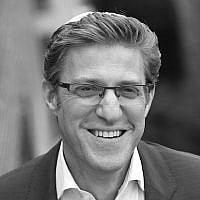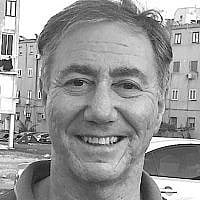
I was a Bondi Beach baby. It was our safe place.
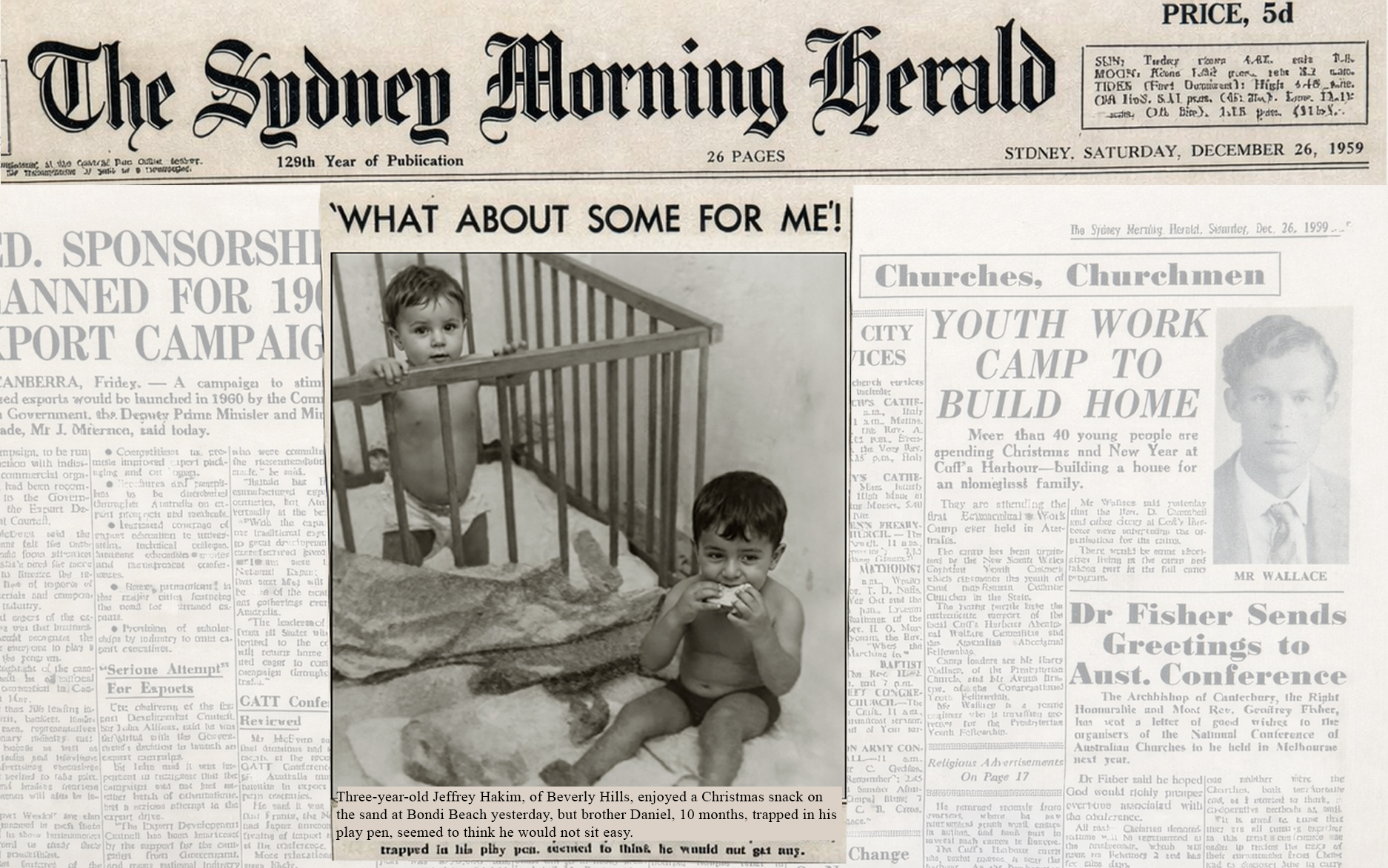
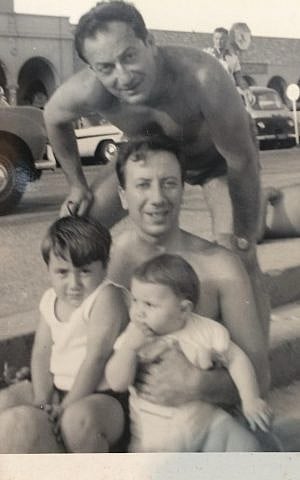
My first Christmas Day was on Bondi Beach. It was 1959, and I was ten months old. My older brother Jeff, born in Cairo, was eating a Vegemite sandwich while I watched from my playpen on the sand. A Sydney Morning Herald photographer captured the scene and ran it on page three of the Christmas edition. I must have looked like a typical Aussie baby. Few could have known I was among the first generation of Egyptian Jewish migrants born into the safety and promise of “the lucky country.”
My absorption into Australian society did not come through the classroom. It came through sports – rugby, cricket, surfing, and, later, karate. That turn was shaped by my Egyptian grandmother, who encouraged me to take up martial arts, believing it might one day come in handy. She carried the story of her own parents fleeing Odessa after pogroms and rebuilding their lives in Egypt. She passed on a quiet understanding that strength was about preparedness, not aggression.
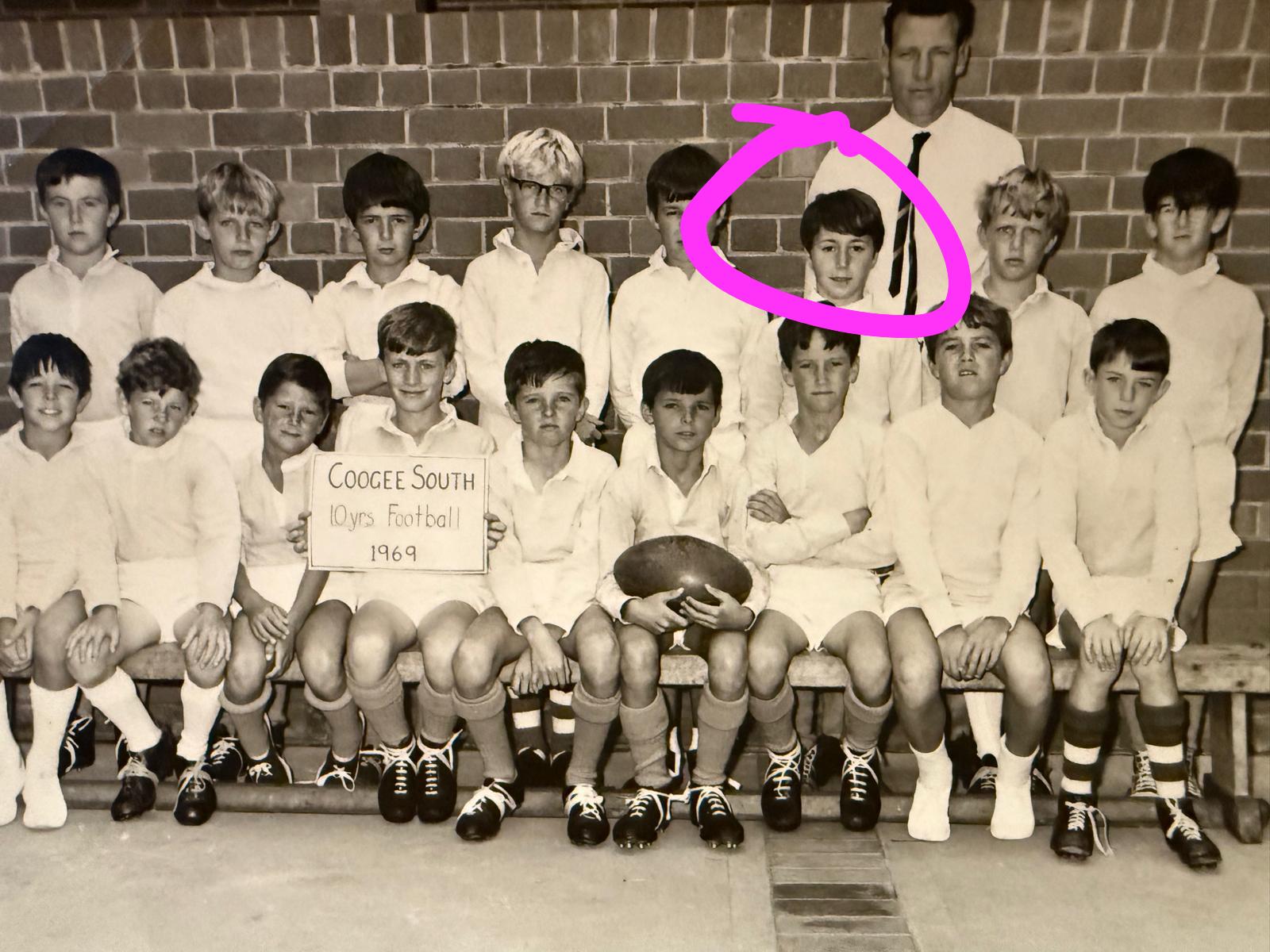
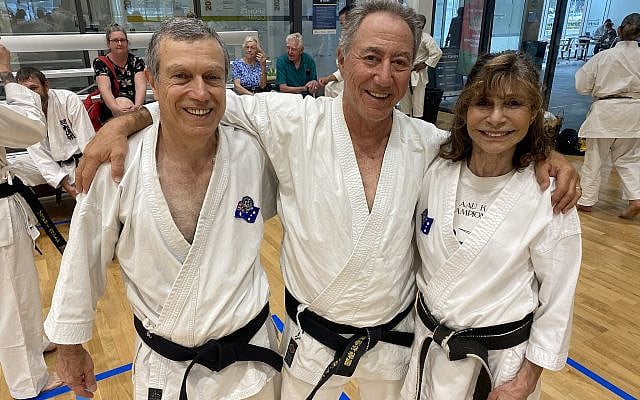
Twenty years later, I opened the Bondi Beach Karate Club. It is still operating today. Generations of Australians – Jews and non-Jews – have trained there, learning discipline, respect and responsibility. We even produced a few world champions.
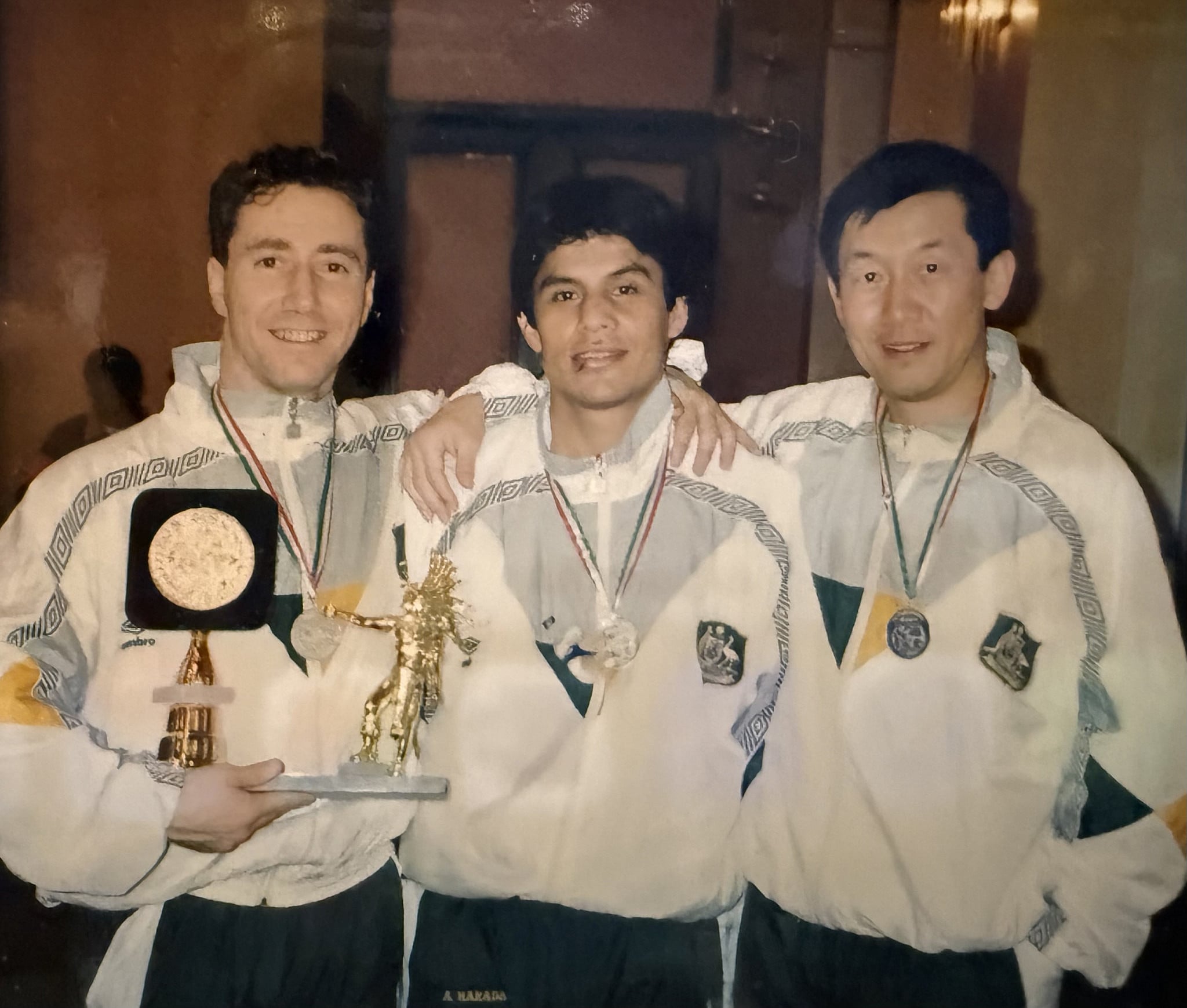
Twenty-five years after that first Christmas on the beach, I found myself representing Australia in the Tokyo Olympic Stadium in the inaugural Shotokan World Karate Games. Wearing the green and gold, I felt deep gratitude for a country that had given me freedom, opportunity, and belonging. Our national team reflected Australia at its best: Migrants from Lebanon, Iran, Peru, Hong Kong, Egypt, and Greece – and me, the token Jewish Australian. We represented our country proudly, while remaining rooted in our diverse communities.
For Jewish Australians of my generation, Bondi Beach was never just a beach, it was a meeting place and a social anchor. From the 1960s through the 1980s, the central steps in front of the Bondi Pavilion were known as “Little Jerusalem,” a playful name that reflected both presence and belonging. The stretch of sand below became a gathering spot for Jewish immigrants and, later, their children. As teenagers, it was where we met friends and, as we joked at the time, checked out the Jewish chicks.
Behind the Pavilion – exactly where the recent massacre occurred – elderly Jewish Holocaust survivors would sit for hours playing chess and checkers. Many of us remember the familiar refrain: “Meet you later at the Jerusalem Steps.” It was a place that symbolized safety, continuity, and community.
When I later made aliyah and moved to Israel, many Israelis would ask me with genuine puzzlement why I would want to leave Australia, “the Garden of Eden.”
Looking back now, it is striking how instinctively we assumed that such places of ordinary Jewish life would remain untouched.
That is why the antisemitic killings at Bondi struck with such force. This was an attack on a place – and a sense of safety – patiently built across generations.
Trauma in the 80s
In the early 1980s, long before “community security” became a standard part of the lexicon, a small group of us co-founded what became the Jewish Community Security Group. It was not born of paranoia, but foresight. Jewish history teaches that optimism without preparedness is fragile.
That foresight was grounded in experience. In 1975, I was among around twenty Jewish students attacked by approximately 150 Arab men on the Macquarie University library lawn. We were holding placards. They came armed with sticks, iron bars, and knives during a rally at which a Palestinian Holocaust denier was speaking. It was the first time in my life that I had to physically defend myself to survive. It was traumatic, and it stayed with me.
In 1982, a bomb exploded at Sydney’s Jewish Hakoah Sports Club, the building that housed my Bondi Beach Karate Club. These events are rarely recalled today, but they shaped a generation that understood that distance offers no immunity.
In 2002, Islamist terror struck Australians overseas. Eighty-two Australians were murdered in the Bali bombings. Today, a memorial mural on Bondi Beach honors those victims.
Back then, the worst danger was overseas. Now, Australians are being murdered at home, on their own beach, during Hanukkah, the festival of light over darkness.
After October 7, chants of “death to the Jews” echoed outside the Sydney Opera House and on the Harbour Bridge. Reporting suggests the perpetrators of the horrific Bondi Beach violence had attended such demonstrations. If confirmed, this matters. It points not to randomness, but to a continuum – hatred normalized, then enacted.
For Israelis, this moment feels tragically familiar. What Jewish Australians are experiencing now echoes October 7: the shock of realizing that hatred has reached places once thought safe.
Australians are mourning Bondi. Surf Life Savers all over Australia are mourning.
Jews across the world are mourning Bondi.
Australian Jews in Israel feel this loss doubly — grief collapsing distance, binding Bondi and Jerusalem, Sydney and Tel Aviv.
When violence strikes a place once known as the Jerusalem Steps, it fractures a sense of safety built patiently across generations.
But terror does not get the final word.
Strength is lighting candles by the sea. Teaching our children without fear. Volunteers returning to their posts — bruised, but unbroken.
With the arrival of Christmas, I find myself thinking back to that photograph on Bondi Beach in 1959 – a Jewish refugee child, unaware of how precious and fragile the safety around him was. The violence that has since reached that same stretch of sand is a reminder that belonging, once achieved, must still be protected.
Bondi will heal. Israel understands this journey all too well. And across Israel and the Diaspora, the responsibility is shared — to speak clearly, to stand together, and to ensure that ordinary places of life remain places of light.
Terror thrives on silence and denial. Resilience grows through solidarity and action.