Writer, Filmmaker, Citizen
My Grandparents’ Legacy and the West Bank
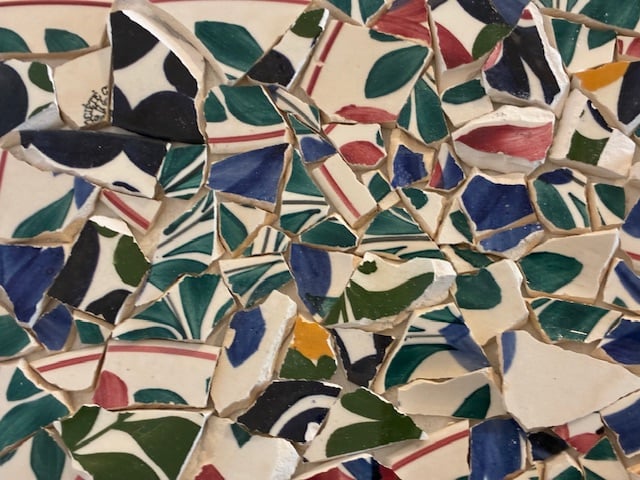
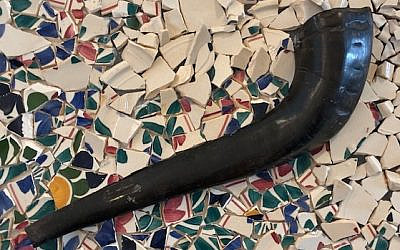
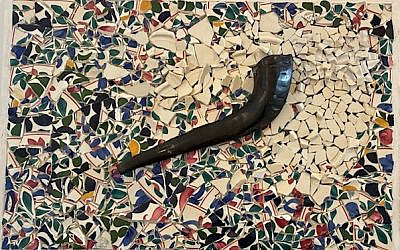
Family Shards (photo by Marc Kornblatt)
The images of young Israelis in the West Bank brandishing guns and clubs, killing Palestinian farmers, torching their crops and property, makes me think of my maternal grandparents. I can only imagine how Papa Sam and Grandma Bessie would respond to such hooliganism if they were alive today.
The two lived in the same village in Belarus, maybe three hours by car from the capital city of Minsk. From what I understand, though they shared the same last name, Katznelson, they didn’t meet until after they immigrated to America. In their later years, they lived on the second floor of my parents’ New Jersey home, so they were fixtures in my world when I was a child.
Grandma and Papa didn’t talk much about their lives in the shtetl. I never heard them talk in Russian. However, it was from them that I learned the word pogrom, which is Russian for wreak havoc or destroy violently.
After the assassination of Tsar Alexander II in 1818, pogroms against Jews became a fashion of sorts among gentiles. Ironically, they proved to be a blessing, as my grandparents fled the pogroms well before the Second World War engulfed Europe. As a result, no one on my mother’s side of the family was murdered in a concentration camp or shot alongside a ditch. My father’s family abandoned Ukraine for America even earlier, when the word immigration was not such a dirty word.
I don’t recall my grandparents ever talking about the pogroms beyond uttering the word like a curse. Years later, I read books and saw films that educated me.
Now, in my eighth decade of life, I see videos of Jewish settlers in the West Bank behaving like cossacks. I see Jewish men wearing black masks like Hamas terrorists clubbing Palestinians harvesting their olive trees. I see a young Jewish man with long sidelocks and a kippah on his head stabbing Palestinian’s grain sacks with a knife. Another shoots into a crowd of protesting Palestinians, murdering one of them. These young men remind me of the worst times in my people’s history, when we were the victims of inquisitions, pogroms, and genocide.
When I immigrated to Israel six years ago, I well understood that the country had its problems. Still, I believed that the Jewish state stood above all of its neighbors as a democracy with a system of laws and a people who cherished life and peace. I took pride in knowing that Israel, like America, both imperfect as they might be, had the brains and brawn to excel in the marketplace and on the battlefield.
But seeing those young men in their black masks, and knowing that the Israeli judicial system, police, and the Israel Defense Force have a dismal record of protecting the rights of Palestinians in the disputed territories, I wonder about the future of the modern state. Israel’s ancient golden age, ushered in by King David, ended with King Solomon. It lasted less than 50 years. Has modern Israel’s golden age come and gone?
Unashamed to be called a Zionist, I believe that Israel should live long and prosper. I do not regret moving to Tel Aviv six years ago. On the contrary, I believe it is my duty to stay. My new country needs more people like me voting and demanding equal rights for all who live on the land.
Papa Sam and Grandma Bessie had passed away by the time I visited Luban, their shtetl, in the early 1990’s shortly before the break-up of the Soviet Union. Three Jews lived there. Once upon a time, 75% of Luban’s population was Jewish. So when I hear the words ethnic cleansing, I think of my visit to Papa and Grandma’s birthplace. Jewish settlers and politicians who talk about driving Palestinians off their lands, remind me of the people who compelled my grandparents to immigrate.
In my mind’s eye, I can see Luban’s horse-drawn wagons and wooden houses with dirt floors, relics from my grandparents’ days that still existed when I visited. I can see Luban’s neglected Jewish cemetery, its overgrown grass offering soft beds for headstones that had been toppled, or had given into gravity.
I can’t see the pogroms that compelled my grandparents to leave. But I can see the pogroms in the West Bank. However strenuously the perpetrators claim that God is with them, that the Torah’s words guide their actions, I see them as heretics.
When I think of Israel’s pogrom mongers, I imagine my Papa Sam and Grandma Bessie whispering, “A shanda, such a shanda.”
Related Topics
Related Posts