My Small Contribution to Israel and the IDF
I’m not usually one to make waves. I don’t look for confrontation, and I certainly don’t go out of my way to stir things up. Most of the time, I’d rather keep the peace — even if that means quietly disagreeing and moving on.
But occasionally, something tugs at my conscience and tells me, this time, you can’t stay silent.
That moment came this past Pesach, while my family and I were spending the holiday at the Armon Hotel in Stamford, Connecticut.
It was the first morning of yom tov, and my wife Sharon and I made our way down to the lobby for davening. The minyan was a mix — about two-thirds Chassidish and Yeshivish families from Brooklyn, Lakewood, and Monsey, and about one-third Modern Orthodox families from the suburbs of New York and beyond. The gabbai, a capable fellow from Lakewood, ran the service smoothly and confidently.
After the haftorah, the ba’al tefillah began Ashrei and returned the Torah to the ark. But something didn’t sit right. I realized that no one had recited the prayer for the United States government — or the prayer for the State of Israel and the IDF.
And that bothered me.
After davening, as everyone headed to kiddush, I decided I couldn’t just let it go. I found the gabbai, wished him a good yom tov, and asked him about it.
“I noticed we didn’t say the prayers for the US government or for Israel and the IDF,” I said. “Was that intentional?”
He smiled politely and said, “Well, in our shul in Lakewood, we don’t have that custom.”
“I understand,” I replied. “But there are a lot of people here who are used to hearing those prayers. Especially now, with everything going on in Israel, it feels strange to leave them out. Would you mind if I said them tomorrow, after the haftorah? It’ll only take a couple of minutes — but it would mean a lot to many of us.”
He hesitated, clearly surprised by my request, but after a pause said, “If you really want to, I guess that’s fine.”
So the next day, after the haftorah, I went up to the bimah with my Koren Machzor and recited the prayer for the US government, followed by the prayers for the State of Israel and the IDF soldiers.
Some people didn’t stand. A few whispered among themselves. I could sense the discomfort. But when I returned to my seat, several people quietly said yasher koach — small words of thanks that meant a lot. Clearly, I wasn’t the only one who had felt that something was missing the day before.
I continued to recite the prayers on Shabbat Chol HaMoed and the last two days of yom tov. And though it might seem like a small thing, it felt important. It felt right.
On the second day of yom tov, the gabbai came over to me at kiddush. He wanted to explain.
“In our community,” he said, “we say Tehillim for the Jews in Israel during the week. We just don’t do it on Shabbos.”
I nodded politely.
I do understand why the Haredi community doesn’t recite the formal “Prayer for the State of Israel.” Saying it can be seen as a political or theological statement — an expression of support for religious Zionism or for the secular state, which many in that world reject. They pray for Jews’ safety and wellbeing in other ways, outside of that framework.
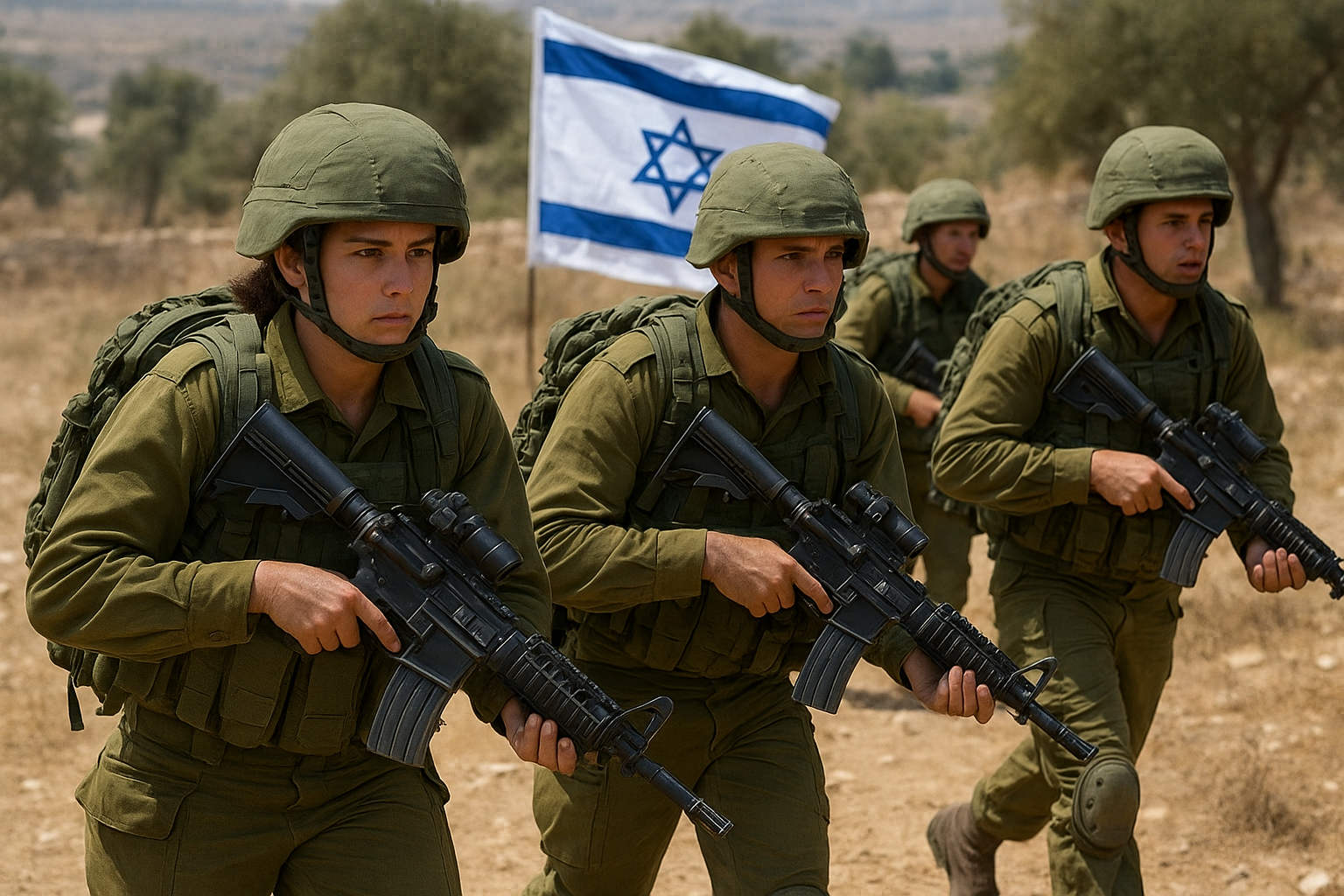
What I struggle with, though, is why they don’t publicly pray for the safety of the IDF soldiers — the very people who are risking their lives to protect all Jews, including those living in the Haredi neighborhoods of Israel.
Sadly, it feels less like a theological issue and more like a political one – at least to me. Many Haredim worry that praying for the IDF would be seen as aligning with the state’s politics — and with institutions that they feel have often been hostile to their community. The IDF, in their eyes, isn’t just an army; it represents a secularizing influence that they’ve spent decades trying to resist.
I get that. I really do. But at the same time, it breaks my heart. Because underneath all the politics and ideology, there are young Jewish men and women — soldiers — who are putting their lives on the line every day to defend our people.
I don’t pretend to have the answers to this deep divide in Israeli society. It’s far above my pay grade.
But I do know this: 6,000 miles away, in a hotel ballroom in Connecticut, I had a chance to do something small — to stand up, to speak out, and to say a prayer for the brave soldiers of the IDF and for the people of Israel.
And I’m very glad I did.