Writing on Jewish identity, Israel, and American politics
My Two Shekels: Israel Needs to Move Beyond Bibi
 Recently, I watched the animated film David with my daughter. She is two and a half, and we watched it in Hebrew to help strengthen her Hebrew.
Some parts scared her. She had questions, and we took our time, finally finishing it over three viewings. I came away with questions of my own.
David and Goliath is the famous part. But I kept thinking about Saul.
Saul’s story is more complicated than a jealous king trying to keep his throne. In I Samuel 15, Samuel tells him that God has rejected his kingship because of his disobedience. David has not yet become his rival.
Later, David serves in Saul’s court, fights his wars, and marries his daughter. He comes from inside Saul’s world. As David’s reputation grows, Saul increasingly sees him as a threat. In I Samuel 18, the king turns against someone who has helped defend his country.
Saul had served Israel. He also became consumed with preserving his place at its head.
Watching that story while following Israeli politics, I found the question hard to avoid: what happens when a leader can no longer imagine the country’s future without himself?
Giving Netanyahu his due
I recently saw Paging Hezbollah at an event hosted by the Israeli-American Civic Action Network, ICAN, at the Saban Theatre in Beverly Hills.
The documentary reinforced something that may surprise people who know my criticism of Benjamin Netanyahu: I give him more credit than many of his critics do.
I give him credit for courage, persistence in confronting Israel’s enemies, and a willingness to authorize operations carrying enormous risks. I respect his ability to speak, make Israel’s case, and lead under pressure.
The intelligence officers, engineers, soldiers, and commanders deserve their credit too. These achievements belong to many people. But political leadership carries responsibility for authorizing difficult decisions, and I recognize that.
My problem is his divisive rhetoric and the politics surrounding his continued leadership. Too much becomes a test of loyalty to him. Too many disagreements become accusations about who truly cares about Israel.
His accomplishments deserve recognition. They do not entitle him to remain prime minister indefinitely.
Security and standing abroad
There is another connection between these films. Tim Tebow was an executive producer of David. At the Paging Hezbollah screening, I heard its Christian director, Justin Folk, explain why this story mattered to him.
Those experiences reminded me how much I appreciate the Christian friends who stand with Israel.
But Israel needs a wider circle of allies, across religions, political parties, and countries. Its future cannot depend on one American political movement or one Israeli leader.
Moving beyond Netanyahu will not make Israel’s enemies disappear. I believe it could help rebuild relationships with friends whose views of Israel have become entangled with their views of him.
My priorities are security first and Israel’s standing in the world second. The two are connected. Israel needs the strength to defend itself and the credibility to sustain alliances and support abroad.
My preferred outcome is Netanyahu stepping down and Likud joining the moderate opposition in a broad unity government. Likud would remain central to governing while Israel gets a fresh start.
Likud’s voters deserve representation. Their choice should not be dismissed. A government beyond Netanyahu does not have to mean a government without Likud.
Netanyahu is 77. He has served as prime minister for more than 19 years across three periods in office.
Experience counts. After that long, so does the ability to prepare the country, and your party, for someone else.
Accomplishments and accountability
Watching Samuel confront Saul made me think about the difference between holding office and accepting responsibility. In modern Israeli history, Golda Meir offers a democratic example of a leader who ultimately left office after catastrophe.
The Agranat Commission’s interim findings did not assign her direct personal blame for Israel’s military unpreparedness before the Yom Kippur War. Nevertheless, amid public anger and political pressure, she resigned in April 1974.
She did not resign immediately after the war. The process was painful and contested. But she ultimately left office.
Political responsibility extends beyond whether an inquiry assigns a leader personal fault.
I can credit Netanyahu for decisions taken to defend Israel and still believe October 7 requires accountability at the highest level. Military and intelligence failures deserve examination. So do the government’s policies, assumptions, and decisions.
Success afterward cannot erase the need to account for what happened before.
I see a Trump parallel in the way loyalty to one man becomes a test of loyalty to the country. That does not describe every Likud voter or every Republican. But when defending the leader becomes the party’s main purpose, questioning his judgment or preparing a successor can be treated as disloyalty.
That is where Saul’s story feels relevant to me.
A coalition needs more than opposition to Bibi.
Israel’s multiparty system makes succession especially difficult. The largest party can lack enough partners to govern. Netanyahu’s opponents can agree that he should leave without agreeing on a replacement government.
Smaller parties gain leverage. Deadlock can keep the incumbent in office.
Wanting Netanyahu out is not a governing program. Someone has to assemble a coalition capable of making decisions and lasting long enough to carry them out.
The Arab-led parties require distinctions. Mansour Abbas’s Ra’am pursued practical agreements and joined the Bennett–Lapid government in 2021. But that was before October 7. Its participation then does not settle whether it would be an acceptable partner now.
For me, any coalition agreement must provide a workable basis for Israel’s security, its identity as a Jewish state, and the government’s ability to act against its enemies. I would apply those standards to every prospective partner.
Ra’am is separate from the Joint List, which brings together Hadash, an Arab-Jewish alliance built around the Communist Party; Ta’al, focused on Arab citizens’ rights and representation; and Balad, an Arab nationalist party advocating a “state of all its citizens.”
Equal rights for every citizen are essential. My objection to Balad’s program is that I believe it would replace Israel’s identity as the Jewish national home. Hadash’s inclusion of Jewish members does not resolve my disagreements with its politics either. The political program matters, regardless of who advocates it.
These parties’ voters have every right to representation in the Knesset. That does not oblige other parties to include them in a governing coalition.
I do not want Itamar Ben-Gvir or Bezalel Smotrich dictating the government’s priorities either. A broad agreement between Likud and the moderate opposition would reduce their leverage too.
What shared responsibility should mean
Religious Israelis and the Haredi parties are not the same thing. Many religious Israelis serve, including in combat, and their families carry an enormous burden.
My issue is with Shas and United Torah Judaism demanding legislation preserving broad military exemptions for Haredi yeshiva students as a condition of supporting the next government.
I respect Torah study. But Israel needs soldiers. Repeated reserve duty means lost income, disrupted businesses, spouses carrying households alone, and children missing a parent.
The same families cannot keep paying that price while other parties negotiate exemptions for their constituents.
On Judea and Samaria, my concern is how decisions are made. I support the safety and quality of life of Israelis and Jews who choose to live there.
Communities, roads, infrastructure, and defense need a coherent plan. Where can people live safely? What can the military protect? How do we use limited land responsibly while accounting for the rights and safety of everyone affected?
These decisions should be guided by long-term security planning. Too often, they appear driven by coalition bargaining.
Who comes next?
Could a negotiated exit persuade Netanyahu to leave? Perhaps. That is speculation, not a reported agreement. Any legal arrangement would have to follow the law and respect accountability.
Likud voters can reasonably object that they chose their party knowing who led it. Other parties also represent voters, however, and can set conditions for joining a government.
Israel elects a parliament, not a prime minister directly. Leading the largest party provides leverage, not an automatic governing majority.
Coalition formation can take considerably longer than a month. Failure could mean another election while the outgoing government remains in office. Israel held five elections between 2019 and 2022. We know that cycle.
The film follows David’s rise and Saul’s fall. What stayed with me was Saul’s growing inability to separate Israel’s future from his own hold on power.
I see something of that in Netanyahu’s determination to remain indispensable. His service and accomplishments are real. So is the need for Israel to have a future beyond his leadership.
But I don’t know who David is.
More importantly, a democracy should not need a David. It needs credible successors, functioning parties, and institutions that do not depend on one person.
I cannot confidently name the person who could bring enough of the country together, protect it, and restore trust. That uncertainty is part of the problem. It is no reason to postpone the question indefinitely.
I want a government focused on security, shared responsibility, competent administration, and rebuilding Israel’s standing abroad.
Likud and its voters have an important place in that government. Netanyahu’s accomplishments deserve recognition.
Israel also needs to be able to choose its next leadership without treating that choice as a betrayal.
We shall see.
–
Adapted from the original essay on my Substack.
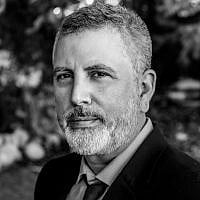
Dory Benami is an Israeli American writer, entrepreneur, and former Democratic congressional candidate. He is the author of BAD JEW: How October 7 Changed Everything I Thought I Knew.
Related Topics
Related Posts