President, Hadassah Main Line Yassky Chapter
My Work in Rehabilitation and Hadassah Hospital’s Wonderful Gandel Center
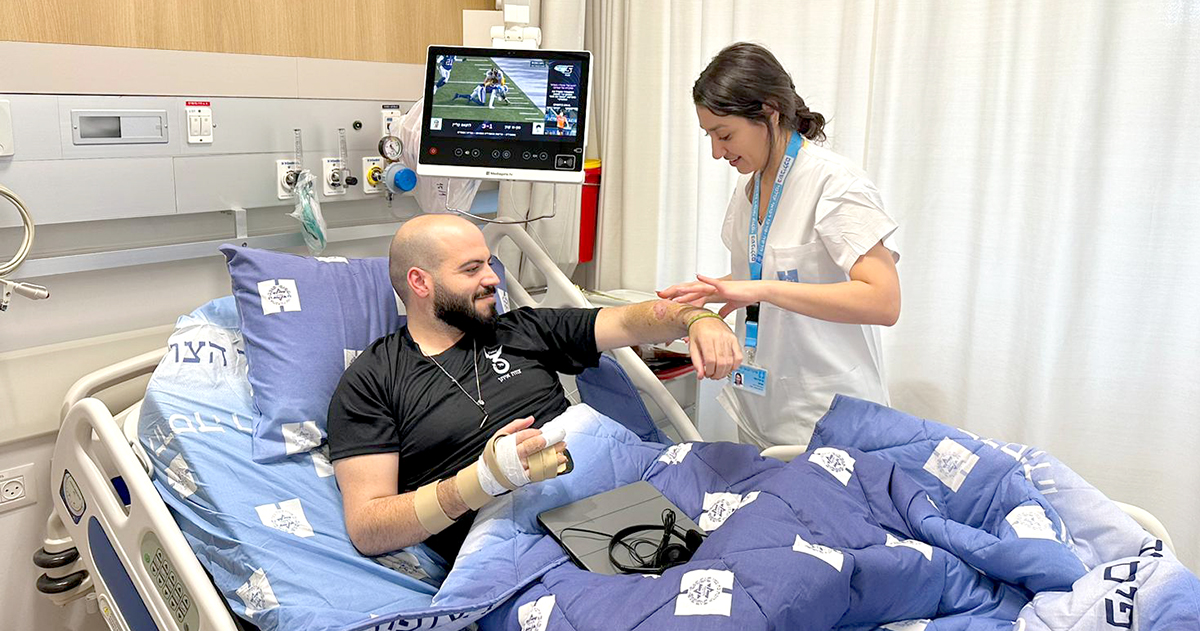
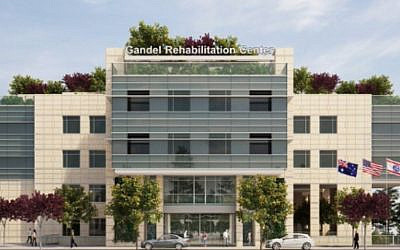
Photo of the Gandel Rehabilitation Center courtesy of Hadassah.
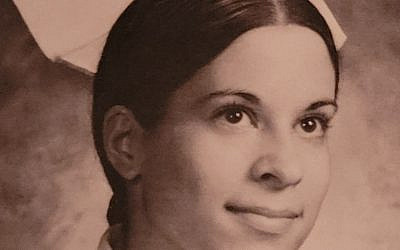
Several months before finishing nursing school and becoming a registered nurse (RN), I faced indecision about the nursing specialty I wanted to pursue. But during a rotation through a physical rehabilitation unit, I realized that was the place for me.
Whereas many other hospital units treat people who often become sicker as time progresses, the patients on the rehabilitation unit are already at their lowest point. They have endured amputations, cerebrovascular incidents (strokes), gunshot wounds, falls, spinal cord paralysis, traumatic brain injuries or other critical misfortunes. Most of these events were sudden, and all were life changing.
When I began my work in rehabilitation at Moss Rehab Hospital in Philadelphia, Pennsylvania, I was 20 years old. While my friends and family said that caring for these patients would leave me depressed, I found it challenging and rewarding. These patients had lost their independence, and many would never be able to live independently or perform normal activities of daily living (bathing, dressing, toileting, preparing meals) for themselves. Even after intensive therapy, some would never be ambulatory or would require assistance to be mobile. It was the job of rehabilitation professionals to help them achieve independence to the fullest extent possible.
The rewards for working in such a challenging environment were many: Elation because a patient, once totally bedridden, was able to bathe, dress and move from bed to wheelchair or toilet with family supervision. Joy, because a young woman paralyzed from the neck down learned to feed herself with adaptive utensils. Heartwarming, when a patient was discharged to live with family after a six-month rehabilitation stay, when nurses and therapists taught the family members how to provide the necessary care.
One memory that remains with me over the decades is of a young man, “Mike,” newly paralyzed from the neck down, who was accustomed to spending weekends at the New Jersey shore with his friends. As a result of his diving accident, he had lost mobility and the ability to care for himself. Following in his father’s footsteps to become a firefighter, as he had hoped, was now impossible.
Mike’s paralysis extended to his bowel and bladder function, rendering it unlikely that he could spend a day at the shore with his friends. But I and the other nurses made it possible. We taught Mike’s best friend, another young male, how to insert a urinary catheter several times a day to drain Mike’s bladder and how to evaluate him for medical complications.
I couldn’t prevent Mike’s accident or change the outcome, but I still recall the smile on his face when he returned to the rehabilitation unit after a day at the shore with his friends. We had saved a small, but important, piece of his life.
In January 2024, the Hadassah Medical Organization began an accelerated phased opening of the Gandel Rehabilitation Center at its Mount Scopus Hospital campus to accommodate soldiers and other individuals wounded in the war following Hamas’ October 7 terror assault on Israel.
Enlightened with the news of Gandel’s opening and the tremendous work being done there, I earmarked my 2024 Hadassah Annual Gift to Gandel. I plan to do the same with my future annual donations.
When completed, the 323,000-square foot, eight-story, 140-bed Gandel Rehabilitation Center will offer comprehensive holistic care for 10,000 patients annually in four in-patient units as well as an outpatient department that can serve hundreds of patients daily. Along with standard rehabilitation services such as physical, occupational, speech, and respiratory therapy, Gandel already features hydrotherapy, a post-traumatic stress disorder center and a computer that detects problems not always apparent in physical exams. Patients regularly meet with psychotherapists and there are family support sessions as well –all aiding in the patient’s psychological healing.
In 1995, I was saddened by the news that actor Christopher Reeve was thrown from his horse during an equestrian competition. His first and second cervical vertebrae were fractured, with resultant paralysis of all four limbs, a complete absence of sensory and motor function below the shoulders and an inability to breathe without mechanical ventilation.
Although he remained completely dependent on others for the remainder of his life, a full complement of rehabilitation professionals was involved in evaluating and managing his condition and planning and training his caregivers so he could live a fuller life. Reeve is a consummate example of how the rehabilitation professionals’ work is critical in prolonging and improving the life of a critically injured individual.
Although I no longer work in the rehabilitation setting, I continue to hold the work of rehabilitation professionals in high esteem. My husband and I ride bicycles for recreation, near our home and throughout the US and Canada. I recall once passing a bicyclist with two prosthetic legs, highlighting for me the outcome when a motivated individual and a robust rehabilitation team join forces. It reminded me why the rehabilitation field remains so rewarding.
As a chapter president and life member of Hadassah, I believe wholeheartedly in the work Hadassah does and I will continue to support the innovative, life-affirming Gandel Rehabilitation Center.
Arlene is a member of the Hadassah Writers’ Circle, a dynamic and diverse writing group for leaders and members to express their thoughts and feelings about all the things Hadassah does to make the world a better place. It’s where they celebrate their personal Hadassah journeys and share their Jewish values, family traditions and interpretations of Jewish texts. Since 2019, the Hadassah Writers’ Circle has published nearly 650 columns in The Times of Israel Blogs and other Jewish media outlets. Interested? Please contact hwc@hadassah.org.
Related Topics
Related Posts