My Zionist last name
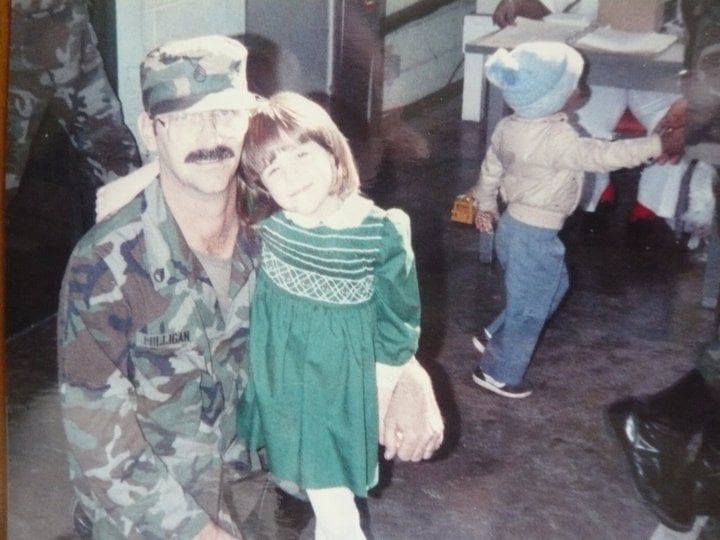
As a Jew, I’ve grown accustomed to hearing “Milligan, that isn’t a Jewish last name,” prompting me to explain my journey to Judaism each time. However, recently someone quipped, “Milligan, that isn’t a Zionist name,” and my knee-jerk reaction was defensive disbelief.
My father, Dan Milligan, was raised Irish Catholic and is the reason I am a Zionist. I didn’t discover my Zionism alongside my Judaism, nor did my Zionism lead me to become a Jew. My Zionism is my father’s legacy.
Shortly after my dad returned from Pirmasens, Germany, where he was stationed during Operation Desert Shield from December 1990–June 1991, he was sitting in his signature dark brown Lazy-Boy recliner watching television. I walked through the room, glancing at the screen, and saw a man wearing a keffiyah banded across his forehead in the traditional dress style.
I was ten years old, and I casually and mistakenly asked why Bill Clinton was standing with Saddam Hussein. My context came from a small trading card-sized photograph with Hussein’s image that I had been given during a lesson about the Gulf War that was taught at a support group for children of soldiers who were overseas. In the portrait, Saddam wore a red and white keffiyah or shemagh, as they are often referred to in Iraq.
I immediately knew I was wrong when my father gestured toward the goldenrod and brown plaid sofa next to him to tell me about Yasser Arafat and the PLO.
My mother and I laugh now when we remember these “learning moments,” during which my dad famously imparted knowledge on a wide range of topics, usually related to military history and current events, at times peppered with warnings about drugs, teen pregnancy, and drunk driving that were informed by the evening news. Typically, these lessons lasted just a few short minutes.
Peace in the Middle East, as I was about to discover, would necessitate numerous evening discussions.
As any good middle schooler would do, I rolled my eyes, suffering through these conversations with absolute pre-teen certainty that they would never matter in my real life. I was wrong.

It was clear to me, even then, that my dad knew a great deal about what was happening with Yasser Arafat, Yitzhak Rabin, and Bill Clinton, and that it was important for me to understand. Over the next weeks, in between watching news coverage about the Oslo Accords, my father, an amateur history buff who never went to college and worked a blue-collar job all his life, walked his eleven-year-old daughter through the history of Israel, from the British Mandate to the present moment.
And, of course, most important to him, he also offered full lessons on IDF history, the Haganah, Mossad, and Shin Bet.
Two years later, in my eighth-grade classroom, I raised my concern about Rabin’s assassination. To my shock, my teacher and classmates seemed to have no idea about or interest in the topic. I returned that evening to the plaid couch, and my dad and I had a long discussion about the perils of being overly focused on our own nation’s current events if we truly wanted to be good Americans.
This conversation surprised me, because as a young teen I was sure my very patriotic father who served in two branches of the military in two major wars would be primarily focused on the United States.
It was through that life lesson that I became a global citizen.
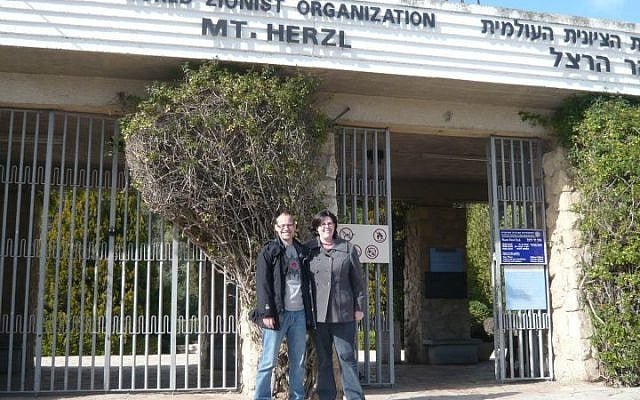
In 2011, when I went to Israel for the first time, my dad asked me to go to Mount Herzl National Cemetery in Jerusalem and to place rocks on the headstones of several individuals on his behalf.
This practice was one that my non-Jewish father had done my whole life, and I assumed he would want me to visit Herzl’s grave while on my way to pay our shared respects to Golda Meir—as he had cultivated a deep admiration in me for the Iron Lady, even if I struggled with some of her policies and actions.
Instead, he asked me to visit David “Dado” Elazar and Moshe Dayan. Dayan, as I would discover after searching for far too long in the blazing sun, is buried in Nahalal and not Mount Herzl.
My mom and I still laugh about these Zionist cemetery excursions, because she was once tasked with helping to find David “Mickey” Marcus’s grave at West Point Cemetery to place a stone on his headstone during an anniversary trip they shared in the 1980s.
It wasn’t until I was older that I realized the uniqueness of my upbringing. At home, we never had to discuss whether we supported Israel, because it was clear that we did, despite the fact that I wasn’t raised by Jewish parents.
But was this childhood indoctrination? Quite the contrary. In our Oslo Accords conversation and subsequent “lessons,” my father taught me several things.
First, he was open for thoughtful discussion and criticism of Israel, Israeli policies, and Israel’s leaders, even from his young daughter. However, he was not willing to entertain whether or not Israel had the right to exist, nor was he open to contesting Jews returning to our homeland.
Even though my dad and I were both steadfast in our Zionism throughout our lives, my father and I often struggled in our conversations about the military—he had, against all odds, raised a pacifist daughter.
The duality of my deep admiration for Rabin’s peace stance and my father’s ardent belief that he and those farther to the left were potentially making Israel vulnerable demonstrate the most important lesson my dad taught me: these types of disagreements could—and perhaps absolutely must—coexist.
He instilled in me the understanding of the importance of Israel not just for Jews but for the Middle East and the world.
Even more so, he taught me to seek out discussions about Israel that acknowledge nuance and complexity, while still asking questions and learning from those with whom I disagree.
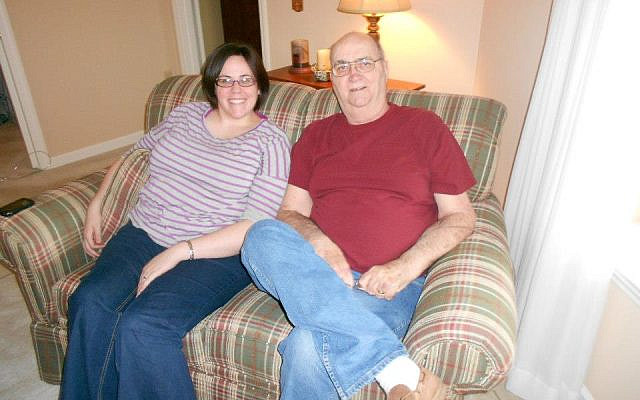
I’ve thought a lot about my father and how he would have reacted to October 7, 2023. Beyond his own feelings about the horrific violence, political strife, and ongoing crisis, I know he also would agonize over the rising rates of antisemitism in the United States.
I am certain that the antisemitism and hatred I have faced as a Jewish feminist professor would enrage him, making him want to protect me both as my father and as the mensch that he was. I can also hear him telling me that he wishes he could get on a plane to go and serve alongside his IDF brothers and sisters.
And, if I’m being honest, I know he would be proud of the work I am doing to educate about Israel’s history, Zionism, and antisemitism, even if he likely still would try to teach me a thing or two about the Haganah’s history.
My dad used to joke, “I don’t know how you turned out the way you did,” whenever I was ranting about one of the many causes about which I deeply care.
The truth is, despite blaming it on my parents giving me Free to Be You and Me as a child, I turned out to be who I am because they taught me how to think.
My father and I may not always have agreed about Israeli politics or military decisions, and in all likelihood, we wouldn’t agree about them now.
Yet, despite being politically middle-of-the-road, he gave me the skills that have allowed me to survive as a Zionist in the liberal progressive spaces in which I live and teach.
He taught me that it isn’t enough to just believe in Israel and to desire peace; you must understand both the history and the contemporary reality alongside all their intersecting complexities.
In his many couch lessons, he often talked about not being afraid to “walk to the beat of your own drum,” and he role-modeled this free thinking for me throughout his life.
He taught me to be brave, to be steadfast even when I was fearful, and to speak with certainty and truth about Zionism and Israel, even when that meant being unpopular.
Milligan is, after all, a Zionist last name.