
Netanyahu has changed the Middle East. Will Israel ensure it lasts?
A different Middle East — and a risk of reversal
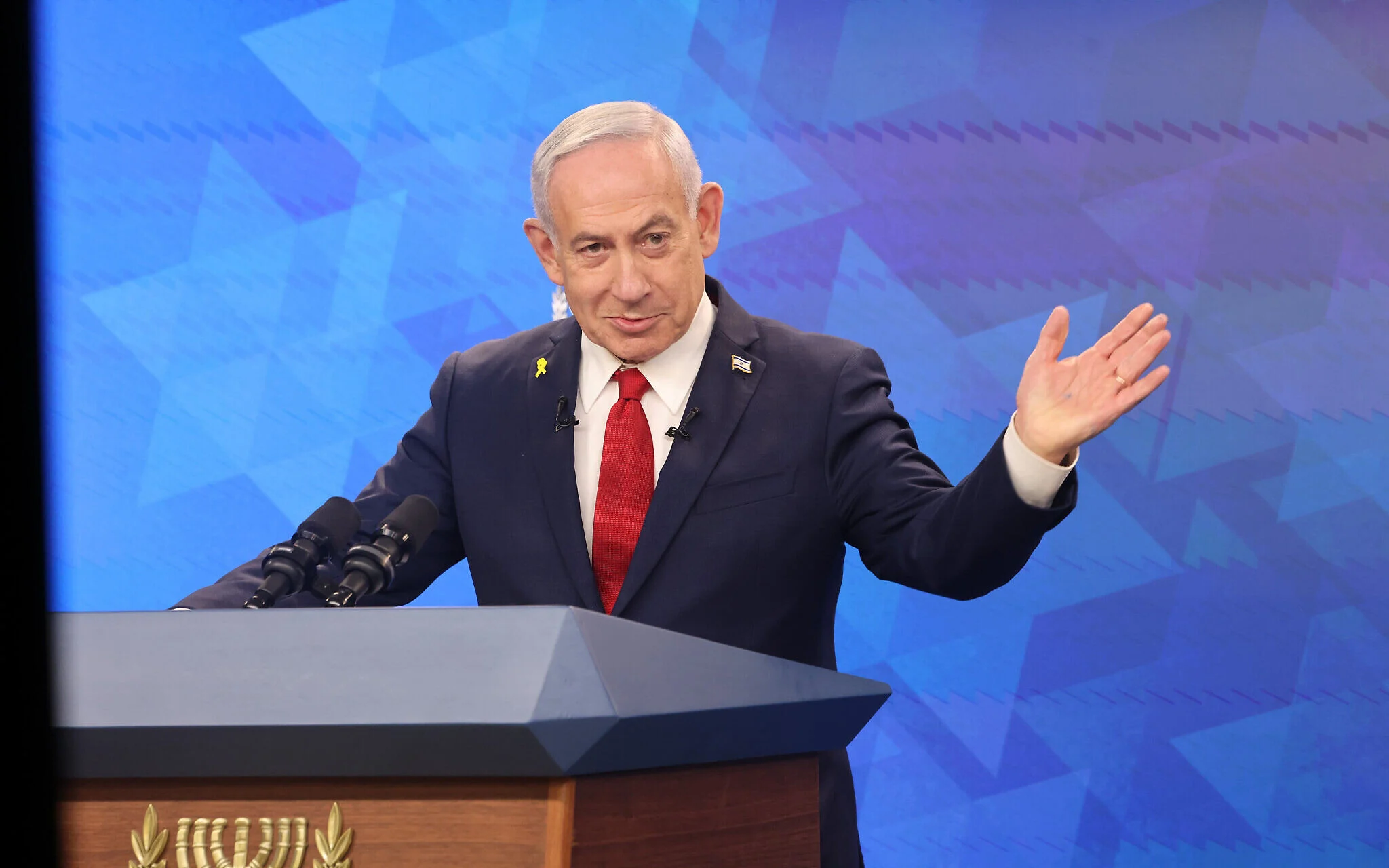
On October 9, 2023, two days after Hamas’s assault on southern Israel, Benjamin Netanyahu told local council leaders that Israel would change the face of the Middle East. The words came amid national trauma, a hostage crisis and the prospect of a multi-front war. They also set out a larger ambition: Israel would not simply restore the status quo that had failed on October 7; it would seek to change the conditions that had made that failure possible.
Since then, the region’s strategic map has been substantially altered. Hamas has suffered severe damage to its military infrastructure. Hezbollah has lost its leader and numerous senior commanders, while Israeli operations have struck its weapons and operational systems. Israel has successfully fought directly against Iran, including the major campaign of June 2025. The collapse of Bashar al-Assad’s government removed a key Iranian partner and disrupted a vital route linking Iran to Hezbollah. Israeli forces have also pursued forward security positions designed to keep hostile forces away from vulnerable communities.
These are consequential operational changes. But they are not irreversible. Adversaries can rebuild, political arrangements can unravel if Israel’s political leaders allow it to occur. Israel’s next task is therefore not simply to maintain freedom of action. It is to make the results of the past three years durable.
A new security doctrine
October 7 exposed the failure of a security concept built around containing Hamas, deterring Hezbollah and managing Iran’s regional network through periodic operations. I critiqued this approach in my May 2024 report, ‘Restoring Deterrence: Destabilising the Iranian Regime’ where I advocated holding the Iranian regime to account for the action of its terrorist proxies.
Israel’s new security doctrine spearheaded by Prime Minister Netanyahu has overhauled this previous approach, emphasizing preventing threats from re-forming: striking leadership and infrastructure, disrupting supply routes, using intelligence to identify vulnerabilities and acting beyond the immediate border when the government judges a threat to be imminent or intolerable.
The consequences have been visible from Gaza and Lebanon to Syria, Yemen and Iran, in which Netanyahu was responsible for undertaking these major operations. Israel’s long-range strikes against Houthi targets, its operations against Hezbollah’s command structure and its attacks on Iranian military and nuclear-related facilities have shown a greater willingness to reach targets far from Israeli territory. Israel’s newly found ability to project power led me to co-author a report, entitled Israel 2048: A Blueprint for a Rising Asymmetric Geopolitical Power. The campaign against Iran also demonstrated the importance of American support and the depth of Israeli-US military coordination.
The economic and technological foundations of power
Israel’s military performance did not emerge in isolation. It rests on an economic and technological base Netanyahu built over decades, most notably as finance minister in the early 2000s, when he advanced tax, labor-market and privatization reforms intended to strengthen competition and integrate Israel more deeply into the global economy. Those reforms were part of a wider process that helped reinforce the market-oriented framework in which Israel’s technology sector expanded.
As prime minister, Netanyahu also made cybersecurity capabilities a national priority. Government decisions established and strengthened national cyber institutions, while investment, research universities, military technology units and private-sector entrepreneurship helped turn Israel into a major cybersecurity hub. Netanyahu’s governments advanced the frameworks for quantum computing, which depends on public funding, academic research, industrial capacity and sustained national coordination.
The war has added a further imperative: a resilient defense-industrial base. Israel’s Ministry of Defense reported record defense exports of more than $14.7 billion in 2024, while domestic manufacturers expanded production to meet wartime needs. The government has increasingly emphasized local procurement, production capacity and the ability to sustain operations when foreign supply is delayed or restricted.
That direction is strategically important. A country that depends entirely on outside suppliers can find its choices constrained during a prolonged conflict. A stronger domestic defense-tech ecosystem – spanning air defense, precision weapons, drones, sensors, cyber, communications and space systems – can improve readiness, support exports and give Israel more freedom to act. But self-reliance should be treated as a goal to build toward, not a claim that dependence on the United States can quickly or completely disappear. To this end, Netanyahu is transforming Israel’s cooperation with the United States, making it indispensable to research and development, granting it greater access to sensitive and innovative defense systems.
Israel’s long-term power will therefore depend on sustaining the economic and scientific conditions that make innovation possible: investment, talent, education, research, competition and stable institutions. The strategic lesson of the war is not only that technology can multiply military force. It is that technological advantage must be replenished continuously, which Israel is doing by investing in its arms industries while cooperating with the United States.
The Gulf vision: peace from the outside in
Netanyahu’s regional outlook predates October 7. For years, he argued that Israel should build relationships with Arab states on the basis of shared interests – particularly concern about Iran, economic opportunity and technological cooperation – rather than allow the Palestinian conflict to block every regional opening. In his 2023 address to the United Nations, he explicitly argued that normalization with Arab countries could improve, rather than foreclose, the prospects for Israeli-Palestinian peace.
The Abraham Accords, signed in 2020 with the United Arab Emirates and Bahrain, followed this “outside-in” logic, with further agreements involving Morocco and Sudan. They demonstrated that formal relations, trade, investment and security cooperation could advance without a prior comprehensive Israeli-Palestinian agreement. The accords were not a substitute for resolving the Palestinian question, but they showed that Arab-Israeli relations need not remain frozen by it.
After October 7, Israel’s military campaign against Iran and its partners has created new potential areas of common interest with Gulf states, including early warning, air and missile defense, intelligence-sharing and protection of maritime routes. Saudi Arabia remains a particularly consequential but unresolved prospect. Any movement toward normalization will not only ensue from diplomacy, but from Israel being able to offer Saudi Arabia military support against threats it faces from Yemen and Iran.
As such, Netanyahu is likely to use Israel’s demonstrated military and technological capabilities to build practical arrangements that serve the security of Gulf partners, including Saudi Arabia, as well as its own. The goal should be a regional network that can resist coercion, protect trade and infrastructure, and make cooperation more valuable than confrontation. Strategically, this will be part of Israel’s long-term security architecture.
Buffer zones are a means, not an end
Israel’s efforts to create or maintain security zones near Gaza, Lebanon and the Syrian separation zone reflect Israel’s changed understanding of border defense. After October 7, the government has argued that warning time and physical distance can help prevent armed groups from assembling near Israeli communities and launching surprise attacks. In southern Lebanon, Netanyahu has defended continued Israeli positions as necessary to keep Hezbollah away from the border; in Gaza and Syria, Israel has likewise sought operational room to disrupt emerging threats. In both areas, Netanyahu’s resolve was in defiance of the Biden and Trump administrations, respectively.
Such geographic positions can provide surveillance, access and opportunities to dismantle Hamas and Hezbollah’s military infrastructure while at the same time ensuring that Israeli communities near the borders can live, work and return home without the constant expectation of another attack.
The danger of strategic reversal
The achievements since October 7 remain vulnerable on several fronts. Hamas may attempt to reconstruct its military and governing networks. Hezbollah can seek to replenish weapons and rebuild command structures. Iran retains incentives to restore missile capabilities and pursue its regional ambitions. The future of Syria remains uncertain, while the Houthis and other armed groups can continue to threaten Israel and regional commerce.
The danger is that Israel could win successive operational contests yet fail to establish a stable outcome. This is why Netanyahu’s strategic resolve has been critical to prevent adversaries in Gaza and Lebanon from using ceasefires to rearm. In the potential absence of a political framework to manage buffer zones, Israel must maintain its resolve and prevent armed factions from filling the vacuums.
With Arab partners that share the same security and strategic threats as Israel, it should convert shared security concerns into practical cooperation and a diplomatic path that can include Saudi Arabia. In Gaza, Israel needs an arrangement that prevents Hamas from rebuilding its military capacity and supports workable postwar governance. In Lebanon, the goal must be a durable reduction in Hezbollah’s ability to threaten northern Israel, backed by enforceable security measures. With Iran, Israel must reconstitute credible deterrence and the ability to respond to renewed threats.
These objectives require measurable tests: fewer attacks on Israeli communities; sustainable returns for displaced residents; verifiable constraints on hostile rearmament; adequate domestic production and reserve readiness; continued U.S. cooperation; and progress toward regional agreements that survive changes in leadership and the next crisis.
Give the gains a chance to endure
The record since October 7 contains both a profound change in Israel’s military posture and a warning about how quickly security assumptions can fail. Netanyahu’s government has presided over an expansion of Israel’s operational reach, the degradation of important adversaries and a shift toward forward defense. His longer record also includes efforts to liberalize the economy, elevate cybersecurity as a national priority and expand Israel’s regional relationships.
But operational accomplishments are not self-sustaining as history is not linear. They are dependent upon political leadership, the lack of which can cause operational accomplishments to be reversed by allowing adversaries to reconstitute themselves, and if there is a reduced commitment in investing in Israel’s defense industrial base. A potential reversal of Israel’s accomplishments could occur if the economy and research ecosystem weaken, or if Israel’s military leverage is not converted into diplomatic engagements that transform the region.
Netanyahu’s declaration in October 2023 was a promise to change the region. The military and geopolitical landscape has indeed changed. Netanyahu is committed for Israel to turn that change into a lasting security framework: one that protects its citizens, limits the ability of adversaries to reconstitute their forces, preserves the technological and economic foundations of national power, and expands cooperation with the Gulf.
The next chapter should be judged not by the reach of Israel’s next strike, but by the durability of the security it leaves behind.