
Strategic Intelligence Consultant & Insights Advisor
Netanyahu’s $3.5 billion answer to the isolation argument
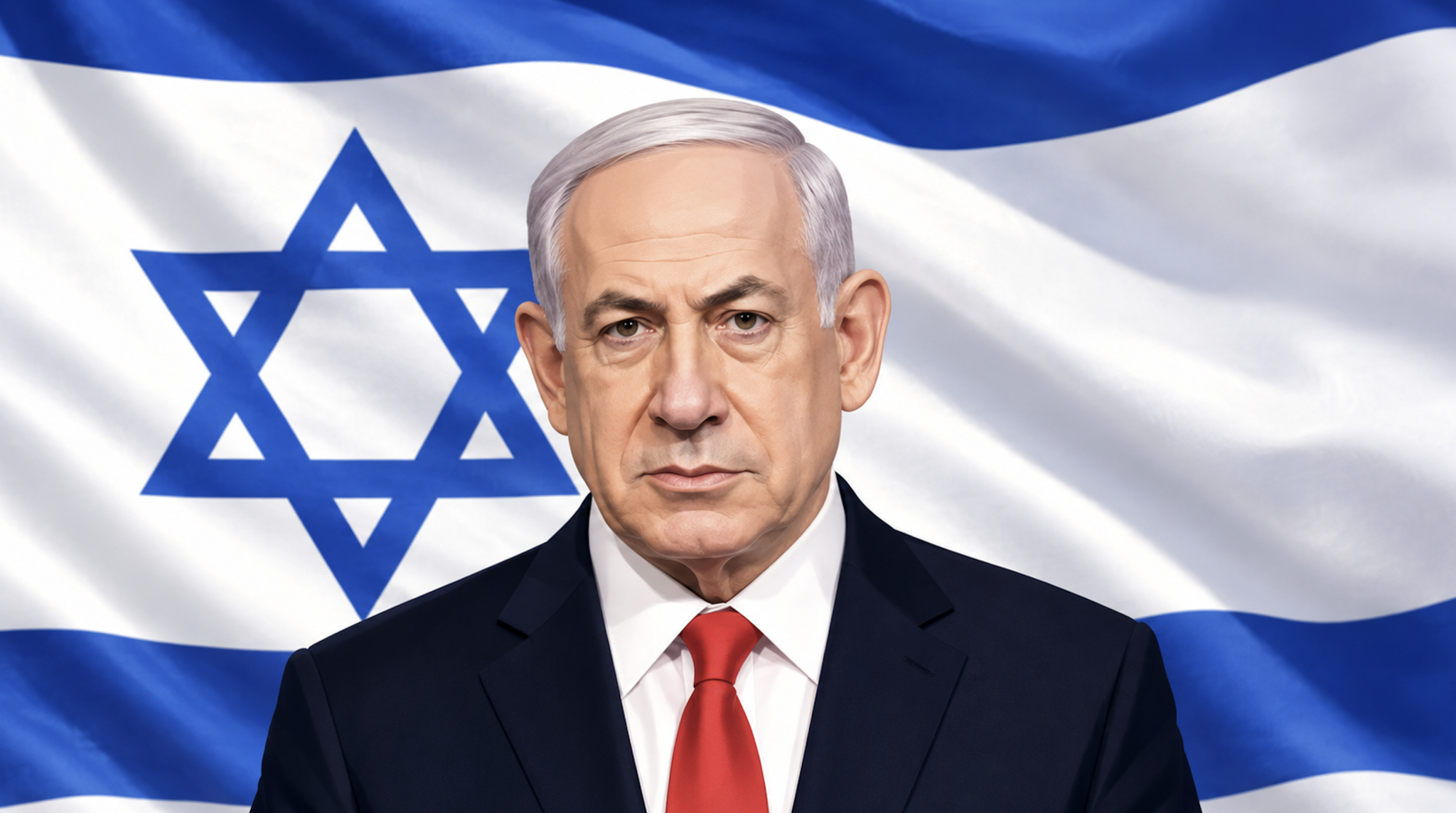
Netanyahu (made by AI)
Israelis have spent much of the past two years hearing that their country is becoming internationally isolated. Then, on August 31, Greece signed a €3.035 billion (roughly $3.5 billion) agreement that will place Israeli technology at the center of its future national air-defense architecture.
That does not make the isolation argument disappear. It makes it more complicated.
The Achilles Shield agreement is not just another export order. Greece is buying David’s Sling, SPYDER and BARAK MX, Israeli MMR radars, and a new national command-and-control architecture designed to tie the layers together. Israel’s Defense Ministry says the system will be based entirely on Israeli architecture and systems. Athens says more than 25 percent of the program, around €750 million, will go to Greece’s own defense and technology sector, with 19 Greek companies already engaged and a domestic production base intended to have export potential of its own. A separate €26 million agreement adds Rafael’s Drone Dome for strategic sites.
For Benjamin Netanyahu, it is hard to imagine a more politically useful contract.
A brand built on interests, not affection
Netanyahu has long made the expansion of Israel’s strategic relationships part of his political brand. His argument has never depended on affection for Israel. It depends on interests: military power, intelligence, technology, trade, and the idea that countries can decide they need Israel even while the Palestinian issue remains unresolved. His “peace for peace” formula of the Abraham Accords era rested on exactly that premise, and in October 2024 he again pledged to widen the circle of peace with Arab states after the war, from a position of strength. In December 2025, during a Knesset debate titled “The collapse of Israel’s international standing,” he dismissed the premise as detached from reality and pointed instead to Israel’s power, its economy and its foreign relationships.
Achilles Shield hands him a concrete exhibit. An EU and NATO member is not merely buying an Israeli missile battery. It is entrusting a major layer of its national air and missile defense to an integrated Israeli system.
The critics have evidence too
Britain, France and Canada recognized a Palestinian state in 2025. This month, all three moved to ban goods from Israeli settlements, while Britain and its partners are developing further targeted measures tied to settlement expansion. Israel responded by ordering the closure of the British consulate in Jerusalem. Other European governments have backed or considered similar steps.
Public opinion is worse still. Pew’s spring 2026 polling, much of it conducted after the US-Israeli campaign against Iran began in late February, found unfavorable views of Israel at 65 percent in Canada, 73 percent in Germany, 75 percent in Italy and 78 percent in both Spain and Sweden. Greece itself recorded 65 percent unfavorable, and was the only country in the survey where views of Israel improved on the previous year: an unusually clean illustration of the gap between what a public feels and what a state decides.
The United States requires more care. Washington’s strategic and military relationship with Israel remains deep, and anyone claiming Israel has “lost America” is not being serious. Yet American opinion has shifted as well. Pew found this spring that 60 percent of US adults view Israel unfavorably, with an enormous ideological gap: 83 percent of liberals against 37 percent of conservatives. Public opinion is not foreign policy. But it cannot be treated as politically irrelevant either.
Four ledgers that no longer move together
So which picture is true, isolation or strategic success? Both, because they measure different things.
There are at least four separate ledgers in Israel’s international position: public opinion, diplomatic relations, commercial and technological ties, and national-security dependence. They used to move roughly in step. They no longer do. A government can recognize Palestine or condemn settlement policy on Monday, while on Tuesday its defense establishment concludes that an Israeli interceptor, radar or counter-drone system is the best answer to a threat it takes seriously.
The numbers show the divergence. Israeli defense exports reached a record $19.2 billion in 2025, up nearly 30 percent and the fifth consecutive record year. Missiles, rockets and air-defense systems accounted for 29 percent of new contract value. Europe was the largest regional market, at 36 percent, even after a 2024 spike driven by the Arrow 3 sale to Germany. Using its separate volume-based methodology, SIPRI ranked Israel the world’s seventh-largest arms supplier for 2021 to 2025.
This produces the most uncomfortable paradox of all. The conflicts that have done the greatest damage to Israel’s reputation are the same conflicts that demonstrated, in combat, what Israeli missile defense, radar, counter-drone and command systems can do. The Defense Ministry itself links export demand to operational performance. A foreign ministry and a procurement directorate inside the same European government may therefore look at Israel through very different lenses.
Greece is not an isolated buyer, and not just a customer
Greece matters because it is part of a pattern. Germany has taken delivery of Arrow 3 under what Israel has described as its largest defense export agreement ever. India and Israel agreed this year to deepen joint defense development, production and technology transfer. Greece has also widened its cooperation with Israel in anti-drone systems, cybersecurity, rocket artillery and military training. None of this proves universal acceptance. It shows that strategic demand can rise while political sympathy falls.
And Greece is not simply another buyer. Over roughly fifteen years the relationship has grown into a durable partnership spanning joint exercises, the international air-training center at Kalamata, technology, investment and the Greece-Cyprus-Israel trilateral framework. Turkey is an unavoidable part of the background. Athens and Ankara have tried to preserve a working détente, but disputes over the Aegean and the Eastern Mediterranean, Turkey’s military weight, and renewed US-Turkish talks on the F-35 all shape Greek threat perceptions. Still, Athens does not present Achilles Shield as an anti-Turkish alliance.
Prime Minister Kyriakos Mitsotakis has been explicit about the Greek model. He calls Israel a strategic partner while stressing Greece’s strong ties with Egypt, the UAE, Saudi Arabia, Qatar and Lebanon. On the very day Achilles Shield was signed in Tel Aviv, Mitsotakis stood beside Lebanon’s president in Athens and described Greece as both a traditional friend of the Arab world and a strategic partner of Israel. Greece is building a network, not joining a camp.
What Netanyahu can claim, and what he can’t
That distinction matters for Netanyahu’s domestic story. His strongest claim is not that Israel remains universally admired; the evidence does not support that. It is that diplomatic criticism does not necessarily translate into strategic irrelevance, and that states facing missiles, drones, Iran or regional instability may assess Israel very differently from universities, editorial boards or party activists.
For many Israeli voters, that confirms a worldview Netanyahu has promoted for years: strength creates relationships, and national interests can outweigh political hostility. Achilles Shield lets him point to a NATO and EU state and say, in effect, that when security becomes concrete, Israel is still chosen.
But there is a trap in celebrating too loudly. Weapons contracts do not purchase legitimacy. They do not reverse negative opinion among younger Western voters, prevent sanctions, or rebuild damaged political coalitions. Strategic usefulness and political legitimacy are different forms of power, and one does not automatically convert into the other.
The Greek deal therefore does not prove that Israeli isolation is a myth. It suggests something more interesting: Israel’s international position is fragmenting into layers. The country can be less popular, more criticized and more diplomatically contested, while becoming more deeply embedded in the security architecture of certain states.
Netanyahu has a $3.5 billion answer to the isolation argument. It is a serious answer. It is not a complete one.
Related Topics