Netanyahu’s isolation at the UN: A wake-up call
Hold the presses. If you thought Benjamin Netanyahu’s schizophrenically hyperactive cameo appearance at the UN General Assembly this past Thursday was nothing more than a desperate last-ditch attempt on his part to convince Israeli voters in the forthcoming Oct. 27 elections that he remains a relevant, even important figure on the world stage, you were sorely mistaken.
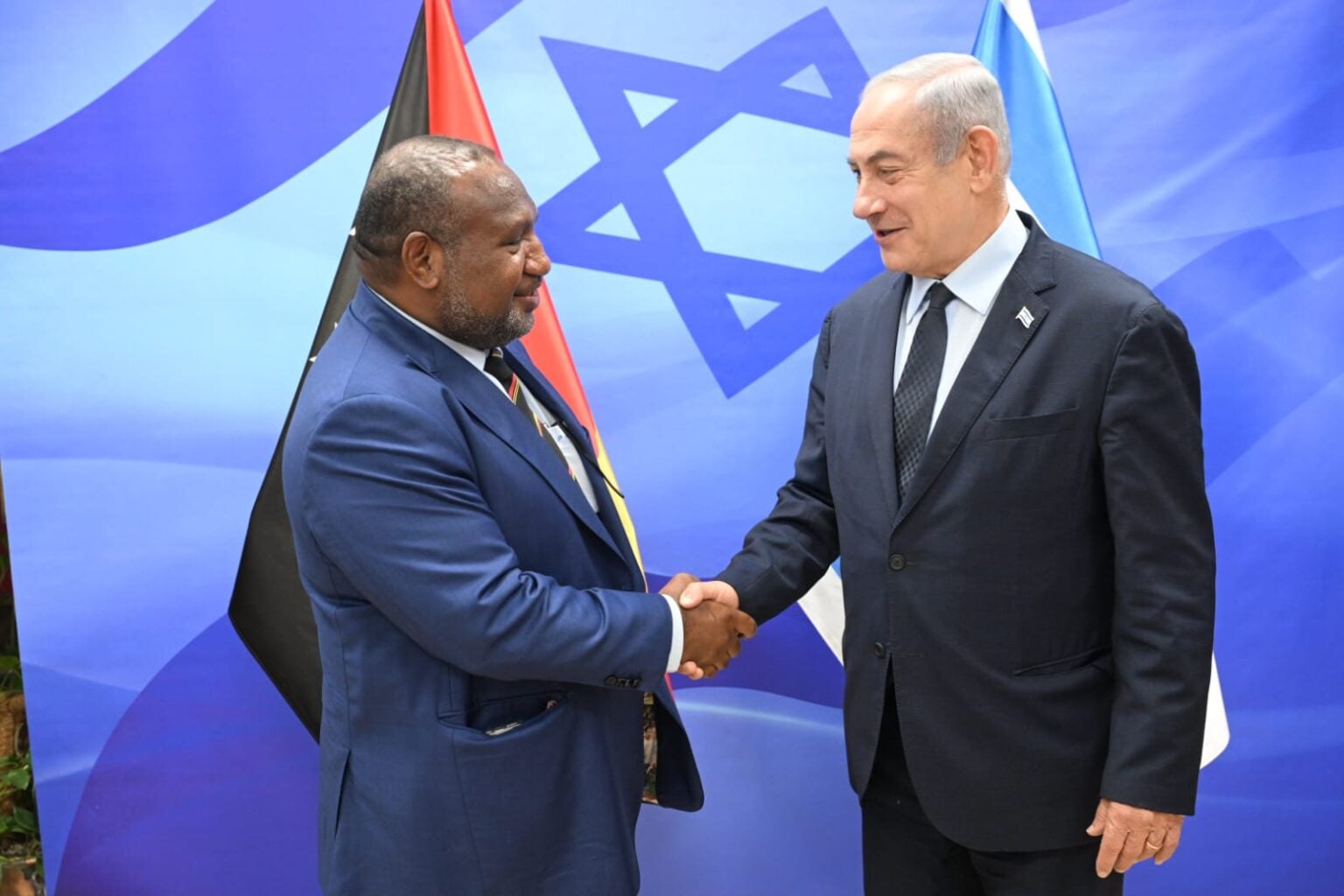
Achieving the diplomatic coup of the year, he succeeded against all odds in securing a meeting with … drumroll please … Prime Minister James Marape of Papua New Guinea.
Yup. You read this correctly. Taking up the eastern part of the island of New Guinea in Oceania between Australia and the Solomon Islands, Papua New Guinea is not and has never been a major player with respect to the Middle East, the Israeli-Palestinian conflict, or the U.S.-Israel war with Iran. Except, of course, that together with the aforementioned Solomon Islands, Papua New Guinea has been a strong supporter of Israel in global forums, and it was the first Pacific island nation to open an embassy in Jerusalem in September 2023. Also, it is a voting member of the UN General Assembly, and, perhaps most significantly in this context, Marape apparently didn’t run for the hills at the very thought of being seen publicly with Netanyahu, all of which may explain why this particular one-on-one was on Netanyahu’s UN schedule.
A meeting with President Trump, something Netanyahu desperately wanted to burnish his credentials as an influential partner of the U.S., never materialized. While Trump chit chatted amiably earlier in the week with NYC Mayor Zohran Mamdani, he couldn’t find time for even a photo op with Bibi. Perhaps especially a photo op. Secretary of State Marco Rubio must have been busy sorting his socks, but Netanyahu couldn’t get a face to face with him either. What about French President Macron? Nope. Ukrainian President Volodymyr Zelenskyy? Wasn’t going to happen. Canadian Prime Minister Mark Carney? Same answer.
To be fair, Netanyahu did meet with Argentinian President Javier Milei, Greek Prime Minister Kyriakos Mitsotakis, and a small handful of other leaders, mostly from Latin America, but these hardly top tier encounters only served to emphasize Bibi’s utter isolation on the international scene.
Accurately characterizing Netanyahu’s UN appearance as “a campaign speech,” former Israeli ambassador to the U.S. Michael Oren told Reuters that “it would be much better if that campaign speech were accompanied by a meeting with the president, or another world leader, or at least the secretary of state, but apparently it’s not. . . . I don’t recall a time when the prime minister came to the United States and didn’t meet with the president.”
In a transparent attempt to put lipstick or at least some type of lip gloss on this particular pig, Netanyahu’s office said that although many world leaders had asked to meet with him, “due to a tight schedule and the need to return before the onset of Sukkot, the Prime Minister was only able to accommodate some of them.”
And Prime Minister Marape just happened to be one of the few lucky ones? To be plausible, even spin must have at least a modicum of credibility.
On a serious note, I hope that on Oct. 27, the Israeli electorate will take note of the extent to which Netanyahu has isolated Israel. Netanyahu is not only way past his sell by date domestically. He and his extremist far-right government have become toxic globally, and that toxicity is on the verge of engulfing Israel as a whole.
Netanyahu’s alienation of his governmental counterparts across the globe extends to significant elements of Diaspora Jewry. As I have noted in earlier articles, I am not an Israeli citizen and thus do not vote in Israeli elections. But that doesn’t mean that Diaspora Jews are indifferent to or do not have a considerable stake in the outcome of the upcoming elections.
More and more Diaspora Jews who are committed to Israel as a Jewish and democratic state have been and are dismayed and repelled by the Netanyahu government’s attempt to dismantle that symbiotic Jewish and democratic essence and replace it with an ultranationalist, autocratic, and theocratic model.
The fact that many of us did not join and are not joining in anti-Netanyahu protest demonstrations should not be seen as acquiescence in the direction in which he is taking both Israel and the Israel-Diaspora relationship.
Many of us who identify as liberal Zionists and who espouse and defend the principles of liberal Zionism are being ostracized by both the Netanyahu government and its acolytes who want Diaspora Jews to act as a mindless, robotic amen corner. Spoiler alert: it’s not going to happen.
In a recent sensitive and insightful JTA article, former Israeli Defense Minister Benny Gantz warns about “a decline in our [that is, Israel’s] global standing, rising antisemitism, a weakening connection with Jewish communities abroad and, above all, a paralyzing internal divide over the questions that define who we are,” adding that “The leaders facing this moment cannot be those who deepen that divide.”
He is 100 percent right.
“American Jews,” Gantz goes on, “should never have to support every Israeli minister or government to demonstrate their support for Israel. Criticism of a political vision is not a rejection of the Jewish state. American Jews remain outside Israel’s democratic arena, but Israel is the nation-state of the Jewish people, and we must protect the dialogue over our shared future. Governments come and go; Jewish peoplehood does not.”
He is absolutely right on this point as well.
Benny Gantz may never be Israel’s prime minister. Indeed, he and his Blue & White party may not even be returned to the Knesset. But this in no way lessens the urgency of the sentiments conveyed in his call to salvage both Israel’s international image and its fraying relationships with Diaspora Jewry.
Israeli and Diaspora Jewish leaders must take Gantz’s words to heart and not just give them lip service. Those who ignore them will do so at their – and our – peril.