
Former China based editor and business development exec.
‘Netanyahu’s Path to National Ruin’
Israel faces an unprecedented crisis—not from its external enemies, but from the man who claims to be its greatest protector. Benjamin Netanyahu’s current tenure represents the most dangerous period in Israeli governance since the state’s founding, driven by a leader who has abandoned all institutional constraints and moral guardrails in his desperate pursuit to remain in power.
This is not about political disagreement or policy preferences. This is about a Prime Minister who has demonstrated, repeatedly and consistently, that he will sacrifice Israel’s democratic institutions, security, and international standing rather than face the personal consequences of leaving office while under criminal indictment.

A Man Without Limits
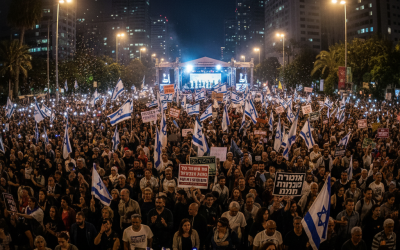
Netanyahu’s behavior since returning to power in 2022 reveals a leader operating without the normal constraints that govern democratic leadership. His judicial overhaul wasn’t policy reform—it was a brazen attempt to escape legal accountability by destroying the very courts prosecuting him for corruption. When hundreds of thousands of Israelis took to the streets, when military reservists threatened to stop serving, when the economy tanked and allies expressed alarm, a responsible leader would have paused and reconsidered.
Instead, Netanyahu doubled down. He dismissed the protests as a “minority,” ignored economic consequences, and pressed forward with legislation that would have made him effectively immune to legal oversight. Only massive sustained pressure and the October 7th attacks temporarily derailed this assault on Israeli democracy.
This pattern reveals something deeply troubling: Netanyahu has crossed the psychological line that separates democratic leaders from authoritarian ones. He no longer sees institutions as constraints on his power but as obstacles to be overcome or destroyed.
Appointing a Terrorist to Control the Police
Perhaps nothing illustrates Netanyahu’s moral collapse more clearly than his appointment of Itamar Ben-Gvir as National Security Minister. Ben-Gvir is not merely a controversial figure—he is a convicted criminal who spent years supporting Jewish terrorist organizations, kept a portrait of mass murderer Baruch Goldstein in his home, and was deemed too extreme even for the military.
Netanyahu knew exactly who Ben-Gvir was when he made this deal. He calculated that gaining Ben-Gvir’s support for his government was worth putting Israel’s police force under the control of someone who celebrates political violence. This wasn’t a mistake or an oversight—it was a deliberate choice that revealed Netanyahu’s complete abandonment of basic standards of governance.
The message this sent to Israeli society was unmistakable: there are no principles Netanyahu won’t sacrifice, no standards he won’t abandon, if it helps him stay in power.
The October 7th Catastrophe: Ignoring Warnings to Maintain Power
The intelligence failures preceding October 7th weren’t bureaucratic mistakes—they were the predictable result of a Prime Minister who systematically ignored professional assessments that contradicted his political narrative. Multiple intelligence warnings about Hamas’s growing capabilities were dismissed because acknowledging them would have required admitting his “management” strategy for Gaza had failed.
Netanyahu’s policy of allowing Hamas to remain in power while containing its military capabilities wasn’t based on security logic—it was based on his political need to avoid the costs of actually solving the Gaza problem. He chose the politically convenient option that maintained the status quo over the harder choice of genuine conflict resolution.
When October 7th exposed this policy’s catastrophic failure, Netanyahu’s response revealed his true character. Instead of taking responsibility, he blamed intelligence services. Instead of focusing on the hostages, he launched a war designed to change the subject from his failures to his supposed strength as a wartime leader.
War Crimes and International Isolation: The Price of Unchecked Power
Netanyahu’s conduct of the war in Gaza has systematically violated international humanitarian law in ways that have isolated Israel from its closest allies. The scale of civilian casualties, the targeting of humanitarian facilities, the use of starvation as a weapon of war—these aren’t accidents or unfortunate byproducts of necessary military action. They are the predictable result of a leader operating without constraints, accountability, or moral guidelines.
When the International Criminal Court issued arrest warrants, when the International Court of Justice ordered provisional measures, when even the United States began withholding weapons, Netanyahu’s response was defiant escalation. He has chosen to make Israel a pariah state rather than moderate his approach or accept international oversight.
This isn’t strength—it’s the behavior of a leader who has lost all sense of proportion and consequence. Netanyahu has made Israel less secure, not more secure, by pursuing military objectives without regard for political, diplomatic, or moral costs.
Sacrificing Hostages for Political Survival
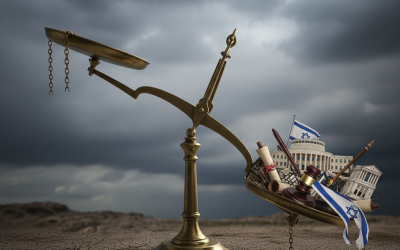
The most morally bankrupt aspect of Netanyahu’s behavior has been his treatment of the hostage crisis. Multiple credible reports indicate that hostage release deals have been available but rejected because accepting them would end the war—and ending the war would mean returning to questions about Netanyahu’s failures and legal problems.
The families of hostages have become the most credible voices opposing Netanyahu’s policies, not because they’re peaceniks or leftists, but because they recognize he is sacrificing their loved ones for his political survival. When the Prime Minister prioritizes his own political needs over rescuing kidnapped citizens, he has violated the most fundamental obligation of leadership.
A Leader Who Cannot Admit Error
Perhaps most dangerously, Netanyahu has demonstrated complete inability to acknowledge mistakes, accept responsibility, or learn from failure. This isn’t just a personality flaw—it’s a fundamental disqualification for leadership during crisis.
Every major decision Netanyahu has made since returning to power has proven disastrous: the judicial overhaul triggered unprecedented social division; ignoring intelligence warnings enabled October 7th; his war strategy has isolated Israel internationally; his hostage policy has prolonged their captivity. Yet Netanyahu has never once accepted responsibility for any of these failures.
A leader who cannot learn from mistakes will keep making bigger ones. A leader who sees criticism as betrayal will eliminate the feedback mechanisms that prevent catastrophic errors. Netanyahu has created a system where no one can tell him he’s wrong—and Israel is paying the price.
The Existential Threat
This is Israel’s existential moment—not because of external enemies, but because the country is being governed by someone who has proven he will destroy anything and sacrifice anyone to maintain power. Netanyahu has already damaged Israel’s democracy, security, and international standing in ways that will take decades to repair.
Every day Netanyahu remains in power, the damage deepens. His complete lack of self-restraint means there is no bottom to how far he will go. He has already crossed lines no previous Israeli leader would have considered crossing. What line will he cross next?
“Super Sparta”: A Vision of National Suicide
Netanyahu’s recent embrace of Israel as a “Super Sparta”—a militaristic state in permanent international isolation—reveals the final stage of his dangerous delusion. This isn’t patriotic rhetoric; it’s a man openly declaring his willingness to transform Israel into a pariah state if that’s what his political survival requires.
The Sparta comparison is more revealing than Netanyahu likely intended. Sparta was indeed militarily powerful, but it was also a society that ultimately destroyed itself through endless warfare, isolation, and internal rigidity. It collapsed because it could not adapt, could not build alliances, and could not sustain itself economically or diplomatically. This is Netanyahu’s vision for Israel—and it’s insane.
Recent military decisions confirm that Netanyahu has abandoned all professional counsel in favor of reckless escalation. The invasion of Gaza City proceeded despite explicit warnings from the security establishment about the strategic futility and enormous costs. Economists warned about the unsustainable economic burden. Diplomats cautioned about the international consequences. Netanyahu ignored them all, driven by his need to appear decisive while avoiding political accountability.
Most recklessly, his reported authorization of the strike in Doha—violating diplomatic immunity, international law, and basic norms of statecraft—represents the behavior of a leader who has completely lost touch with reality. This wasn’t strategic necessity; it was the action of someone so desperate to change the narrative that he’s willing to burn down decades of diplomatic relationships and condemn hostages to death in the process.
The Final Abandonment
Each of these decisions follows the same pattern: professional advice warning of catastrophic consequences, Netanyahu dismissing these warnings for short-term political gain, and Israeli society paying the price for his recklessness. The hostages remain in captivity partly because Netanyahu’s actions have made negotiation nearly impossible. The international isolation deepens because he mistakes defiance for strength.
The Democratic Imperative
Israeli democracy still provides the tools to remove dangerous leadership. But those tools only work if citizens use them. The upcoming election isn’t about policy preferences or partisan loyalty—it’s about whether Israel will remain a viable state or become Netanyahu’s “Super Sparta”—militarily active but diplomatically isolated, economically unsustainable, and ultimately doomed.
Netanyahu has shown Israelis exactly who he is: a man without limits, without principles, without the moral constraints that make democratic leadership possible. His “Super Sparta” vision is a confession—he is willing to sacrifice Israel’s future, its alliances, its economy, and its citizens’ lives to maintain power.
The question now is whether Israelis will act on what they’ve learned before Netanyahu’s vision of glorious isolation becomes irreversible reality. Israel can survive many threats, but it cannot survive being governed by someone who sees the state itself as expendable if sacrificing it serves his personal interests. The time for normal politics has passed. This is about national survival—and Netanyahu is the threat.
Related Topics
Related Posts