
Netanyahu’s UN Speech: Between Tragedy and Strategy
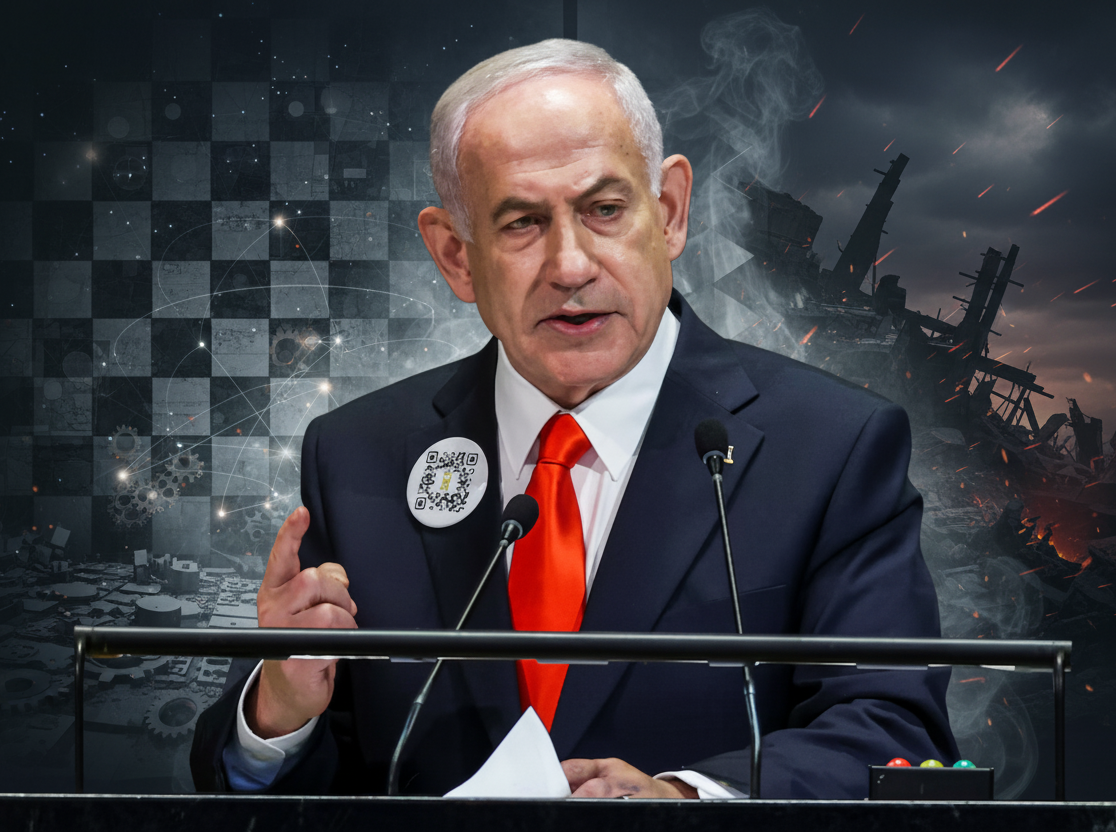
From the peaks of moral truth to the depths of a nation standing alone; from the blazing flames of righteous pathos to the mass walkout that testified to a loss of direction: The forty minutes of Netanyahu’s speech at the UN podium last Friday were a display of a leader calling on the world to take stock of itself — and of a veteran statesman refusing to answer the hard questions posed by his own people.
And it had everything.
There was the “American” Netanyahu: eloquent and forceful. The gifted leader juggling punchlines and sharp turns of phrase, props (the Iranian axis of evil), and crowd interaction. Netanyahu the questioner, the challenger, demanding that the nations return to Western morality and open their eyes. It was an important speech — perhaps his most important speech, and in that respect, he did not disappoint. Few, if any, Israeli leaders could have spoken with such fluency and seductive presence.
But alongside Netanyahu the questioner, there was also Netanyahu without answers.
Precisely in the strongest moment — when he rebuked world leaders for their hypocrisy and moral cowardice — that is exactly when Netanyahu was caught in his own failing.
“For Israel,” Netanyahu declared, “every civilian casualty is a tragedy; for Hamas, it is a strategy.”
It was pure truth — truth that had to be spoken. But precisely because it was truth, it hurt. For in the mirror of nearly two years past, it is now painfully clear: where tragedy fails, strategy must prevail. And Netanyahu — who asked, who demanded, who prodded — showed once again that he carries tragedy, but not strategy, and instead of solution, he leaves us with confusion. He who was supposed to provide a strategy clung to tragedy; he who was supposed to answer chose instead to question.
This clinging to tragedy — seen in his reading of the names of the twenty hostages still officially alive (which drove out of the hall the father of fallen hostage Itay Chen Z”L), and in his directing the world to a QR code linking to the horrors of October 7th — was chilling, but far too late.
And it’s not that he didn’t try.
His description of negotiations with Syria’s new regime, his romantic wink to Indonesia’s leader — showed a flicker of the man who once was a grand strategist. The man who, with Trump, engineered the Abraham Accords, who was courted by world leaders, who nearly delivered an historic normalization deal with Saudi Arabia. That same man now insists everything is “business as usual.” Even the Lebanese, he suggested, are just about ready to sign a deal. Geula is near, Netanyahu seemed to say. Yet he is so immersed in these visions that they almost blind him.
Is there a single Israeli who truly believes he will stroll through Damascus or Beirut as he now does in Dubai and the Emirates? Is there anyone who truly believes these are agreements of anything beyond security expediency?
The Netanyahu who crowed about expanding the Abraham Accords, who paused again and again to let the hall applaud, neglected to mention the dozens of diplomats who walked out, the contorted flight path he had to take to avoid skies where he is under arrest warrant, or the fact that most of those clapping were members of Israel’s own UN delegation.
His speech did, in authenticity, narrate Israel’s tragic story of the past two years. Righteous cause and national trauma bind every Israeli and Jew, but they are no guarantee of victory. Diplomatic deals, however important, are no substitute for the deal that matters most. Tragedy is no excuse for lack of strategy.
When the day comes and such a deal is struck, Netanyahu’s loyalists will proclaim: only he could and can and did. They will ignore the price Israel could have paid months earlier, and overlook the reckless fringe players — inexperienced, unrestrained — who now impose on Netanyahu decisions he never would have taken on his own.
And yet — it must be stressed — this was an important speech. It was good, indeed vital, that its main points — especially those aimed at the feeble leaders of the West — were spoken from the UN podium. His rhetorical skill, his schoolmaster’s tone, were powerful and carried his message forcefully. His exposure of Palestinian lies and hypocrisy was critical — especially in this place, at this moment.
What was unbearable was to see different Israel commentators gleefully rooting for their prime minister’s embarrassment; to watch their absurd, disconnected demolition of the speech right after it ended. The personal hatred of Netanyahu has created an audience that prefers its leader’s downfall — in wartime. Even if that leader bears responsibility for the price we are paying, the craving for his failure, especially on the world stage, is pathetic, shameful, and tells us more about them than about him.
Today we learned that Netanyahu opposed a Knesset committee discussion on the death penalty for terrorists, an initiative pushed by Ben Gvir. During the session, hostage coordinator Gal Hirsch emphasized that such a discussion right now undermines efforts to free the hostages. The gap between Netanyahu and the professionals on one side, and his populist extortionists in government on the other, could not be clearer. Someone — hopefully the President of the United States — must put an end to this farce.
Tomorrow, Netanyahu is expected to meet with Trump to discuss continuing efforts and practical steps for ending the war and freeing the hostages. Better then, with a little nudge from Washington, that Netanyahu move from words to deeds — and replace tragedy with strategy.