
Author of Just, Reasonable Multiculturalism (2021)
New Era: Can Andy Burnham Bring Stability?
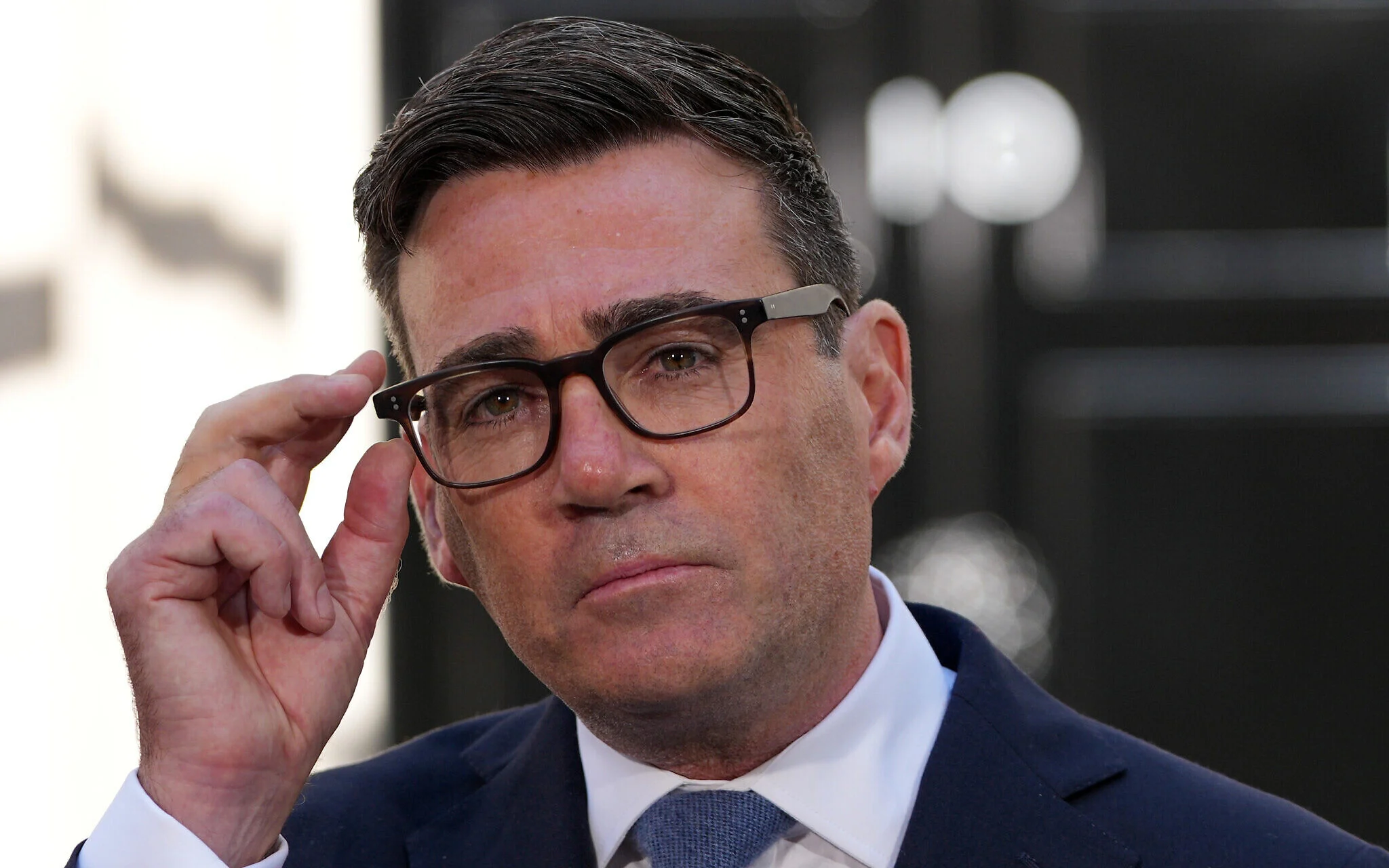
Britain’s new Prime Minister Andy Burnham speaks to staff and media at 10 Downing Street in London, July 20, 2026. (AP Photo/Kirsty Wigglesworth)
On 20 July 2026, Andy Burnham became Britain’s seventh Prime Minister in just ten years. Whatever one’s political allegiance, that statistic alone tells a story. Since the Brexit referendum in 2016, Britain has cycled through leaders at a remarkable pace, with each arriving promising renewal and departing amid disappointment, division, or crisis. Burnham inherits a desperate Labour party and a public that is craving for a positive change, whose mood is shaped by exhaustion, scepticism and a growing loss of faith in politics itself.
His immediate challenge is formidable. Economic growth remains weak, household finances are under pressure, public services are stretched and demands for constitutional and regional reform have become impossible to ignore. Internationally, Britain is still searching for a settled place in the world after Brexit, while managing relationships with both Europe and an increasingly unpredictable United States.
In his first remarks as Prime Minister, Burnham struck a markedly different tone. Rather than promising sweeping transformation, he spoke of stability, competence and rebuilding trust. He said that cost of living measures will be outlined “from tomorrow” and pledged to end rough sleeping and build more council homes, while honouring defence commitments. Burnham promised to bring respect and teamwork to politics. It was a message designed less to excite than to reassure, a recognition that many voters are no longer looking for grand promises, but for evidence that government can simply work again. His first move was to abolish VAT on electricity bills, signalling an intention to pair pragmatic governance with immediate action on the cost of living.
A Different Relationship with Washington
One of Burnham’s earliest tests will be managing Britain’s relationship with President Donald Trump.
The two men come from very different political traditions and possess sharply contrasting temperaments. Yet the realities of diplomacy leave little room for personal preference. Britain and the United States remain deeply interconnected through security, trade and intelligence cooperation, and both leaders will have strong incentives to make the relationship work.
What may distinguish Burnham is his political confidence. Unlike many recent Prime Ministers whose authority rested primarily on Westminster credentials, Burnham spent nearly a decade building a political base outside London as Mayor of Greater Manchester. That experience has given him an independent public profile and a style rooted more in direct engagement than in Whitehall process.
As a result, he may approach international negotiations with greater political self-assurance than his predecessor. Burnham has spent years operating as a public campaigner as much as an administrator, and that background could prove valuable when dealing with an unconventional American president who often responds more to political strength than diplomatic convention.
The Value of Political Instinct
Perhaps Burnham’s greatest advantage is that he understands politics as politics.
Over the past decade, British governments have often appeared overly focused on management while neglecting the importance of narrative, persuasion and coalition-building. Burnham’s career suggests a more intuitive understanding of these realities.
His years in Cabinet under Gordon Brown, followed by his tenure in Manchester, have exposed him to both national and local government. More importantly, they have forced him to engage continually with voters outside Westminster and with Labour back benchers. He understands that political success depends not merely on making decisions, but on explaining them, defending them and bringing people with you.
That instinct could help him avoid some of the mistakes that have troubled recent administrations, especially Starmer’s. Parliamentary management, party discipline and public communication are central to effective government. Burnham recognises this.
The challenge will be maintaining focus. Every incoming Prime Minister arrives convinced that the problems facing Britain are urgent. Most discover that governments quickly become overwhelmed when they attempt to solve everything simultaneously. Burnham’s success may depend less on the number of policies he announces than on his willingness to prioritise relentlessly and deliver tangible results in a small number of areas.
The Burnham Agenda
The broad shape of Burnham’s programme is already becoming clear.
First, he is expected to pursue a significant expansion of regional devolution. Having spent years arguing that Britain is among the most centralised countries in Europe, Burnham is likely to push decision-making power away from Whitehall and towards mayors and local authorities. Housing, transport and skills policy may become key areas of decentralisation.
Second, public services are expected to move back to the centre of government. Rather than focusing primarily on performance metrics and targets, Burnham has indicated a preference for improving the practical experience of citizens using the NHS, social care and other frontline services.
At the same time, he needs to be careful with finance, not trying to achieve that which is unachievable. Burnham faces the difficult task of reconciling fiscal discipline with a demand for greater public investment. The political appetite for austerity has largely disappeared, but economic reality limits the scope for expansive spending. Burnham will, therefore, need to demonstrate that reform and investment can coexist with financial credibility.
Finally, he has signalled a desire to reduce bureaucratic complexity and make government more responsive. In an era of declining trust in institutions, visible action to simplify processes and demonstrate value for money could prove politically effective.
The Real Test
Ultimately, Burnham’s success will be judged by whether he can restore a sense of competence and direction to British government. After a decade of instability, many voters are no longer searching for ideological crusades or transformational visions. They want a government that makes clear choices, delivers on its commitments and provides a degree of predictability in an increasingly uncertain world.
That may not sound particularly ambitious. In today’s Britain, however, it would be a significant achievement.
If Burnham can combine political discipline with competent delivery, his premiership could mark the beginning of a more stable chapter in British politics. If he fails, however, he will simply become another name on the growing list of prime ministers who entered Downing Street promising national renewal only to leave behind an even deeper sense of political drift and public disillusionment.
Waiting in the wings is Nigel Farage, ready to capitalise on every government misstep. Each broken promise, policy reversal or failure to improve living standards strengthens his claim that Britain’s political establishment has exhausted itself. Were Farage eventually to reach Number 10, he would lead the most radical government Britain has seen in the post-war era.
Britain has traditionally rejected political extremes, favouring pragmatism and moderation. Yet years of stagnant growth, declining public services and a succession of leaders who have promised much but delivered too little have eroded that instinct. Increasingly, voters are less motivated by ideological conviction than by frustration with the status quo. When confidence in mainstream politics collapses, the appetite for political experimentation grows.
Labour’s decision to replace Keir Starmer with Andy Burnham reflects a recognition of this danger. Burnham’s task is, therefore, not merely to govern effectively but to restore public confidence that moderate politics can still produce meaningful results. Whether he succeeds may determine not only Labour’s future but also whether Britain continues its tradition of centrist government or embarks on a far more uncertain political course.
The opportunity before him is considerable. So is the challenge.
Related Topics
Related Posts