
Articles Crafted for Action
New York’s Dystopian Makeover
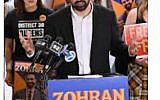 If you followed Zohran Mamdani’s campaign in New York, you probably noticed the colors first — that hyper-contrasted indigo and orange, a pairing that feels more like a tech start-up than a civic movement. The posters pop but don’t invite warmth. They’re engineered for the algorithm, not the citizen.
Even the typography tells a story: thick serif letters with sharp geometric precision — what designers call retro-futurism. It’s the visual language of inevitability: part 1970s optimism, part 2040s compliance. You don’t vote for it; you download it.
And the slogan — “For a New York You Can Afford” — sounds populist until you read it twice. It isn’t an invitation; it’s a provocation. It implies the old New York was theft, that everything before was greed, and that only ideological purification can make the city livable again. It’s a perfect trick of post-modern propaganda: mock the past while pretending to rescue it.
The Aesthetic of Inevitability
That’s the genius — and the danger — of Mamdani’s political style.
He doesn’t sell socialism through protest or chaos; he sells it through calm, minimalist inevitability. The message is clear: The future is already here. You can either adapt or look obsolete.
This is not persuasion. It’s psychological design. When campaigns begin to look like brand launches, politics stops being deliberation and starts being download culture. The voter becomes a user; ideology becomes interface.
The Language of Control Disguised as Compassion
Read his statements closely and you’ll find the same algorithmic vocabulary that now dominates corporate activism: equity, community, liberation, care. Words that sound universal but define nothing. Their emptiness is the point. When morality is aesthetic, accountability disappears.
It’s the new authoritarianism of comfort — not boots on the street but slogans in the feed. Orwell warned that tyranny could come through euphemism; he never imagined it would arrive through graphic design.
The City That Once Felt Real
I’ve lived in this city long enough to recognize when its energy changes.
New York used to be gloriously loud, argumentative, alive — Jewish delis beside Dominican bodegas, neighbors who disagreed but cared enough to shout. Freedom was noisy, and that was its beauty.
Today, the new New York feels quiet, curated, compliant. Posters tell us progress has arrived. Algorithms remind us to smile about it. The revolution is happening — and it’s perfectly color-corrected.
The Illusion of Progress
Mamdani’s campaign isn’t just a fluke of political branding; it’s a prototype. A blueprint for turning ideology into lifestyle, regression into design. It trades substance for symmetry, responsibility for rhetoric. It looks futuristic, but it’s spiritually exhausted.
That’s why this election matters. What’s happening here is not a neighborhood trend. It’s the test model for how to sell soft totalitarianism in a democracy. Make it bright. Make it modern. Make it look like freedom.
The Warning
Freedom rarely dies by force. More often, it fades by rebranding. When citizenship becomes a marketing product, when dissent looks “dated,” when morality feels like an interface — that’s when liberty is already gone.
New York once defined the American experiment. Now it’s defining its simulation.
And that should worry every free citizen who still recognizes the difference.
Related Topics