Published author, Jewish educator and scholar
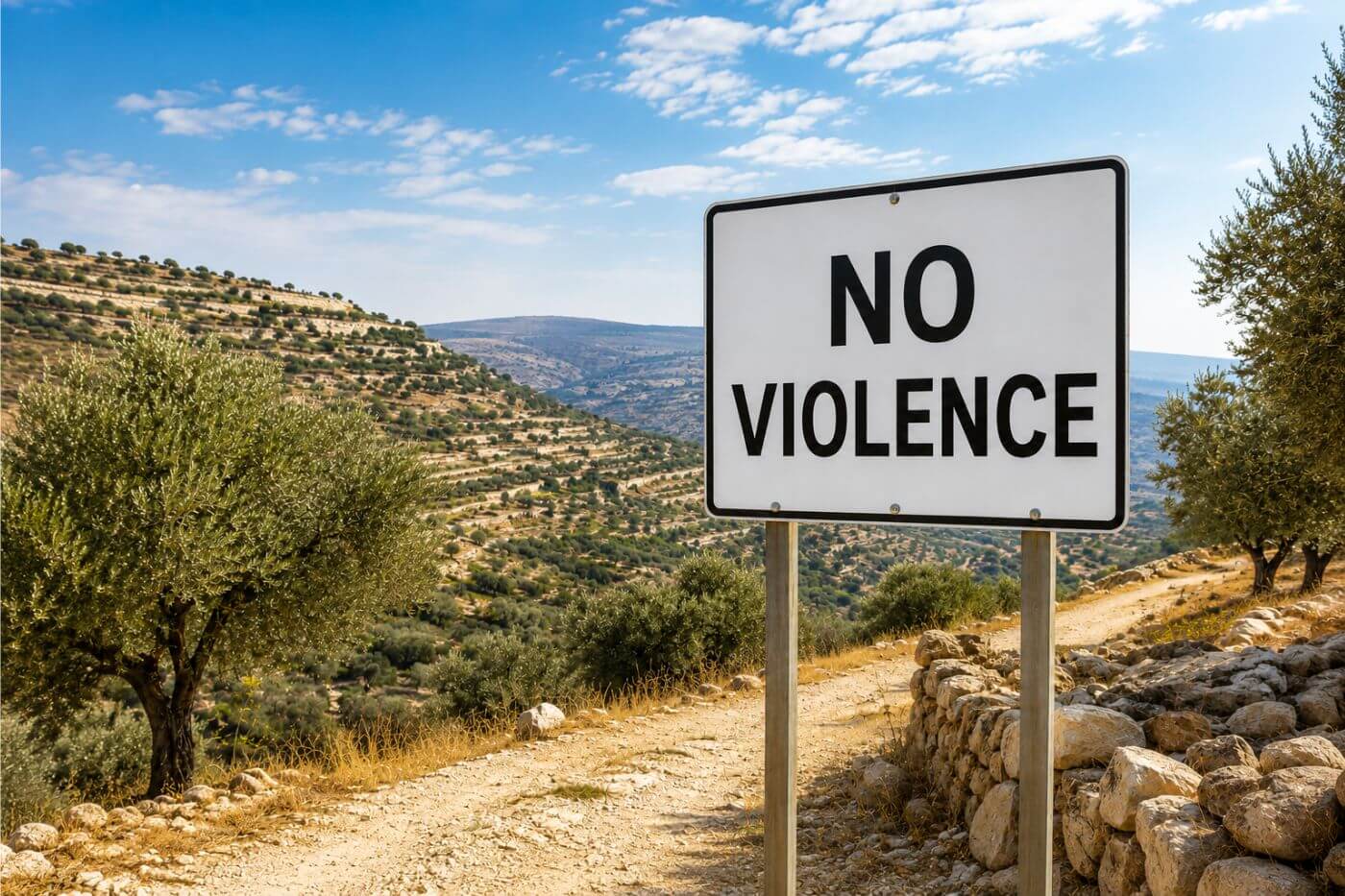
Nitzavim–Vayelech: No Violence in the Name of Torah or the Land
ChatGPT
Near the end of Parashat Nitzavim, Moses makes an enigmatic statement:
“The hidden things belong to the Lord our God, but the revealed things belong to us and to our children forever, to fulfill all the words of this Torah” (Deuteronomy 29:28).
There are things we cannot know. Human beings cannot see into other people’s hearts. We do not always know people’s motives. We cannot predict every consequence of our actions. Some things remain hidden. Those belong to God.
But Moses immediately introduces another category: the things that are revealed. Those belong to us.
That distinction imposes an enormous moral responsibility. We cannot be held accountable for what we genuinely could not know. But we cannot hide behind uncertainty when something is happening directly in front of our eyes.
That lesson has become painfully relevant in Israel today.
There has been a troubling and well-documented rise in violence by extremist Jewish settlers against innocent Palestinians in Judea and Samaria.
In the Palestinian village of Qusra, families have reported repeated attacks on their homes and property. In August, dozens of masked Jewish attackers reportedly threw stones at a home while seven Palestinians were trapped inside. Earlier incidents in the village included attacks on homes, smashed windows, physical assaults, and threatening graffiti.
These acts cannot be excused as legitimate responses to Palestinian terrorism.
There is indeed Palestinian terrorism. Israelis living in Judea and Samaria have faced shootings, stabbings, car-rammings, and other horrific attacks. A Jewish state has both the right and the obligation to protect them.
But precisely because we insist upon the moral distinction between terrorism and legitimate self-defense, we must insist upon that distinction when Jews are the perpetrators as well.
Attacking an innocent Palestinian because another Palestinian committed terrorism is not self-defense. Burning property is not self-defense. Throwing stones at a family inside its home is not self-defense. Terrorizing innocent people because of their ethnicity is not the Torah’s vision of Jewish sovereignty.
And here I believe there is another uncomfortable issue that we, particularly within the Religious Zionist community, must confront: the response of our religious leadership has too often been far too quiet.
To be clear, there have been important exceptions. Rabbi Mosheh Lichtenstein has called the violence morally and ethically wrong and argued that it must be confronted explicitly from the pulpit. A group of settler rabbis has publicly declared that violence must not be used even in situations of confrontation. Other rabbis and settlement leaders have spoken as well.
But given the seriousness and persistence of the phenomenon, where is the sustained religious outcry? Where are the sermons? Where are the public letters signed by hundreds of rabbis? Where is the educational campaign in our yeshivot and schools teaching young people that love of Eretz Yisrael can never justify cruelty toward innocent human beings?
Religious Zionism has produced extraordinary passion for the sanctity of the Land of Israel but it must speak with equal passion about the sanctity of the human being.
Indeed, the two cannot be separated. If we believe that returning to this Land is part of the fulfillment of Torah, then the way we behave in that Land must itself reflect Torah.
Our claim to Eretz Yisrael cannot merely be about where Jews are entitled to live. It must also be about the kind of people we become when we live there.
There will always be questions about which reports are accurate. There will always be disagreements about politics, territory, security, and responsibility. There will always be facts we do not know.
Those are the hidden things.
But there comes a point at which invoking complexity becomes a way of avoiding moral responsibility.
When people are beaten, when homes are attacked, when property is destroyed, when innocent families live in fear—and when perpetrators repeatedly act in the name of Jewish settlement—these are no longer hidden things. They are “revealed” and they belong to us.
This should be a wake-up call for Religious Zionism. A movement that taught generations of Jews that sovereignty creates religious responsibility must be the first to demand moral accountability when Jewish power is abused.
We should not need the international community to tell us this. We should not need foreign governments to tell us this. We should not even need the police or the army to tell us this.
Because the Torah tells us this. “The hidden things belong to the Lord our God.” But what is happening before our eyes belongs to us—and so does the responsibility to stop it.
Shabbat Shalom.
For more insights on the parasha and current events in Israel, visit
https://davidharbater.com/parasha-current-events/
Related Topics
Related Posts