
The Baal Shem Tov and Clinging Through Joy
I can’t do anything I don’t enjoy, anything I don’t feel joy in. I love my work so much and enjoy it so much that I can do therapy for hours without a word of complaint. For a long time I thought this was just my temperament and then I stopped at a verse in Devarim. Toward the end of the book comes a long list of curses and somewhere in the middle of it the reason is given. Tachat asher lo avadeta et HaShem Elokecha besimcha uvetuv levav. Because you did not serve HaShem your God with joy and with gladness of heart. So the service is being done what is missing is the joy, and the Torah counts that lack among the reasons for the curses. The Talmud looks at the same place. The Shechinah does not rest amid sadness, laziness or idle talk, only amid the joy of a mitzvah.
These words were read for centuries and still piety was often measured in sorrow. How much fasting how many tears how much remorse. In the eighteenth century in Podolia Rabbi Yisrael ben Eliezer, known as the Baal Shem Tov, turned that measure upside down. In the teachings his students gathered and passed on, the first principle in serving HaShem is to guard against sadness as much as one can. Even to someone who has stumbled into sin he says not to wallow in grief, to feel regret and return to joy. For him sadness was a trap that keeps a person from serving and so he speaks sharply about tears as well. Weeping is very bad, he says, HaShem must be served with joy. The only tears he allows are the ones that come from joy and closeness. He says a prayer offered with great joy is received better than one offered in sorrow, and he does not separate awe from joy. Awe without joy in his eyes is a gloomy way to stand before God.
He gave joy so much weight because he saw it as the way to cling. The Hebrew name for that bond is devekut from a root that means to cleave, to stick to. The first time the Torah uses this word it describes a bond between two people. Al ken ya’azov ish et aviv ve’et imo vedavak be’ishto. Therefore a man leaves his father and his mother and cleaves to his wife. After Sinai the same verb returns. This time for HaShem. Ve’atem hadevekim baHaShem Elokeichem chayim kulchem hayom. You who cling to HaShem your God are all alive today. The Talmud pauses over this verse and asks an honest question. If HaShem is a consuming fire, how can a person cling to Him? Its answer sends a person back to people. Cling to the wise, do them kindness, share in their work.
Ramban describes devekut as remembering HaShem and His love at every moment, so that even while speaking with others a person’s mouth and tongue are with them and his heart is with Him. When I read this I thought of the hours I spend in therapy, while I listen to the person in front of me, I do it the way I do all my work, as if I were doing it for Him, and maybe that is why I never notice the hours passing.
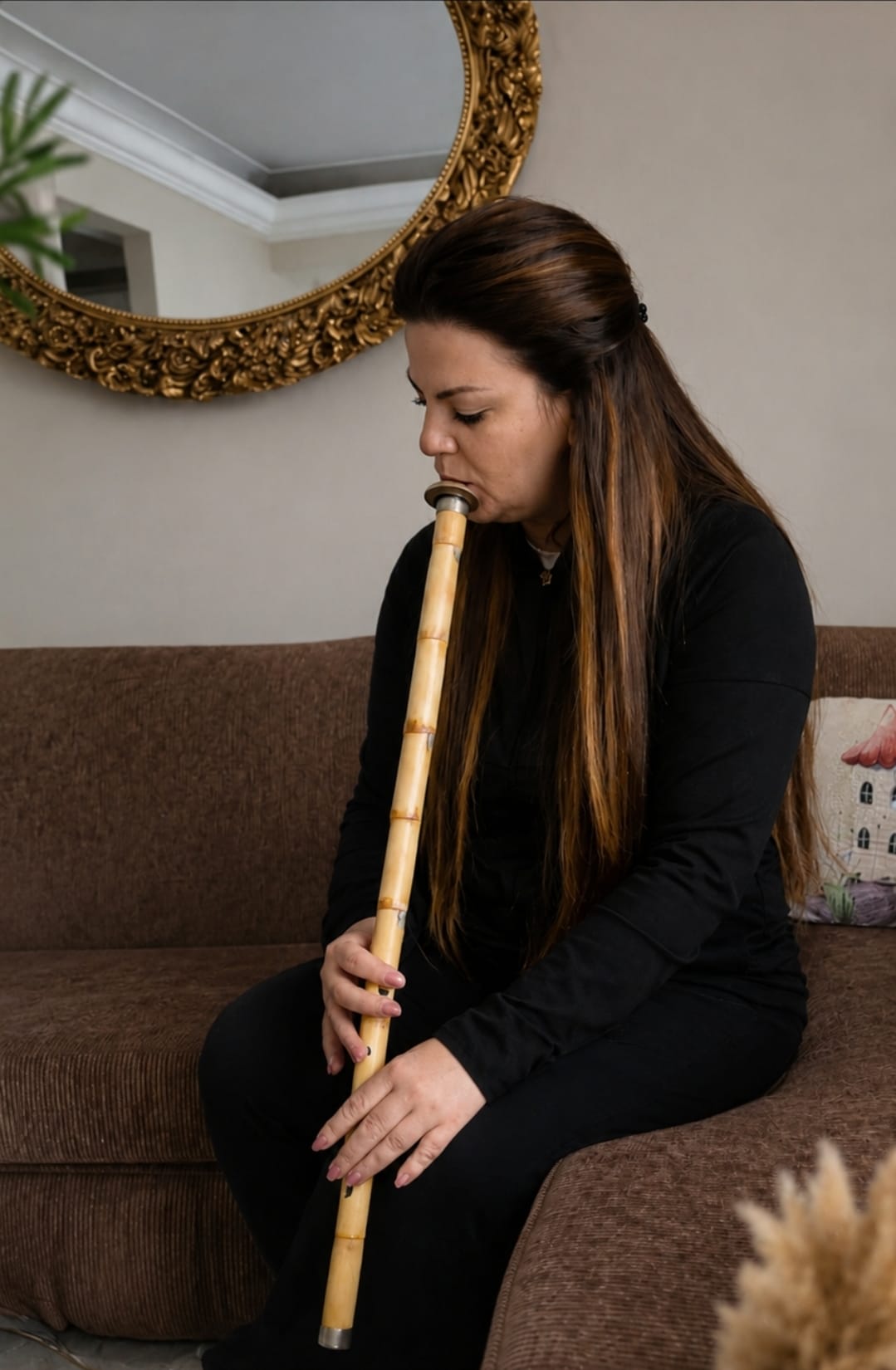
For the Baal Shem Tov too a person could stay clinging to Him while eating, working and talking, with no need to withdraw from the world. The verse in Mishlei, bechol derachecha da’ehu, know Him in all your ways, stands at the center of his teaching. I feel closest to Him when I dance, when I play the ney, the reed flute, and when I write. David too danced before HaShem with all his strength as the Ark was brought up to Jerusalem. VeDavid mekarker bechol oz lifnei HaShem. And the last psalm in Tehillim, as it lists the ways of praise, names the drum and the dance, the strings and the pipe. Haleluhu betof umachol, haleluhu beminim ve’ugav.
For me this closeness begins the moment I wake up. When I open my eyes the first thing I do is say good morning to Him and make a beracha. In Modeh Ani the prayer said each morning a person gives thanks before even getting out of bed, before washing their hands. The prayer’s last words, rabbah emunatecha, great is Your faithfulness, come from Eichah. In Eichah these words are spoken in the middle of ruin, and just before them it says chadashim labekarim, they are new every morning.
The rule I keep for myself comes from here too. I bond with what brings me closer to HaShem and keep away from what draws me away from Him. What first drew me to the Baal Shem Tov was his counsel to live in joy and gladness. Among his sayings is one very close to this rule, that the essential thing is to let go of sadness and hold on to joy. A story attributed to him speaks from the same place. On Yom Kippur, during the Ne’ilah prayer, a shepherd boy who cannot read takes a small whistle from his pocket and blows it with all his might. The people in the Kal are angry with him. The Baal Shem Tov says that this sound carried all the prayers up to heaven. The story’s roots turn out to be older. In the twelfth century Sefer Hasidim, a boy who does not know how to pray serves HaShem by leaping over a ditch. The story has passed from hand to hand over the centuries, and in every telling there is someone who cannot pray, and his joy is accepted.
When I pick up my ney I can’t help thinking of that boy. The Talmud’s words stay with me too. The Shechinah rests amid the joy of a mitzvah. Tomorrow morning I will say good morning to Him again.
- Devarim 28:47. https://www.sefaria.org/Deuteronomy.28.47
- Babylonian Talmud, Shabbat 30b, the Shechinah rests amid joy. https://www.sefaria.org/Shabbat.30b
- Tzava’at HaRivash 44, 45, 46, 107 and 110, compiled by the Baal Shem Tov’s students. https://www.chabad.org/library/article_cdo/aid/145465/jewish/Tzavaat-Harivash-44.htm
- Keter Shem Tov 302.
- Bereshit 2:24. https://www.sefaria.org/Genesis.2.24
- Devarim 4:4. https://www.sefaria.org/Deuteronomy.4.4
- Babylonian Talmud, Ketubot 111b. https://www.sefaria.org/Ketubot.111b
- Ramban on Devarim 11:22. https://www.sefaria.org/Ramban_on_Deuteronomy.11.22
- Mishlei 3:6. https://www.sefaria.org/Proverbs.3.6
- Shmuel II 6:14. https://www.sefaria.org/II_Samuel.6.14
- Tehillim 150:4. https://www.sefaria.org/Psalms.150.4
- Eichah 3:23. https://www.sefaria.org/Lamentations.3.23
- Sefer Hasidim and the Hasidic tale of the whistle. https://books.openbookpublishers.com/10.11647/obp.0284/ch12.xhtml