No Bad Bunny for the Diaspora Jewish World
“The Jewish world needs a Bad Bunny,” Joshua Hoffman argues, invoking the Puerto Rican superstar whose Spanish-only Super Bowl halftime show turned reggaeton into a triumphant display of unapologetic cultural pride on America’s biggest stage. Hoffman wants a Jewish cultural force that “finds new language, new sound, new icons that translate old identity into something that feels alive right now”, making Jewishness feel “confident, cool, modern, and unavoidable” to Jews and non‑Jews alike. While his envy of Bad Bunny’s authentic cultural vitality is understandable, his essay rests on a Diaspora-based idea of what “the Jewish world” is, and on misplaced expectations of what American Jewish culture can presently yield.
Israel already has “Bad Bunnies”
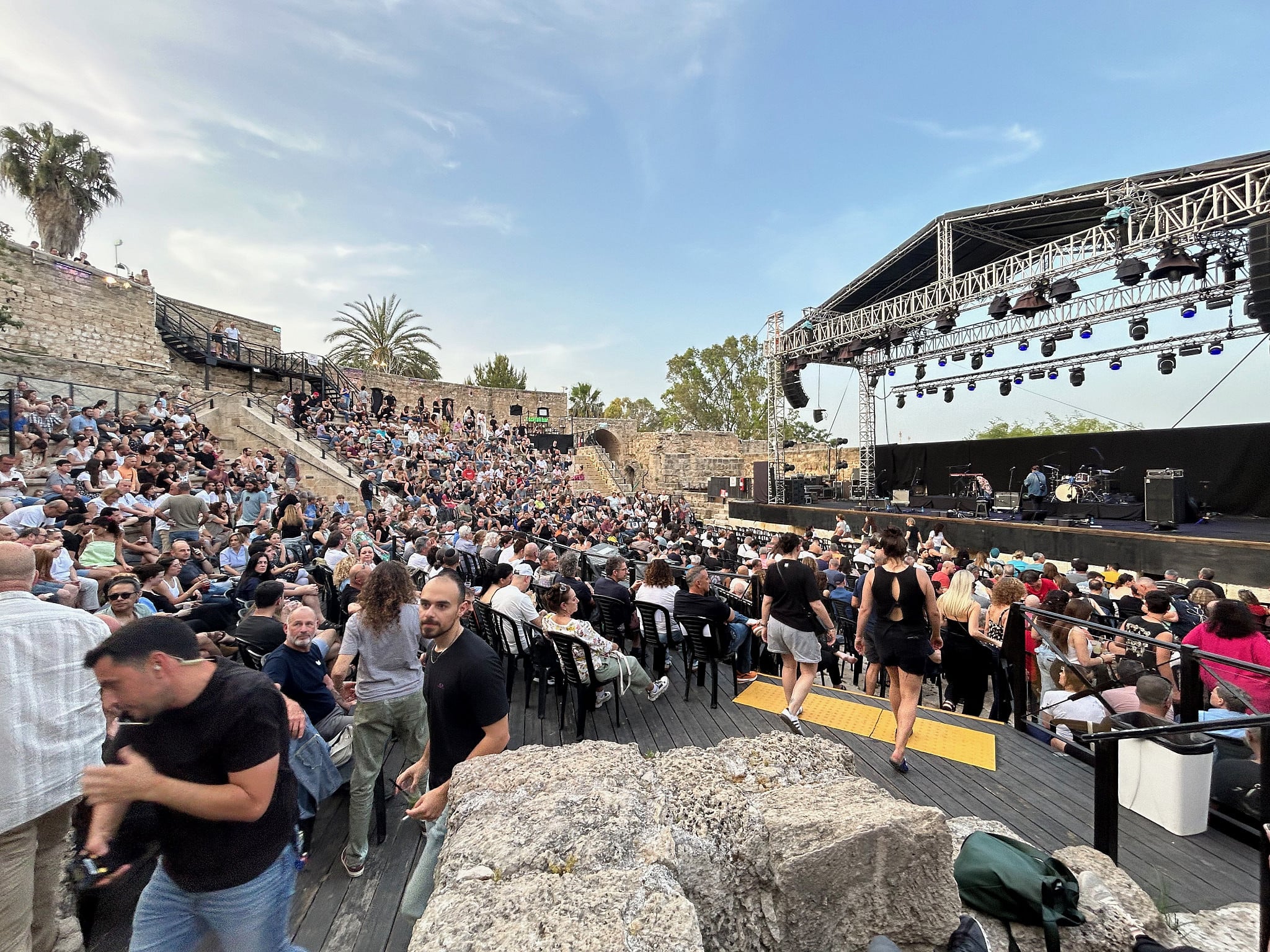
Where you stand depends on where you sit. Hoffman treats “the Jewish world” as if it were essentially a North American English‑speaking space, overlooking the fact that Israel’s 7.5 million Jews (and the estimated 600,000 Israelis living in the Diaspora) now make up much more than half of the global “Jewish world”. In Israel, the cultural project he dreams of – “when culture moves on Jewish terms, without translation” – already exists in abundance: a thriving Hebrew popular culture in music, theater, dance, spoken word, and literature that continuously remixes Jewish texts, sensibilities, and lived experiences, into something unmistakably contemporary. Israeli music in particular fuses Western musical styles, such as rap, with Mediterranean and Oriental sounds, in a vital Hebrew that ranges from Biblical to Hasidic to Arabic- and English-inflected modern slang. Like the 700 million birds that migrate through its airspace, the cultural currents in Israel’s musical airspace are rich, complex, diverse and beautiful, in which Jewishness is not a footnote but part of the air the culture breathes.
Israel currently has a dozen Hebrew performing artists every bit as talented, energetic, authentic, and lively as a Spanish-speaking Bad Bunny, and their work is consumed daily by millions of Jews who experience it as the default soundtrack of their lives. While unfamiliar to most American Jews who do not understand Hebrew, Israeli popular music is already “a cultural force that makes Jewishness feel confident, cool, modern, and unavoidable” and that enchants more than half of the world’s Jews.
It seems what Hoffman really wants is some Jewish cultural expression that would make American Jewish life feel compelling, substantive, and attractive, both to Jews on the edge of disengagement and to the surrounding non‑Jewish public.
(Let’s set aside the silly idea that even if there WAS an American Jewish culture that was exciting, appealing and authentic, and that COULD be celebrated in song by a performance artist, that it would come about because of funding or support from Jewish charitable or communal organizations. As he himself notes, “Bad Bunny did not emerge from a foundation grant designed to “combat anti-Puerto Rican sentiment”. Likewise, the vital Israeli music scene did not emerge because of government allocations, but as an organic part of the popular culture of a Jewish majority society. Cultural expressions are authentic products of dense, self‑confident communities; they are not manufactured by grant committees.)
It is also worth underscoring how unusual Hoffman’s examples are. Bad Bunny’s reach is turbocharged by the presence of more than 60 million Latinos in the United States and by Puerto Rico’s complex status as both American and Latin American. K‑Pop’s success in the U.S. is likewise the exception rather than the rule. Even large mature cultures like France, Germany, Italy, (let alone Poland, Greece or Thailand), have not produced any equivalent to Bad Bunny or K-Pop that celebrate French, German or Italian popular culture and are known in the US. Expecting contemporary Jewish civilization to generate a parallel cultural phenomenon misunderstands the rarity behind such breakthroughs.
The thinness of current American Jewish culture
Hoffman’s longing for a Diaspora Jewish Bad Bunny also avoids a harder truth: contemporary non‑Orthodox Jewish life in the United States is not a particularly rich or distinctive cultural ecosystem from which a world‑shaking pop icon is likely to emerge. Most American Jews are highly assimilated, with increasingly tentative connections to their Jewish roots, Jewish learning or Jewish culture. Jewish reference points compete with and are usually eclipsed by a broader liberal, college‑educated American identity in which most markers of specifically Jewish difference are either softened or largely erased. This does not mean American Jewish life is worthless; it does mean that its cultural raw material is thin compared with communities in which everyday practices, language, and social worlds are more intensely and self‑consciously Jewish.
Of course, this excludes the Orthodox and ultra-Orthodox, who do have a deeply rooted authentic communal culture, but that dense culture is not one with broad appeal. Within Orthodox communities, there is a lively religious music scene — Hasidic pop, yeshivish rock, the Jewish equivalent of Christian contemporary music — that does what Hoffman praises: it translates inherited texts and motifs into something emotionally immediate in contemporary form. Yet its appeal is very limited; its lyrics, codes, and aesthetics are aimed at insiders and do not speak to a broader audience. Modern Orthodox Jews, many of whom are fluent in Hebrew and closely tied to Israel through study and family, often draw on Israeli popular music (especially spiritual Hebrew pop) for their cultural diet, further undercutting the need for a Diaspora Jewish Bad Bunny.
Jewish writers were once literary Bad Bunnies
But although current secular “American Jewish culture” today is not something alive, confident and magnetic – “so that Jewishness itself becomes impossible to dismiss” – that was not always the case. Hoffman himself alludes to the possibility of a Jewish Bad Bunny taking some cultural form other than music.
Perhaps Hoffman forgets that this already DID happen – during the American Jewish literary Golden Age, from after World War II until not so long ago. That was an era when English literature written by Jews, much of it steeped in the Jewish experience, had a heyday, when it was extremely popular, prize-winning and prominent. The best-selling author Saul Bellow won the Nobel Prize in Literature (1976), the Pulitzer Prize for Fiction, and three National Book awards. Best seller Phillip Roth won the Pulitzer Prize, two National Book awards, three Penn-Faulkner awards. And there was also Bernard Malamud, Cynthia Ozick, Herman Wouk, Chaim Potok. In Canada there was Mordecai Richler, and in England Howard Jacobson. Their novels spoke powerfully to non‑Jewish audiences while giving Jews the feeling that their particular histories, neuroses, and aspirations were central to the cultural conversation “so that Jewishness itself becomes impossible to dismiss”.
Alongside them stood a host of Jewish comedians whose sensibilities – rooted in Yiddishkeit, immigrant memory, and outsider irony – reshaped American humor, from the Borscht Belt to late‑night television and Hollywood film. This era made Jewishness a compelling “other” in the American imagination: distinctive enough to be noticed, close enough to the cultural center to be admired.
But that heroic era is over. Jews are no longer – as once they were – an interesting “other”. Post-War Jewish writers, with their immigrant roots and their bold yearning to have their unique Jewish voices heard, are a thing of the past, and the once-popular celebration of their schtick is long over. Today the vast majority of non-observant American Jews are virtually indistinguishable from non-Jewish college-educated liberal Americans. Once celebrated for breaking into a WASP-dominated establishment through their hard work, Jews are now in a downward decline as they go from being an admired minority to a despised minority. In a post-liberal America, the literary and political landscape is being reshaped by new demographic coalitions and post‑colonial narratives with little sympathy for Jewish historical experience.
A fading American Jewish epoch
I do agree with Hoffman that the current defensive posture of traditional Diaspora Jewish communal organizations is not particularly appealing, as they deal with the rise of antizionism (antisemitism in its current form, or as I prefer to call it, Judeophobia). Unfortunately, it has become necessary to once again protect the civil rights of Jews as they return to being a disfavored minority, and as they are shunted out of popular American culture in favor of new arrivals.
The election of Mamdani as the mayor of New York, a city that for decades was seen as the capital of Diaspora Jewry, is a striking marker of the end of the American Jewish Golden Age. We can only hope that the end of this Jewish Golden Age will not be catastrophic, as was the end of the German Jewish Golden Age that culminated in Weimar, or the Arabic-speaking Andalusian Jewish Golden Age that ended with the rise of the Almohad fundamentalists in the 1140s. For the shrinking group of secular American Jews who strongly identify as Jewish, the realistic hope may simply be a life free from violence, social exclusion and open intolerance, rather than a return to cultural centrality.
If Hoffman is looking for thick, self-confident Jewish civilization, he can find it in Israel, which, with all its multiple faults and existential challenges, has an incredibly rich and vibrant Hebrew culture. An authentic Hebrew speaking cultural world that unselfconsciously “makes Jewishness feel confident, cool and modern”.
But I’m afraid that there will be no Jewish Bad Bunny at any Super Bowl halftime show – or anywhere else in the embattled Jewish Diaspora.