Kindness is a habit, not an event.
No Bride or Groom Should Walk to the Chuppah Alone
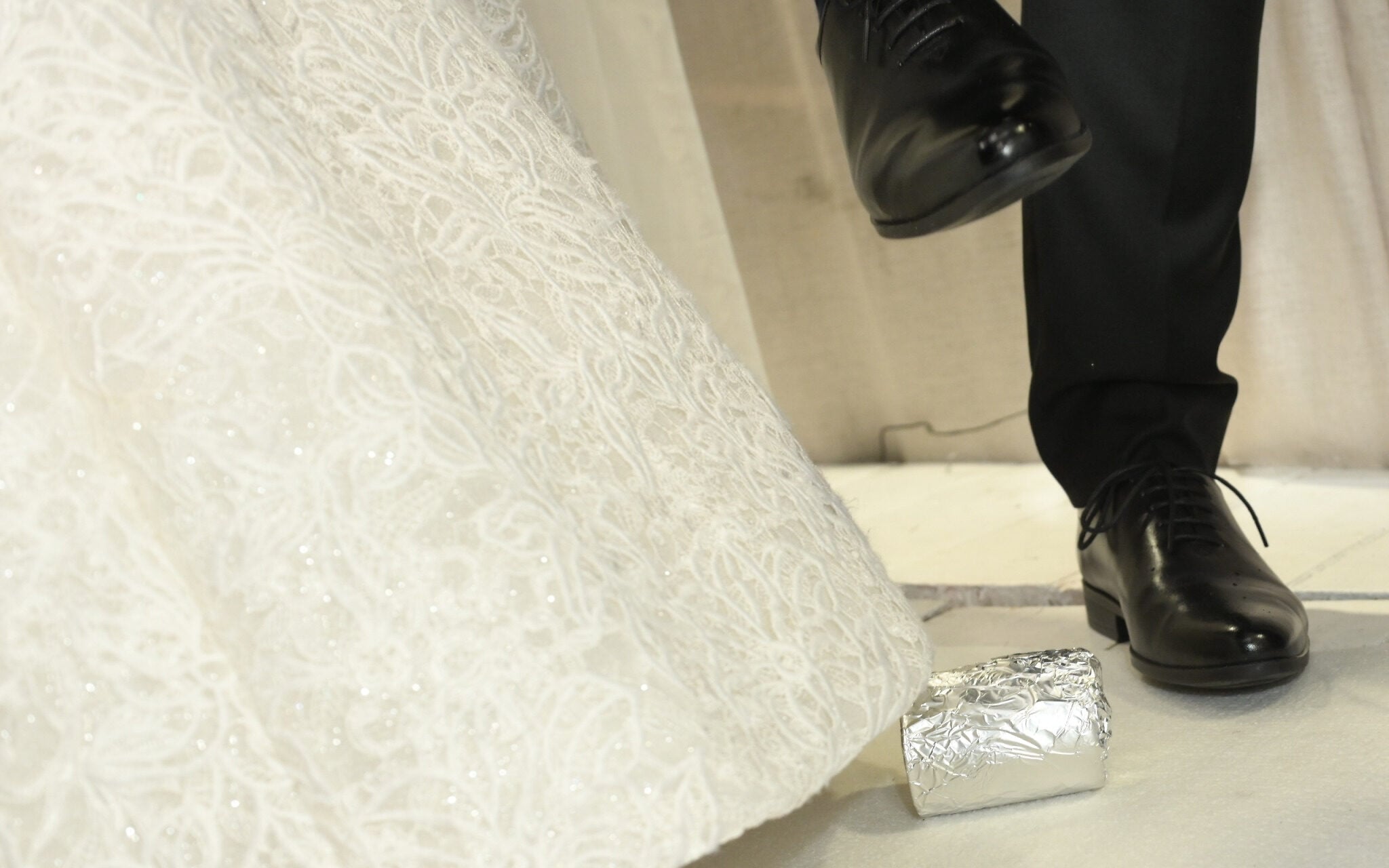
Breaking the glass under the Chuppah. Photo by Menachem Yosifon, public domain (CC0), via Wikimedia Commons.
In my first post, I wrote about my great-grandfather, Rabbi Raphael Baruch Toledano, Zt”l (“may the memory of the righteous be a blessing”), Chief Rabbi of Meknes, and the institutions of Chesed he built there. One of them has stayed with me more than the others: מֹהַר הַבְּתוּלוֹת (Mohar HaBetulot, “a dowry for brides”). Its purpose was simple. No young couple in Meknes should be kept from the Chuppah because they could not afford it.
A wedding is supposed to be the happiest day of a person’s life. But for a young man or woman who has lost their parents, it can also be one of the hardest. To stand under the Chuppah without a mother or father there is a pain I cannot even imagine.
Four couples
Over the past few years, through Rafi Toledano | Philanthropies, I was Zocheh (granted the merit) to fully sponsor four weddings in Israel. In every one of them, both the bride and the groom were orphans. The brides were students at Seminar Tehillah in Bnei Brak, and it was through Rabbi Moshe Vaknin, Shlit”a (“may he live a long and good life”), of Seminar Tehillah, that I was able to be part of their Simchas. I am deeply grateful to him.
Honestly, it is hard for me to put into words what those weddings meant to me. Just writing about them makes me emotional. Four young couples who had every reason to feel alone on that day stood under the Chuppah with joy, and I had even a small part in that. It is one of the greatest merits of my life.
Its fruits in this world
Every morning, we say in the Siddur: אֵלּוּ דְבָרִים שֶׁאָדָם אוֹכֵל פֵּרוֹתֵיהֶם בָּעוֹלָם הַזֶּה (“These are the deeds whose fruits a person enjoys in this world”), while the principal remains for the World to Come. Among them is הַכְנָסַת כַּלָּה (Hachnasat Kallah, “helping a bride to the Chuppah”).
Look at where it appears. Hachnasat Kallah sits right between בִּקּוּר חוֹלִים (Bikur Cholim, “visiting the sick”) and לְוָיַת הַמֵּת (Levayat HaMet, “escorting the departed”). Why would a wedding stand between a sickbed and a funeral?
My Rabbi, Rabbi Yitzchak Friedland, Shlit”a, shared with me a beautiful explanation from the Steipler Gaon, Zt”l, one of the great Torah sages of the last generation: this is no accident. Hachnasat Kallah stands between the two to teach us its power: helping a bride and groom reach the Chuppah can keep a sick person from ever reaching the next words on that list.
Those words mean more to me now than ever. The fruits are a young couple building a Jewish home. They are a Chuppah that might not have happened otherwise. They are a bride and groom who knew, on the day they missed their parents most, that Klal Yisrael was standing with them.
In his name
A century ago, my great-grandfather made sure no couple in Meknes would be kept from the Chuppah. I am simply trying to follow in his footsteps.
In his name, Hachnasat Kallah will remain one of the ongoing initiatives of Rafi Toledano | Philanthropies. B’ezrat Hashem (with Hashem’s help), there will be many more Chuppahs to come.
Related Topics