
No One Is Coming: What Warsaw 1944 Teaches Israel About Allies
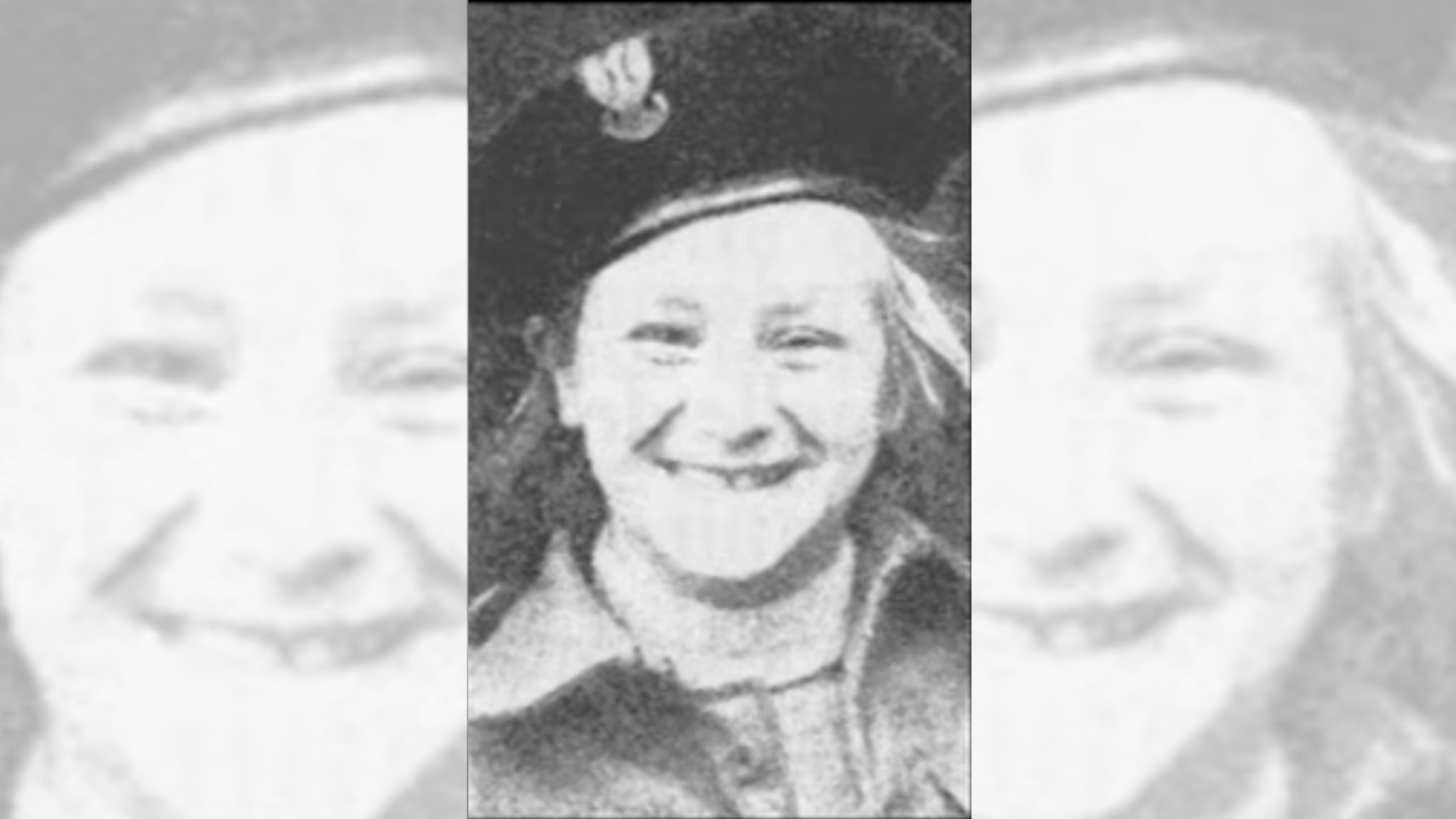
Twice in two years, the world watched Warsaw burn and did not come. A nine-year-old Jewish girl survived both fires. What her generation learned became the State of Israel. We should not need to learn.
In August 1944, if you stood on the east bank of the Vistula River and looked west, you could watch Warsaw die. Smoke darkened the sky by day. Fires lit it by night.
Soldiers of the Red Army stood on that bank for weeks.
They watched.
They waited.
They did not cross.
On the opposite bank, inside the burning city, was a nine-year-old Jewish girl with a pistol and a nom de guerre.
Her name was Edna. She was my mother-in-law.
Born at 18 Miła Street, later the site of the ŻOB command bunker during the Warsaw Ghetto Uprising, she survived the ghetto, escaped to the Aryan side under a false Catholic identity, and became one of the youngest soldiers in the Polish Home Army. Her nom de guerre was Kajtek. She carried messages through sewers and sniper alleys, was wounded by a grenade, and received Poland’s Cross of Valor when the Warsaw Uprising surrendered.
The Home Army surrendered on October 2, 1944.
It was her tenth birthday.
Nine years old when she picked up the pistol. Ten on the day the city laid down its arms. An age for schoolbooks and skipped rope, not sewers, false identities, and burning cities.
She had already learned what happened when the world watched and did not come.
The First Fire
In April 1943, the Jews of the Warsaw Ghetto rose against the Germans with pistols, homemade grenades, and almost nothing else. They did not expect to win.
They expected to choose how they died.
For nearly a month, a few hundred fighters held off the SS while the ghetto burned around them.
Hidden on the Aryan side under a false Catholic identity, Edna watched the glow from an apartment window. Inside those flames lay her birthplace.
So did almost everyone she had ever known.
The world knew.
So did the Allied governments.
Appeals reached the outside world.
No meaningful military aid reached the fighters.
The Jews of Warsaw learned, in the hardest way possible, that they could count on no one but themselves.
Sixteen months later, Warsaw learned the same lesson.
The Second Fire
By late July 1944, the Red Army had reached the outskirts of Warsaw. Soviet radio broadcast appeals urging the city to rise. On August 1, eighty-two years ago this week, believing liberation was only days away, the Polish Home Army launched the Warsaw Uprising.
Instead, it fought for sixty-three days against an enemy that murdered an estimated 40,000 to 50,000 civilians in the Wola district during the first week alone.
And Stalin’s armies stopped at the river.
Moscow dismissed the uprising as a reckless adventure and its leaders as criminals. A liberated Warsaw under the Home Army threatened Stalin’s plans for postwar Poland. Whatever military constraints Soviet forces faced, Stalin refused for weeks to allow Allied aircraft to use Soviet airfields, forcing British, Polish, and South African crews to fly all the way from Italy to deliver only a trickle of aid. By the time he relented, much of that aid fell outside the insurgents’ shrinking territory.
Edna was there throughout, a child carrying messages through streets the world had already abandoned.
On October 2, the Home Army surrendered.
An estimated 150,000 to 200,000 civilians were dead.
Edna was marched into a German prisoner-of-war camp, one of the youngest known child POWs of the war.
After the surrender, German demolition squads systematically destroyed what remained of Warsaw. By January 1945, roughly 85 percent of the city’s buildings had been destroyed through the 1939 invasion, the destruction of the ghetto, the uprising, and the deliberate demolition that followed.
The Red Army crossed the Vistula into a city of ruins.
The consequences did not end there.
The destruction of the Home Army weakened Poland’s non-Communist resistance just as the Allies were deciding the country’s future. At Yalta, Poland’s fate was determined by the great powers, and the nation emerged under Soviet domination for nearly half a century.
Abandonment by an ally is never a single event.
It compounds.
It shapes everything that follows.
Twice in two years, help stood within reach of Warsaw.
It chose not to come.
Edna’s generation drew the only rational conclusion.
What They Built From the Lesson
Here is what that lesson looked like in one family.
Edna’s brother, Yakov, survived because he saw the truth before many adults around him did. After the war, he helped found Kibbutz Lohamei HaGetaot, the Ghetto Fighters’ Kibbutz, established by survivors of the Warsaw Ghetto Uprising who believed the next Jewish battle would be fought on Jewish soil, with Jewish weapons, under Jewish command.
Edna eventually made her home there.
There she met Harry, the man she would marry. Harry had sailed for the Land of Israel aboard the Exodus 1947, another ship the world turned away.
One family.
One history.
One lesson purchased at almost unimaginable cost.
No one is coming to save you.
Israel was not founded on optimism about the goodwill of nations.
It was founded on memory. On two fires in one city, and on what happened when help stood close enough to see the smoke.
Edna almost never spoke about politics.
She did not need to.
She had already lived the lesson history was still trying to teach.
Reading the Trend Lines
History deserves precision.
America is not the Red Army waiting on the east bank of the Vistula. For decades the United States has been Israel’s indispensable ally. To suggest otherwise would be false.
But the lesson of Warsaw is not to reject allies.
It is to understand what alliances can and cannot do.
Nations ultimately act according to their own interests. Interests evolve. Governments change. Public opinion changes. Strategic priorities change.
Public support for Israel has become more divided than it once was, particularly among younger Americans. Debate over America’s role in the world has also changed, with a growing willingness across parts of the political spectrum to question long-standing overseas commitments.
These are not predictions.
They are trend lines.
Warsaw’s tragedy was not that support disappeared overnight.
It was that those depending on it discovered, at the worst possible moment, that it was more fragile than they believed.
Help was close enough to hear.
It never crossed the river.
The Girl With the Pistol
Edna never waited for history to become fair.
At nine years old, in a city the world could see burning, she picked up a pistol and crossed streets that grown men feared to cross.
That is the inheritance she left.
Not bitterness.
Not paranoia.
Clarity.
Cherish your allies.
Strengthen your alliances.
But never build your survival on the assumption that someone else will cross the river.
Alliances are weather.
Sovereignty is climate.
A nation stakes its survival on the climate, never on the forecast.
For nearly two thousand years, Jews lived in other nations’ weather.
Warsaw taught, at unbearable cost, why that could never again be enough.
Israel exists so that no Jewish child will ever again stand in a burning city waiting for an army across the river.
The army across the river had tanks.
Artillery.
The strength of a great power.
Edna had a pistol.
A nom de guerre.
And a reason.
History remembers which of them showed up.
–
Janet Bond Brill, PhD, is the author of Little Edna’s War, based on her mother-in-law’s Holocaust testimony, published on January 27, 2026, on International Holocaust Remembrance Day. Order Now.