CEO of Time to Stand Up for Israel
No One Left Behind: Israel’s Sacred Duty
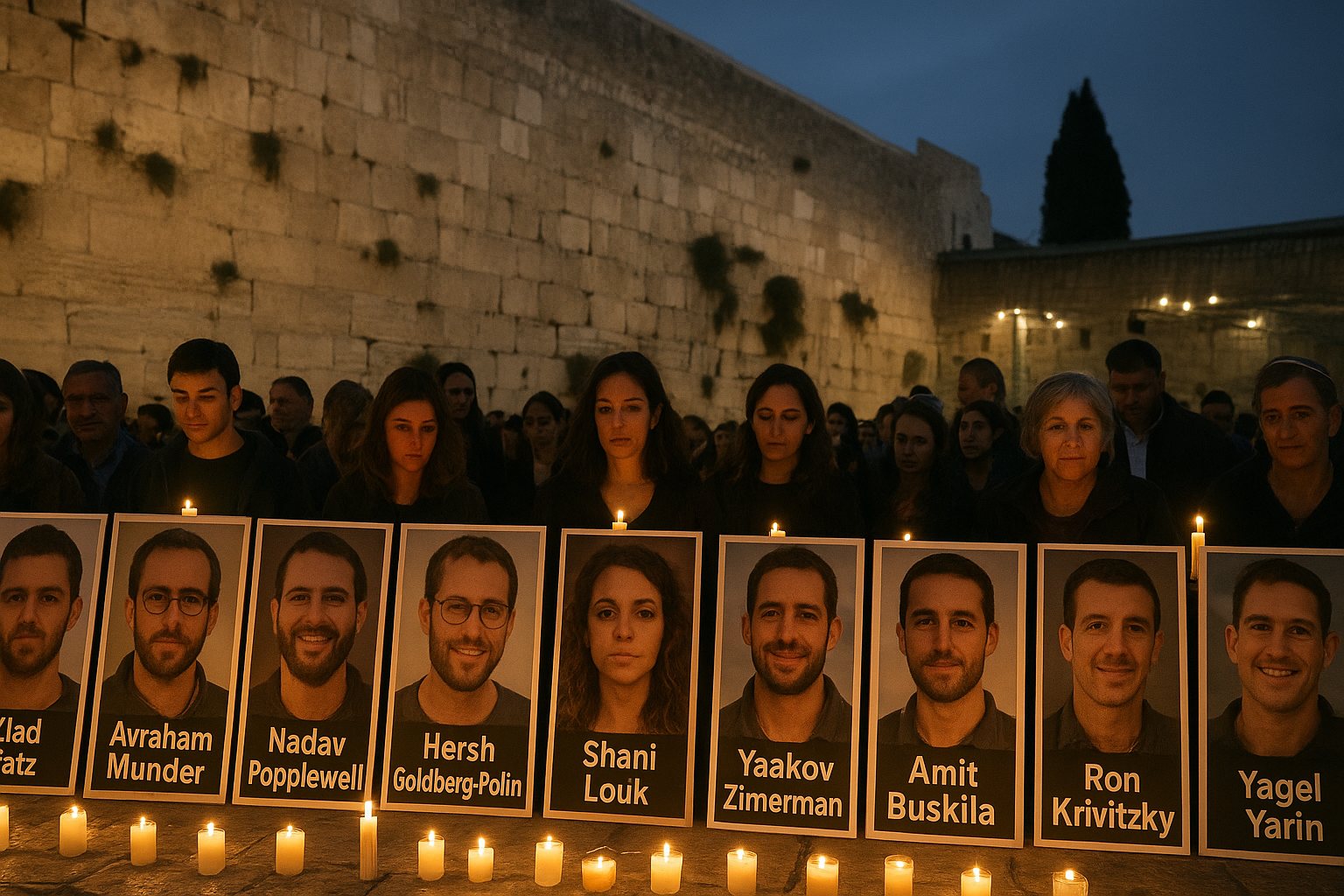
Photo credits: Sabine Sterk (AI)
For most nations, war ends when the guns fall silent. But for Israel, the battle continues long after, in the unrelenting quest to bring every son and daughter home. Whether alive or deceased, no Israeli hostage, soldier, or civilian is ever forgotten. The return of the dead is not merely a moral act or a political statement, it is deeply embedded in the Jewish soul, culture, and history.
The Pain of Uncertainty
When hostages are taken, the pain of captivity reaches far beyond those held, it spreads to every corner of society. Families wait by the phone for months, sometimes years, not knowing whether to hope or mourn. When their loved ones never return or when Hamas refuses to release their remains, the agony becomes endless.
Psychologists call this “ambiguous loss”, a grief without closure. It’s a wound that cannot heal because there is no final goodbye. Families live in emotional limbo: every rumor, every unverified report, every negotiation reignites both hope and despair. This uncertainty is a form of psychological torture, one that Hamas knows well and deliberately exploits.
Hamas and the Weaponization of Deceit
For decades, Hamas has used both living and dead hostages as tools of manipulation. Their strategy is simple but cruel: keep families and a nation hostage to uncertainty. Even after all living captives are freed or confirmed dead, Hamas often withholds bodies to continue exerting pressure, trading corpses for concessions.
This tactic violates every moral code and every law of war. Yet it also reflects the fundamental difference between Israel and its enemies. Hamas sees human life, even death, as a bargaining chip. Israel, on the other hand, sees it as sacred.
The Jewish Imperative to Bring Everyone Home
The drive to bring home every fallen or missing Jew is not a modern invention. It is a reflection of thousands of years of Jewish faith, culture, and identity.
In Judaism, the idea of return, both physical and spiritual, is central. The Torah and the Prophets repeatedly promise that one day, “He will gather you again from all the nations where the Lord your God has scattered you.” (Deuteronomy 30:3–4).
This hope known as the Ingathering of the Exiles, is not limited to the living.
Traditional Jewish belief teaches that in the time of the Messiah (Mashiach), even the dead will be resurrected and return to their homeland. Every prayer, every festival, and even the phrase “Next year in Jerusalem” reflect this eternal longing to come home, body and soul.
So when Israel fights to retrieve the remains of hostages or soldiers, it’s not only fulfilling a humanitarian duty, it’s honoring a spiritual covenant that stretches back to the Bible.
From Faith to Nationhood
When the modern State of Israel was founded in 1948, it took this ancient faith and made it a national mission. The Law of Return (1950) ensured that every Jew, anywhere in the world, has the right to come home.
But that law isn’t just about immigration, it symbolizes the rebirth of a people who refuse to leave anyone behind again. After centuries of exile, persecution, and disappearance, Israel’s promise is clear: Every Jew has a home, and every fallen one will be brought home.
This belief guides Israel’s actions in every conflict. The nation has launched daring missions, sometimes risking soldiers’ lives, to recover bodies from enemy territory. From the return of fallen soldiers in Lebanon to hostage recovery efforts in Gaza, this duty transcends politics, it is a sacred trust between the state and its people.
The Psychological and Moral Imperative
Failing to recover the remains of hostages doesn’t just affect the families, it wounds the collective psyche of the nation. Israel is small; every loss is felt personally. Each missing name is a hole in the nation’s heart.
The return of bodies allows families and Israel as a whole, to begin healing. It gives closure, a place to mourn, a name to remember. Without it, grief remains suspended, turning into chronic trauma and societal unrest.
For comparison, consider global cases like Madeleine McCann, Amelia Earhart, or Jimmy Hoffa, names that still evoke mystery and pain decades later. In each, families were left in torment because no proof of death ever arrived. Now imagine hundreds of such cases compressed into a single small country, that is Israel’s reality after every war or terror attack.
A Nation That Refuses to Forget
Bringing back the dead might seem symbolic to outsiders. But for Israel, it is an act of moral defiance, a refusal to let terror define the value of life. It says: You can take our people, but you cannot erase them. We will find them. We will bring them home.
This commitment is what sets Israel apart. In a world where enemies desecrate, Israel restores. Where others hide behind lies, Israel demands truth. And where others seek death, Israel sanctifies life, even beyond death.
In the End
For Israel, the return of the dead is not just a humanitarian act, it’s a declaration of identity. It’s about faith, dignity, and the eternal promise that no Jew will ever again vanish into the darkness of history.
In life or in death, every soul deserves to come home.
That is why, for Israel, the mission continues, until the last hostage, the last soldier, the last lost child of Israel is finally returned.
Related Topics