
One people, one beating heart!
No part in Apartheid!
Words carry immense power, shaping perceptions and influencing public opinion. Unfortunately, we are witnessing a rise in baseless accusations that can tarnish a nation’s reputation and diminish its standing on the global stage. These accusations, often rooted in radical ideologies and devoid of factual substance, have severe consequences, and Israel finds itself at the center of such attacks. It is critical to understand the weight of terms like “apartheid” and to use them with caution, as reckless labeling can obscure the truth and harm the integrity of discourse.
For those unfamiliar, apartheid was a system of institutionalized racial segregation that plagued South Africa from 1948 to the early 1990s. Under this regime, the non-white majority faced severe restrictions on their movement, education, employment, and access to basic rights. The system was designed to entrench white supremacy, denying the majority population any meaningful political or economic participation. The fall of apartheid, spearheaded by figures like Nelson Mandela, marked a significant triumph of justice and human rights.
Comparing the democratic state of Israel to apartheid South Africa is not only misguided but dangerously misleading. Israel is home to nearly two million Arab citizens who enjoy full rights, including voting, access to education, and representation in the Knesset. Unlike the systemic racial segregation of apartheid, Israel’s Arab citizens are integrated into society, participating in its democratic processes and contributing to its economy, education, and culture.
While it is true that Israel’s policies towards the Arab Palestinian territories are at times deserve scrutiny, the situation cannot be equated to apartheid. The Palestinian territories of Gaza, Judea, and Samaria (the West Bank) are governed, in part, by Palestinian authorities who refuse the presence of Jews in these areas. In fact, many Palestinian leaders openly call for a future state without Jews, a sentiment that starkly contrasts with the rights Arab citizens enjoy within Israel. It is this double standard—where Palestinians demand Jewish-free territories while accusing Israel of apartheid—that needs to be addressed.
Israel is often forced to defend itself against baseless accusations, leaving its critics unaccountable for the damage they cause. Trigger words like “genocide” and “apartheid” are thrown into the discourse with little regard for their actual meaning, leaving Israel fighting to maintain its moral and legal standing in the global arena. For example, the recent case brought before the International Court of Justice (ICJ), initiated by South Africa, accuses Israel of committing genocide in Gaza—a charge that Israel has rightly dismissed as entirely unfounded. Such allegations, instead of fostering genuine dialogue and understanding, only serve to vilify Israel and distort the reality on the ground.
The ICJ case reflects a broader trend where legal actions are used to undermine Israel’s legitimate right to self-defense, all while ignoring the true source of instability: terrorist organizations operating within Palestinian territories. By framing Israel’s defensive measures as genocidal, the international community is turning a blind eye to the violent actors who perpetuate the conflict. This moral confusion prevents real progress and exacerbates tensions.
Apartheid, as it existed in South Africa, was a brutal system that denied millions their humanity. It should not be used as a rhetorical tool to describe the Israeli-Palestinian conflict, which, though complex, involves far different dynamics. Israel is a vibrant, multicultural society where Arabs, Jews, Christians, and other minorities live and work together, despite the challenges posed by regional hostilities. In fact, the most common name for newborns in Israel is Muhammad, further illustrating the integration of Arabs into Israeli society.
Furthermore, Israel’s legal framework ensures the protection of minority rights. Arab citizens can serve as judges, hold seats in parliament, and participate in every aspect of Israeli life. The robust legal system, coupled with anti-discrimination laws, reflects Israel’s commitment to equal rights, standing in stark contrast to the true nature of apartheid.
Yet, the international community’s focus often remains disproportionately on Israel, ignoring the broader context of the region. The United Nations and other global bodies have passed numerous resolutions condemning Israel while remaining silent on the oppressive regimes and human rights abuses in neighboring countries. This selective condemnation feeds into a dangerous narrative, one that distorts the truth and fuels antisemitism.
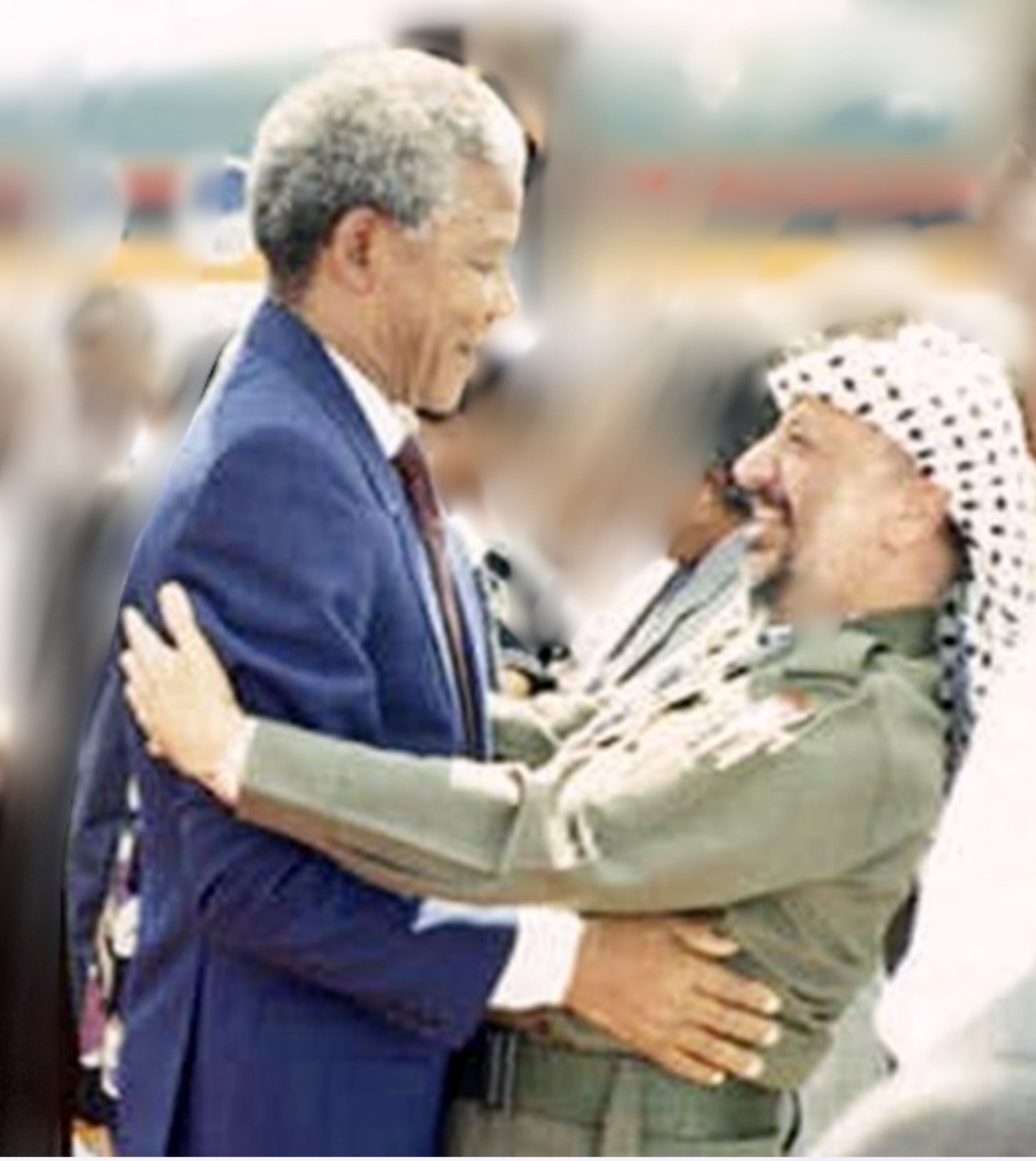
Desmond Tutu, a hero of the anti-apartheid movement, was a vocal critic of Israel, often equating its policies with those of South Africa’s apartheid regime. While Tutu’s commitment to human rights is unquestionable, his stance on Israel ignored the complexities of Jewish history and sovereignty. Tutu’s alignment with figures like Yasser Arafat reflected a one-sided view of the conflict, failing to recognize the indigenous connection of the Jewish people to their land and the legitimate security concerns Israel faces in a hostile region.
Tutu’s rhetoric, which painted Israel solely as an oppressor, overlooked the reality that Palestinians are not only victims of the conflict but also agents within it. By framing the issue in binary terms—oppressor versus oppressed—Tutu, and others like him, have contributed to a narrative that fuels division rather than fostering understanding.
We must reject simplistic comparisons and accusations that do not reflect the nuanced realities of the Israeli-Palestinian conflict. To carelessly apply terms like “apartheid” to Israel is to undermine the gravity of the true apartheid regime and to distort the facts on the ground in Israel and the Palestinian territories. Instead, we should focus on fostering dialogue and understanding, recognizing the rights of all peoples in the region.
Let’s shift focus to where apartheid is truly taking place today. In various parts of the world, we witness alarming forms of segregation and discrimination that are often overlooked or excused. While some accuse Israel of apartheid—despite the country being home to diverse populations with equal rights for all citizens—there are regimes that engage in genuine acts of apartheid on the basis of gender, religion, and personal freedoms.
Consider the plight of women in countries like Iran and Saudi Arabia, where gender apartheid is enshrined in law. In these societies, women are denied basic rights such as freedom of movement, the ability to dress as they choose, or even the right to education and employment without male guardianship. Saudi Arabia has made some strides in recent years, such as allowing women to drive, but these changes are often cosmetic, masking deeper systemic oppression. Iran, especially under its current regime, continues to brutally repress women who resist the government’s strict mandates on veiling and personal freedom, as we’ve seen with the courageous protests that erupted in response to the killing of Mahsa Amini.
Then there is the issue of freedom of religion. In countries like Pakistan, Saudi Arabia, and parts of Egypt, religious minorities face significant persecution. Christians, Ahmadi Muslims, and other non-Muslims are often barred from practicing their faith openly, and laws like blasphemy laws in Pakistan can lead to imprisonment or even death for those accused of insulting Islam. These countries claim to defend religious morality, yet they oppress anyone who does not align with the state’s radical interpretations of Islam.
Freedom of expression is another area where genuine apartheid flourishes. In places like North Korea, Iran, and China, citizens are not free to express dissenting views or criticize the government. State-controlled media, censorship, and severe punishments for speaking out create an environment where people live in constant fear of retribution. This is especially prevalent in China’s treatment of the Uyghur Muslim population, where reports of forced labor, re-education camps, and cultural erasure paint a grim picture of systemic oppression.
What’s ironic is that many of these regimes, particularly in the Middle East, stand openly hostile to Israel while simultaneously engaging in some of the most egregious human rights violations in the world. They accuse Israel of apartheid while enforcing their own forms of segregation and oppression. The hypocrisy is clear—those who cry out against Israel often have deep-seated agendas, and their accusations serve as a distraction from their own abuses.
Falsely accusing Israel of apartheid not only trivializes the painful legacy of South Africa’s past but also disrespects the genuine struggles of those who have endured true persecution and systemic discrimination. By misusing this term, these accusations dilute the significance of real apartheid and unjustly invite criticism of Israel, while diverting attention from nations and communities facing authentic oppression.
It is evident that Israel’s legitimacy is so contentious among many UN countries that they resort to spreading false accusations and misinformation, driven by political agendas and deep-seated animosities. Some even revive ancient blood libels to fuel this hostility. Tragically, in their efforts to vilify Israel, they silence the voices of those truly in need of international support—those suffering under genuine tyranny and injustice. This moral distortion does a disservice to both truth and humanity, tainting the global discourse and undermining the pursuit of real justice.
It is crucial that we direct our attention to these real-world cases of apartheid, where individuals are denied fundamental freedoms because of their gender, religion, or views. As global citizens, we must stand against all forms of discrimination and segregation, not just the selective narratives pushed by those with political motives. True justice demands that we recognize and challenge genuine apartheid wherever it occurs, rather than allowing baseless accusations to tarnish countries like Israel that are committed to defending democratic values and human rights.
In the end, if we are to uphold the values of truth and justice, we must resist the temptation to vilify nations based on misleading and inflammatory accusations. Israel, a nation that has contributed so much to the world in fields ranging from science to moral leadership, deserves a fair and balanced examination. Only by engaging with the facts and rejecting harmful rhetoric can we hope to build a future where justice and peace prevail.
Related Topics
Related Posts