Nobody Left Behind
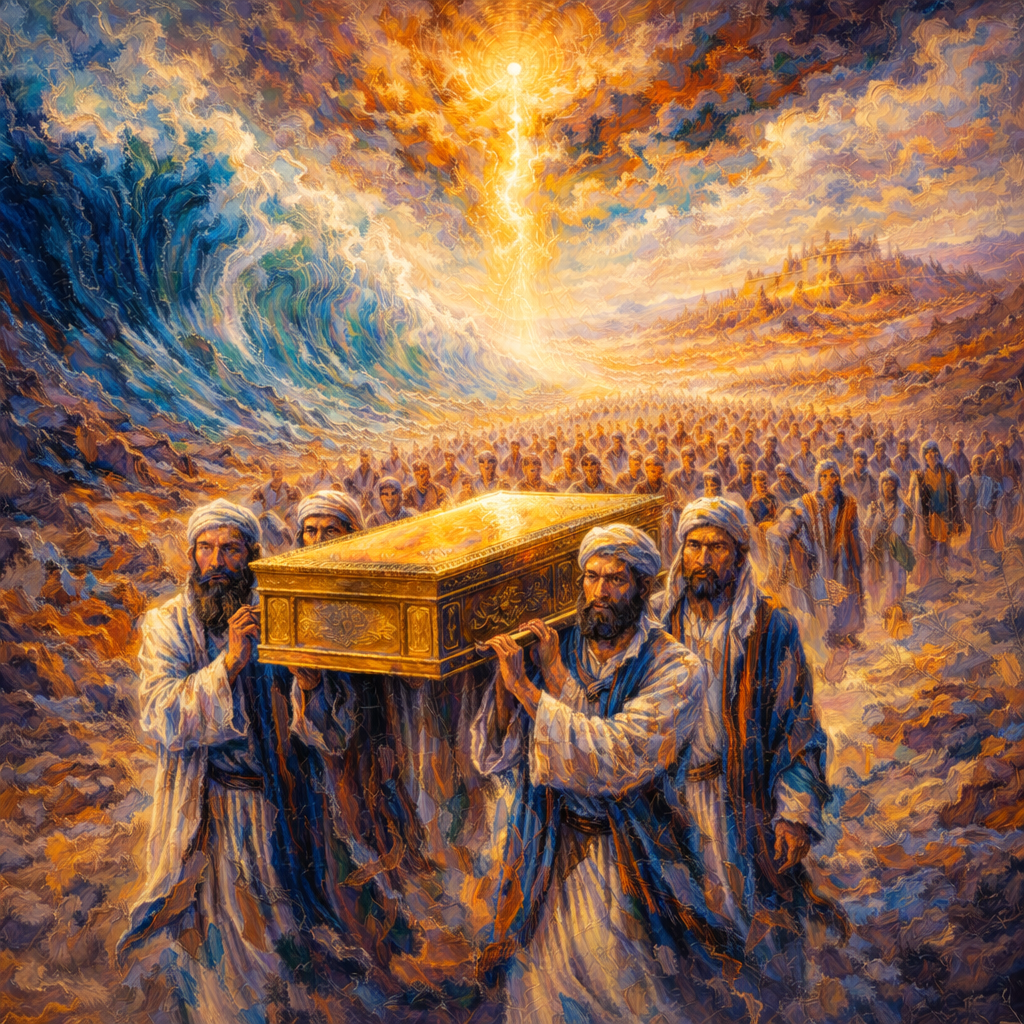
The Jews left Egypt. Liberated from the shackles of over two centuries of slavery, they began their journey to the Promised Land. Yet, one particular detail from their distant past provides a persistent echo as they travel to their future.
Now when Pharaoh banished the people, God did not lead them by way of the land of the Philistines, although it was nearer; for God said, “The people may have a change of heart when they see war and return to Egypt.” So God led the people roundabout by way of the wilderness at the Sea of Reeds; the Israelites went up armed out of the land of Egypt. And Moshe took with him the bones of Yoseph, who had exacted an oath from the children of Israel, saying, “God will be surely deliver you: then you shall carry up my bones from here with you.” They set out from Succot and encamped at Etam, at the edge of the wilderness. (Shemot 13:17-20)
One detail in this prologue seems out of place: Yoseph’s bones. Admittedly, Moshe, as the leader of the Jewish people, was fulfilling a long-standing promise made by their ancestors. Yoseph, on his deathbed, had made his brothers promise that when the redemption came, they would take his remains with them (Bereshit 50:24-25). Yet, why does this feature so prominently in the text? What would seem like an interesting marginal detail is elevated to the foreground.
Yoseph is also surprisingly present in the foreground of Leil HaSeder, the night on which we annually relive our liberation from Egypt. Almost at the beginning of the Seder, we dip a vegetable into saltwater. Various interpretations have been suggested for this custom, the most remarkable of which might be that of Rabbeinu Manoach:
We have the custom to eat “Karpas-a vegetable” to remember the woolen tunic that our forefather Yaakov made for Yoseph, through which the circumstances evolved that our ancestors descended to Egypt. (Commentary on Mishneh Torah, Hilchot Chametz U’Matza, 8:2)
Yoseph was given a special coat by his father. This furthered his brothers’ jealousy of him. It reached a breaking point when, alone with Yoseph, they stripped him of his coat and threw him into a pit. They dipped his coat in blood. The blood-stained clothing would fool their father into thinking a wild animal had killed their brother. A caravan of Ishmaelite merchants passed, and the brothers sold Yoseph to them. He was taken to Egypt and sold into slavery. After a long and dramatic tale, Yoseph’s family descended to Egypt, as Yoseph, now the viceroy of Egypt, could sustain them through famine. The family grew, and after Yoseph’s passing, they were enslaved by the Egyptians. Both chronologically and causally, the slavery of the Jews began with the sale of Yoseph into slavery.
Yoseph’s presence continues through Leil HaSeder. During Temple times, the “Korban Pesach-Pascal Lamb”, was the centerpiece of the Seder. The Talmud (Pesachim 65b) details a very particular way that the Korban Pesach should be carried once it had been sacrificed: one must hang it over their shoulders “like merchants.” Rashi (ibid) explains:
“Merchants: this is the way of Ishmaelite tradesmen.”
Echoes of Yoseph return. Yoseph was taken down to Egypt by Ishmaelite tradesmen. We must carry our Korban Pesach in a way reminiscent of Yoseph’s long walk to slavery.
We drink the “ארבע כוסות-four cups of wine” on Seder night. There are a number of different explanations for this practice. The Talmud (Yerushalmi Pesachim 10:1) explains that the word “כוס-cup” appears four times in the dream of the butler who was imprisoned with Yoseph in Egypt. Although it seems irrelevant to the story of Pesach, the butler’s dream was a crucial stage in the chain of events that led to the Jews being enslaved. This dream was interpreted by Yoseph, who foresaw the butler’s release from prison. Two years later, and re-employed by Pharaoh, the butler remembered Yoseph and recommended him to Pharaoh, who was desperately searching for someone to interpret his own dream. Pharaoh, overwhelmingly impressed by Yoseph’s wisdom, appointed him as viceroy over Egypt. And so the stage was set for Yoseph’s family to join him in Egypt and slowly be trapped into slavery.
The theme is clear and the message chilling: the Jews ended up in slavery as a direct consequence of selling their brother into slavery. We were enslaved because we enslaved.
However, the converse is also true. If we are to be freed from slavery, we must free Yoseph from slavery. We must bring Yoseph back with us.
Let’s look at the broader picture. The story of our Exodus does not end when we leave Egypt. Even the end of the Torah does not mark the end of this story. It almost does. The Torah finishes on a climax. The Jews are not in the Land of Israel, but are standing on its threshold. Only in Sefer Yehoshua (The Book of Joshua) do the Jews finally enter, conquer, and settle the Promised Land. Fascinatingly, Sefer Yehoshua (in its penultimate verse!) closes with a familiar, out-of-place detail.
And the bones of Yoseph, which the Children of Israel brought up from Egypt, they buried in Shechem, in the portion of the field that Yaakov had bought from the sons of Hamor, the father of Shechem, for a hundred Kesitah, and it was to the children of Yoseph as an inheritance. (Yehoshua 24:32)
Why mention this now? Why Shechem? Shechem was the very place where Yoseph’s father had sent him on that fateful day when he was sold into slavery. For that wrong to be righted, Yoseph must be returned to Shechem. For Israel to be the Jews’ homeland, the must bring Yoseph back home to it.
When the time of redemption came, Moshe went to the Nile, where Yoseph had been buried, and said: “Yoseph, the time of love has come. God is redeeming His children. The Divine Presence, all of Israel, and the Clouds of Glory are waiting for you…” (Hadar Zekeinim 13:19)
We want to take you back.