A third-eye thinker living in the Holy Land
Normal Country
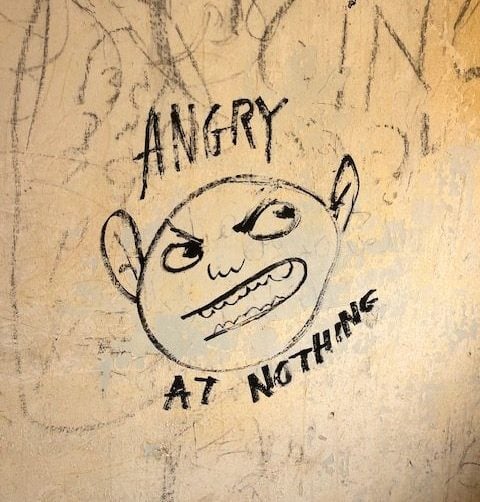
We have gotten very good at living like this.
Aroma coffee comes with a swirl of foam.
Someone is double-parked on Bezalel.
People beep before the light turns green.
There are weddings on Tuesdays.
The sea is full on Saturdays.
And there is war.
There is always something we have learned
to fit inside our concept of normal.
A siren in the middle of dinner.
A funeral on a Wednesday afternoon.
A dead friend’s face
fading on a poster in the sun.
A child killed in Gaza.
Another.
Another.
And somehow, by evening,
someone is asking where we should get dinner.
I don’t say this because I think we shouldn’t eat.
I say it because the human animal
can get used to almost anything.
This is perhaps our greatest talent,
and the thing that scares me most,
lately.
We’ve learned to sleep through explosions
and to recognize the sound of an interception
without looking up from our phones.
We learned which way to run when the siren begins
and how long after the boom we need to wait.
And we know that not everyone has somewhere to run to.
A normal country.
For years
our friends have disappeared into rounds of miluim.
They come home exhausted,
and leave again before they’ve remembered how to be home.
We’ve normalized checkpoints
turning a twenty-minute drive into a two-hour journey,
families separated by permits and concrete,
two people living close enough
to see each other’s houses
but not to know each other’s lives.
Somewhere along the way,
we began speaking of Palestinian freedom
as though freedom were a fixed amount
that could only be divided
between us.
Our politicians would like us to believe
that the only way to protect our children
is to keep someone else’s children behind a wall.
And when the walls did not protect us,
we were told we needed higher ones.
We were told to be afraid.
Afraid of Arabs.
Afraid of the left.
Afraid of anyone who was not afraid enough.
This pervasive fear insists that if we loosen our grip for even a second
this whole place will be taken from our hands.
So we learned to grip harder.
Now look what it has done to our hands.
Tomorrow we will have elections.
I keep hearing people ask who can keep us safe.
It is a reasonable question.
I want to be safe.
But we have been asking who can keep us safe for years.
And somehow
we are less safe,
less free,
more alone,
and burying more people.
We have built fences,
walls,
checkpoints,
surveillance towers
and entire political careers
around the promise
that one more use of force
will finally bring us safety.
And each time that promise fails,
we are told the problem
is that we did not go far enough.
I wonder how many more times
we will be told that the answer
is to do more of the very thing
that brought us here.
I wonder what kind of country we are becoming in the meantime.
And what they are asking me to become in exchange for this promise of safety.
How much suffering have I already learned to look past?
How many things have I learned not to feel?
How many times can I be told there is no other way
before I stop looking for one?
I know that some people call this naive.
But I have seen what we call realistic.
I have seen the funerals,
the demolished homes,
the families waiting to know if their loved ones are alive.
We watch along,
mistaking endurance for a political vision,
as though surviving this long were reason enough
to keep living like this.
A normal country.
I am tired of being told
that wanting something different
means I do not understand where I live.
I understand enough to know
that no election will undo what has happened.
No piece of paper will bring back the dead,
rebuild a home,
or make two peoples trust each other
after everything they have done
and everything they have endured.
I am not expecting a miracle,
not even in the Holy Land.
I never imagined I would love this country enough
to refuse what we’ve allowed ourselves to become.
So,
I’ll stand behind cardboard
with a small piece of paper in my hand.
I keep thinking about that.
How after everything so violently big,
it comes down to something so ordinary:
a school classroom,
a folding table,
a cardboard screen,
someone checking my ID.
The day after,
buses will still be late.
Someone will still be double-parked on Bezalel.
The coffee will still come with its little swirl of foam.
And somewhere, a family will be burying a child.
I know my vote will not stop that immediately.
But what life would this be
if the best we can do
is to get used to living
like this?
So I will take that small piece of paper
and choose
what I hope
to get used to
next.
Related Topics
Related Posts