
Unapologetically Explaining Israel and Sharing the Jewish Light.
Northern Syria under Fire, While the World Looks Away
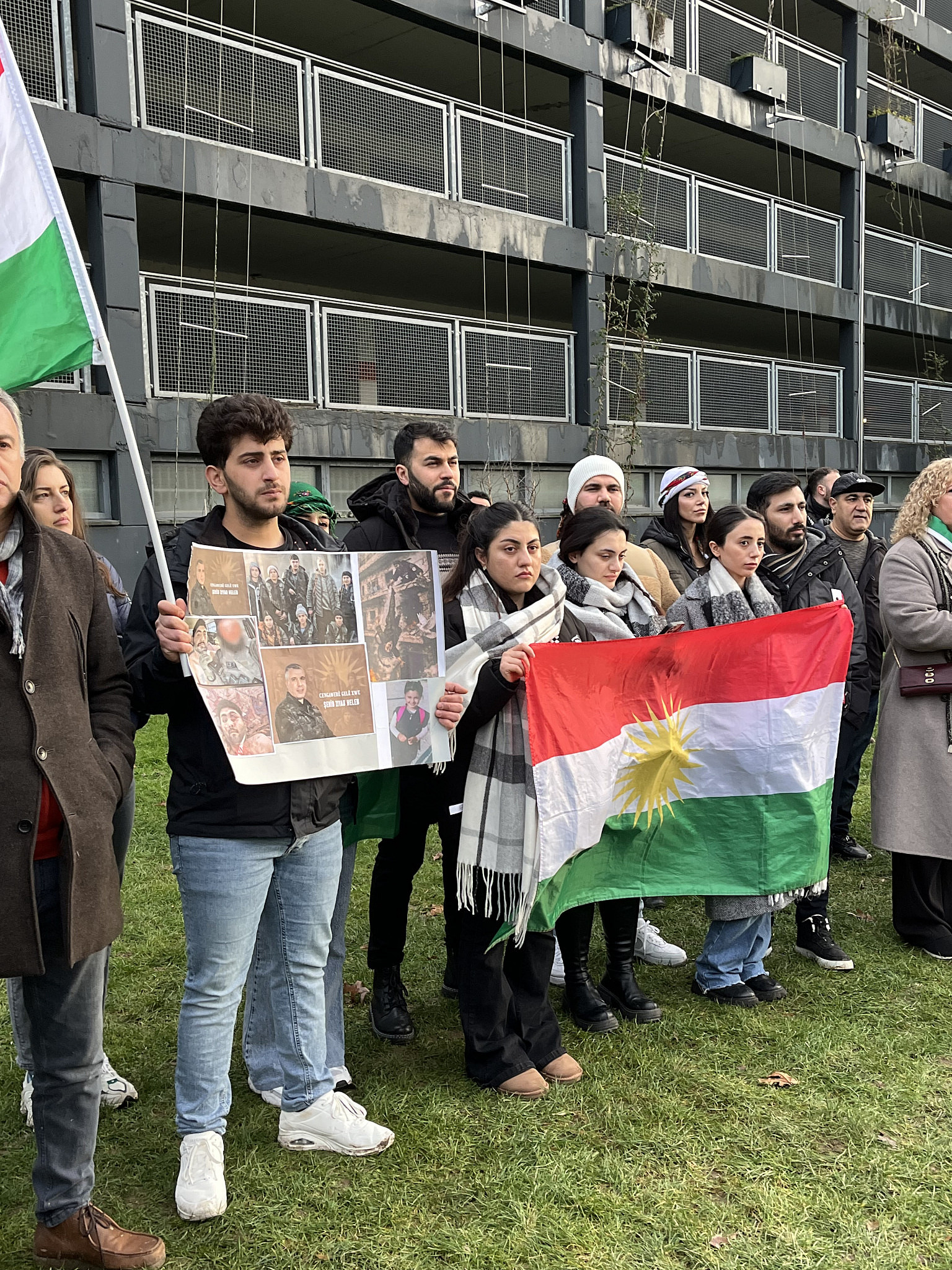
There is an ongoing humanitarian catastrophe in Rojava, North and Northeastern Syria (Photo courtesy: Paushali Lass).
Kobani, a Kurdish city in Rojava, Northern Syria, is again the target of a coordinated military assault. Turkish tanks are advancing, drones are striking, and Kurdish civilians are being killed, displaced, and left without the means to survive.
Kurdish families in Kobani today are torn apart. Children are dying not only from bombs but from cold, hunger, and the collapse of basic infrastructure. This is not a tragic accident of war, but a calculated campaign of pressure, displacement, and erasure.
I write this not only as an observer but as someone who knows people from Kobani personally. I have friends who fled their homes there in 2015 and now live in Germany. They left behind behind their beloved olive trees and pistachio fields, homes that had been in their families for generations, and the communities they had always known. They did not leave because they wanted a different life abroad. They left because war and relentless Turkish airstrikes made it impossible to stay. Even after ISIS was defeated, their hometown has remained unsafe, and returning is not an option.
Now, once again, their families, their friends, and the people of their town are facing an existential threat — not just to their security, but to their very existence, identity, and future on their ancestral land. What is happening is not simply another escalation; it is the slow erasure of a people’s right to remain rooted in their own history, soil, and memory. This is also why their voices matter deeply to me — because my relationship with them was forged through my work connecting global communities with Israel, and through that work I came to understand not only the Kurdish struggle, but the extraordinary loyalty, moral clarity, and sense of solidarity many Kurds hold toward the Jewish people and the Jewish state, and to the values of human dignity and peaceful coexistence.
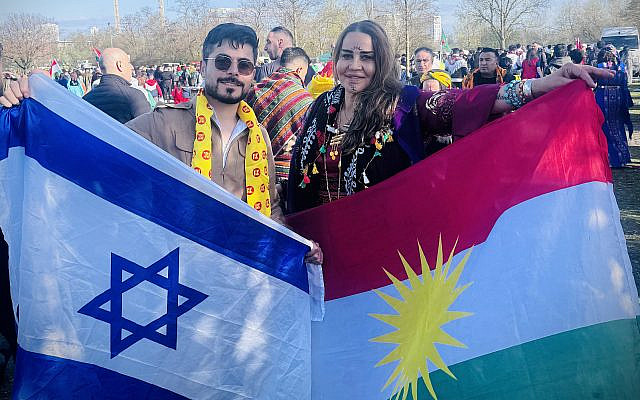
These friends speak openly about their deep respect for Israel. They stood 100 percent in solidarity with Israelis since the October 7 attacks, even receiving death threats from some aggressive Syrian Arab immigrants in Germany for doing so. Many Kurds feel a strong affinity with Jews because of shared values of mutual respect, coexistence, and shared experiences of exile, wandering, and displacement. For them, not standing with Israel in its hour of need is unthinkable. And equally, I believe Israel should not leave them in their hour of need.
For those unfamiliar with Kobani, some context is important. Kobani is a predominantly Kurdish city in northern Syria, near the Turkish border. In 2014 and 2015 it became a symbol of resistance against ISIS. Kurdish forces, both men and women, fought street by street to defend the city and played a central role in defeating ISIS in north and northeastern Syria, liberating territory and preventing further territorial expansion by the group with crucial support from the U.S. and international partners for anti‑ISIS efforts in the region.
After ISIS collapsed, international attention waned. But Turkey did not relent. Since 2016, Ankara has repeatedly launched military operations into Kurdish‑controlled areas of northern Syria, targeting not only armed groups but also civilian infrastructure — power stations, water systems, hospitals, and food supplies — as documented in extensive reporting on the offensive by Turkish and Turkish‑backed forces against Kurdish areas.
The pattern of attacks has intensified over the last couple of years. In late December 2024, Turkish drones struck the Tishrin Dam on the Euphrates River, destroying its electrical generators and cutting water and electricity to more than 400,000 residents in Manbij, Kobani, and surrounding areas. In January 2025, Turkish drones targeted a crowded market in Sarrin, just south of Kobani, killing at least 13 civilians, including four children, and injuring many more, according to the Syrian Observatory for Human Rights. In mid‑March, a Turkish airstrike near Kobani’s countryside killed at least nine members of one family who were working their land, many of them children, as reported by Kurdish forces.
These events are not distant or abstract. Ordinary places like markets and farmland have become deadly, and attacks on vital infrastructure have left entire communities without water, heat, or electricity during winter. They represent not isolated battlefield incidents but a sustained campaign that deprives civilians of life’s essentials and creates unbearable conditions that force populations to flee.
This shift in tactics is stark when compared to the years after ISIS was defeated, when Kurdish forces helped stabilize northeastern Syria, protect minority communities, and limit the spread of extremist groups. Now, without effective protection or support, those gains are rapidly eroding.
For Israeli readers, the stakes go beyond morality. The Kurdish forces in northern Syria, especially those in and around Kobani, have been among the most effective local partners in the fight against ISIS and other extremist groups. Their presence helped prevent the re‑emergence of violent actors along Syria’s northern and eastern borders. A weakened Kurdish presence creates a vacuum that can be exploited by groups hostile to regional stability — extremist fighters prone to expand southward, including toward the Syrian‑Jordanian border and through the Golan Heights. Weakened Kurdish control could thus reopen pathways for threats to re‑emerge that might soon enough reach Israel’s borders.
We are already seeing the impact of this vacuum. Radical armed groups in northern Syria, including those aligned with Hay’at Tahrir al‑Sham (HTS) and remnants of ISIS cells, have exploited the chaos to regroup and launch further attacks. These groups have openly threatened to “liberate Palestine” and direct violence at Jews, as seen in videos circulating from the region. Backed by Turkey’s tacit support and emboldened by a lack of effective international pushback, these voices are gaining traction. If northern Syria remains unstable, the consequences will not stay confined there.
So where is the world? The United Nations is currently providing limited aid support to Kobani, and Kurdish bodies like the Barzani Foundation in Iraqi Kurdistan have made extraordinary efforts. A handful of parliamentarians and senators in Israel, Europe, and the United States have spoken out. Their voices of solidarity matter, but words alone do not stop bombs and violent assaults. Solidarity has value, but when it is not paired with action, it unfortunately does little to ease the suffering of those facing an active ethnic cleansing.
The people of Kobani need real help. They need humanitarian corridors that allow fuel, food, medical supplies, and winter aid to reach civilians safely. They need protection for hospitals, water systems, and energy infrastructure. They need no‑strike commitments on civilian areas, with real consequences for violations. They need emergency resettlement and safe passage for the most vulnerable. They need targeted sanctions against those responsible for attacks on civilians, not symbolic measures that leave them exposed.
Governments with moral authority, including Israel, the United States, and European countries, have both the ability and the responsibility to act. This is not about taking sides in a regional conflict. It is about protecting civilians when a state uses military force to punish an ethnic population. Turkey should not be allowed to act with impunity. Trade agreements, military alliances, or diplomatic convenience should not be more important than human lives.
Sanctions alone are not enough. When ethnic cleansing is underway, protecting civilians is not an act of aggression. It is an act of responsibility. The Kurds of Kobani are not asking for privilege. They are asking for the most basic right: to live on their land without fear.
Finally, Turkey, a state that seeks the displacement of Kurds and openly advocates Israel’s destruction, cannot be considered a legitimate stakeholder in Gaza’s reconstruction. If the international community continues to look away, it forfeits its moral authority to speak about human rights anywhere else. Silence in moments like this is not neutrality. It is complicity.
Related Topics
Related Posts