French-Israeli Artist and Jewish Advocate
Not Just a Waiting Room: Reclaiming Diaspora History
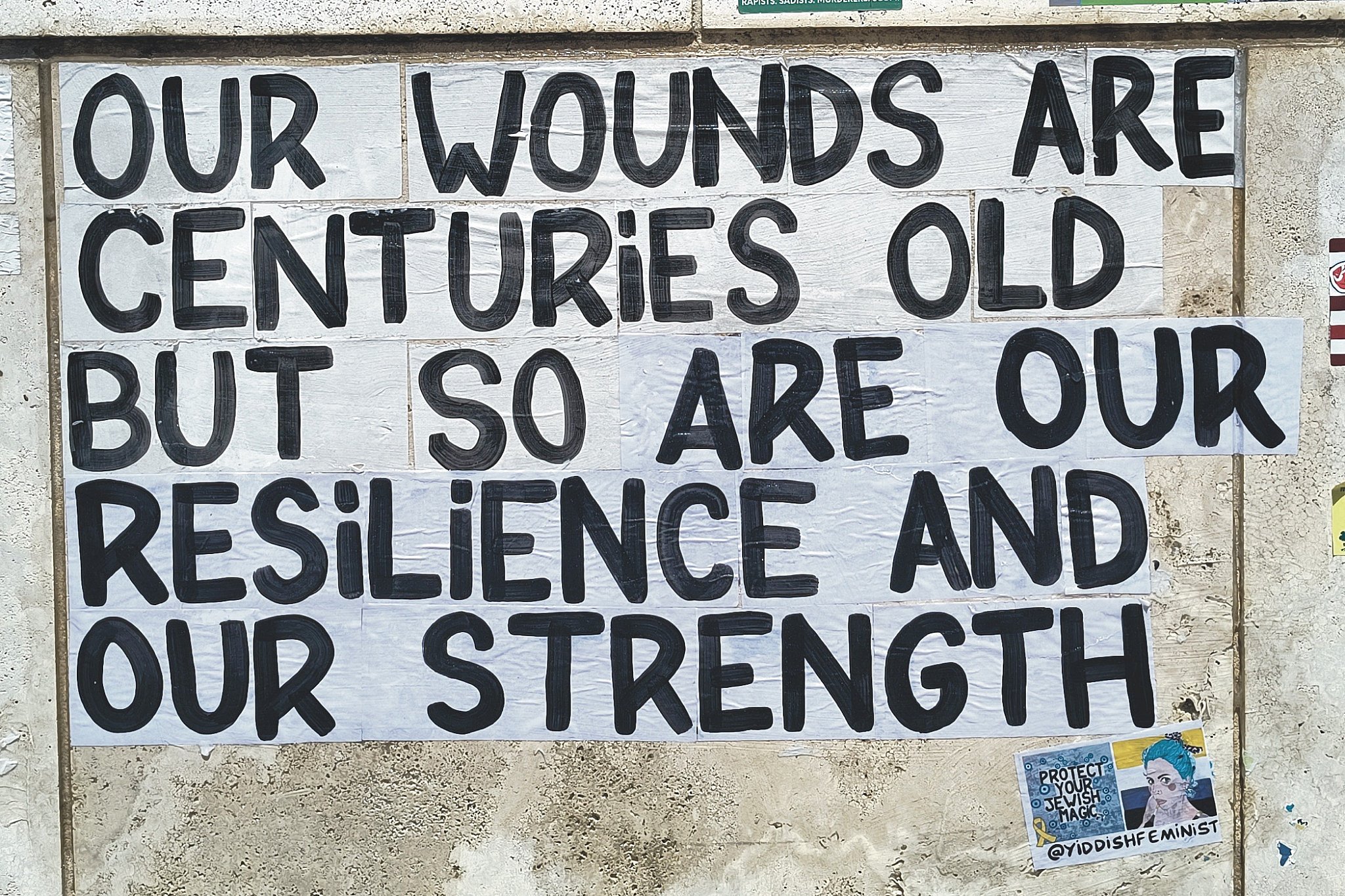
Credit photo : @YiddishFeminist / Morgane Koresh
I made Aliyah from France 16 years ago. Like many Jews in the Diaspora, I grew up carrying the weight of history on my shoulders. My grandparents spoke Yiddish and bore the scars of a world that had nearly erased our family. Many of my relatives were murdered in the Shoah. What I inherited was a deep sense of vigilance: that being Jewish meant staying alert, because antisemitism would always return. In that context, Judaism was about memory, grief, and survival – above all, a duty to remember and a love for Israel that ran deeper than gratitude.
That love for Israel hasn’t changed. I am a proud Zionist. I believe in the Jewish right to self-determination in our ancestral homeland. But being a Zionist doesn’t mean I need to reject the richness, complexity, and enduring relevance of the Jewish Diaspora. These two truths can, and must, exist together.
Since October 7 and the horrifying rise in global antisemitism, conversations around Jewish identity and survival have become more urgent and more polarized. For many, the Diaspora feels like a trap; Israel, a lifeline. But if we reduce Jewish history to a binary – Israel as strength, Diaspora as weakness – we risk flattening both.
The Diaspora was never just a passive exile. It was a civilizational space stretching from Baghdad to Berlin, Fez to Vilna, Alexandria to Buenos Aires, where Jews didn’t merely survive, they built. We created spiritual, legal, artistic, and intellectual traditions that still shape who we are today. The Diaspora wasn’t always safe, but it was never empty.
I speak as someone who lives in Israel and deeply values it, yet refuses to erase the legacy of the Diaspora. My work as a street artist, tattoo artist, and Jewish activist, alongside my role in the Voice of the People initiative, centers on reclaiming the cultural and historical depth of Jewish life outside Israel. Too often, especially here, the Diaspora is presented as a tragic prelude to national rebirth. But this framing does a disservice to the millions of Jews who still live outside Israel, and to the legacy we all carry forward.
This is not about nostalgia, nor about romanticizing the Diaspora or minimizing antisemitism. I know intimately what Diaspora trauma looks like. But if we define Jewish identity only through fear and survival, we risk forgetting the very sources of our resilience. We must remember not just the suffering, but the accomplishments, wisdom, and creativity of Jews across continents and centuries.
After October 7, many are asking what kind of Jewish future we can build. My answer is this: one grounded in memory and imagination. A future that includes pride in Israel, but also embraces the cultural and historical diversity of our people. Not one at the expense of the other.
Jewish continuity doesn’t require choosing between homeland and heritage. It means holding both with integrity.
This article is only a starting point. In future pieces, I’ll continue exploring why reclaiming our Jewish history and geography, especially the richness of diasporic experience, is essential to understanding who we are today. I’ll reflect on how, across centuries and continents, we’ve built resilience, meaning, and strength; not just in spite of dispersion, but often through it.
Related Topics
Related Posts