Not just missing, but abandoned by the system
Two years ago, I arrived at the absorption center on Tzahal Street 9 in Safed, northern Israel.
It was the holiday of Purim, at the very beginning of the war, when emotions blurred together, and moving forward felt like the only way to avoid losing one’s sanity. Like many others, I was looking for something to hold on to, some small action that could create a sense of purpose. That is how I found myself distributing Purim gift baskets at the absorption center — a place meant to represent a beginning, a temporary home, a safe space for new immigrants. But the air there was heavy, not because of what I saw, but because of what was missing.
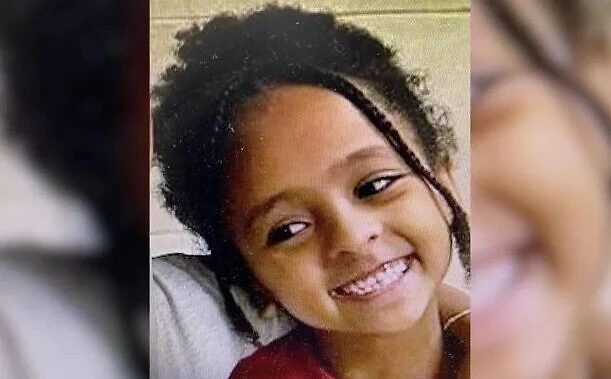
Haymanut Kasau had already been missing for nearly a month.
A nine-year-old girl, a new immigrant from Ethiopia, had disappeared from the very place where I was standing. There, I did not hear shouting. I did not see panic. Her name did not echo through the corridors. It was spoken quietly, almost in a whisper. There was no sense of urgency. Only a heavy, silent concern – one that remained confined within the building and never spilled outward.
Now, two years have passed. Only in recent weeks has the case returned to the headlines, following an announcement by Israel’s police commissioner that the case would be transferred to Lahav 433, the national unit responsible for investigating serious and organized crimes. It was an important decision – but a late one. Too late.
Haymanut’s case is not one that naturally commands public attention. She is the daughter of a family of new immigrants, living in an absorption center in a peripheral city, far from centers of power and from the arenas where public pressure is formed. There are no political connections, no lobbyists, no one calling television studios every evening demanding answers. Perhaps that is why her story remained in the corridors, never becoming a national event but instead a marginal issue, confined to what officials repeatedly described as “closed-door discussions.”
This is not because the case is less severe. It is because the child falls outside the profiles that tend to trigger immediate public and institutional attention. In Israel, visibility is not distributed equally, and neither is urgency. I cannot escape the feeling that if this had been a child from a different social background, from a different city, the system would have moved faster. More resources would have been allocated, more personnel would have been assigned, and the case would have been treated from the outset as a matter demanding immediate and sustained attention.
The way the state has chosen to address this case speaks volumes. This disappearance was supposed to be discussed in the Knesset’s National Security Committee. The disappearance of a young child — particularly from a state-run facility — is, first and foremost, an internal security issue. In practice, however, the discussion took place in the Immigration and Absorption Committee. During that hearing, troubling contradictions emerged in police statements, including an admission that, contrary to earlier declarations by senior officials, Israel’s internal security service, the Shin Bet, had not been involved in the investigation at all.
Two years have passed, and there are still almost no answers.
How is it possible that a child disappears in Israel without even a single meaningful lead? Where are all the capabilities the country prides itself on? Instead, the same familiar mantra is repeated again and again: “closed-door discussions.” The public does not know. Her family does not know. And time continues to pass. To this day, neither the family nor the broader public has been allowed to participate in searches with appropriate security support.
And so perhaps it is time to change the language as well. To stop calling her “missing,” and to state the simple truth: Haymanut is a child abducted within the State of Israel.
This is not merely a semantic debate. Definitions shape reality. In the Israeli context, classification shapes institutional behavior. A “missing person” case is treated as tragic but limited; an “abduction” triggers a different level of urgency, coordination, and resource allocation. It affects which units are involved, how investigative tools are deployed, and how much public and political pressure is considered legitimate.
Language does not only describe reality — it structures it. Continuing to use terminology that softens the gravity of the event is therefore a broader statement about who we are as a society: about who receives attention and who is left behind, about which stories the state turns into national missions and which remain the burden of one family, one community, one peripheral town.
We have seen this gap before.
Avera Mengistu and Hisham al-Sayed, Israeli civilians held by Hamas for more than a decade, returned to Israel only after years of public neglect. In Hostages Square in Tel Aviv, during rallies, a digital counter meticulously tracks the time that has passed since October 7. The difference between the clock that counted their captivity and the clock that counts the current hostages is not merely a gap in time. It is a social gap, between whose pain is recognized as national and whose pain remains marginal.
This is not only Haymanut’s story, and it is not only the story of the Ethiopian community. It is the story of all those who lack access to power, who do not possess connections, resources, or the ability to make their voices heard. People who do not lack suffering, but lack someone willing to shout it out loud.
Concerned citizens are not powerless. At the very least, they can refuse to let this case fade into silence by insisting that it be discussed publicly, addressed in the appropriate forums, and described with the urgency it demands. Because when a disappearance is treated as something that can be handled behind closed doors, silence does not remain neutral. It becomes part of the outcome.
In the end, this is a choice we make as a society. The meaning of the name Haymanut is “faith.” I have deep faith that she will return home. But faith alone is not enough. What is required is a clear plan of action, the right people, technological tools, and the full deployment of all available capabilities. Every moment that passes matters.
We can move on, explain, normalize, and remain silent.
Or we can choose differently, to be the voice of those who have no voice.