
Nothing about us without us
Achieving Health Services with Accessibility during National Emergencies
Israeli legislation clearly guarantees the right of people with disabilities to receive equal and accessible healthcare services at all times. But the reality on the ground in Israel tells a very different story.
During one of the days of the “Iron Swords” war, “A.”, a woman with mobility and visual disabilities, left her home to obtain medication. Clinics and pharmacies had been closed due to a lack of proper shelter infrastructure, but A. was not provided with accessible information about this. When she arrived at her clinic, she discovered it was closed—indicated only by a small, illegible notice. Her attempts to contact her healthcare provider by phone failed, and even the national call center had no idea where to direct her.
“B.” is a woman with a hearing disability who went for a gynecological exam during the COVID-19 period. The doctor refused to remove his mask so that she could read his lips, despite a Ministry of Health directive requiring this accommodation. The doctor also denied her request to be accompanied by a friend, who had come to assist her. Instead, he called for a nurse, who also refused to lower her mask while speaking. This severely affected both the quality of the examination and B.’s overall experience.
The stories of A. and B. are not isolated—they are part of a troubling reality.
Today, approximately 1.7 million people in Israel live with some form of disability. While not every person with a disability has significant health problems, the overall health status of people with disabilities is, on average, poorer than that of the general population.
Among people with disabilities, only 34% rate their general health as good or very good, compared to 85% among people without disabilities.
Between Legislation and Reality
Despite the protections enshrined in law, about one-third of people with disabilities struggle to access services at health clinics even under normal circumstances. At the same time, they tend to require more healthcare services than the general population.
The digital gap further deepens inequality. Only about half of people with disabilities use online health services offered by their health funds, compared to nearly three-quarters of those without disabilities. Among the elderly, this gap is even more pronounced: only about two-thirds of older adults with disabilities use the internet at all. These figures describe routine times—but their implications during emergencies are especially stark.
Critical Consequences in Times of Emergency
In emergencies, existing barriers become dramatically more severe. People with disabilities are at heightened risk of emotional distress and post-traumatic stress disorder. Previous studies have shown that the emotional well-being of people with disabilities—and especially children with disabilities—is significantly more affected during crises compared to the general population.
During the “Iron Swords” war, there was a sharp increase by tens of percentage points in the number of individuals who turned to the Ministry of Health for mental health rehabilitation services due to a deterioration in their emotional condition.
Similarly, during the COVID-19 pandemic, another prolonged crisis, nearly two-thirds of people with disabilities reported a decline in their mental health, and more than one-third reported a decline in their physical health.
Healthcare Services During War
During the “Iron Swords” war, healthcare services underwent changes and reductions. Information about health services was not always accessible — or even clear — to people with disabilities or to service providers themselves. Medical services were suddenly not always accessible, and services for evacuees often failed to provide information pertaining to accessibility.
All of this has direct consequences for how people with disabilities access and use healthcare services.
Additionally, there was a rise in requests for emotional support and mental health services, reflecting a surge in psychological distress among the general public, and even more so among people with disabilities.
This has placed increased strain on the mental health system, within which people with disabilities are at an even greater risk than others of not receiving care that is adequately suited to their needs.
“Advancing Tomorrow” Conference
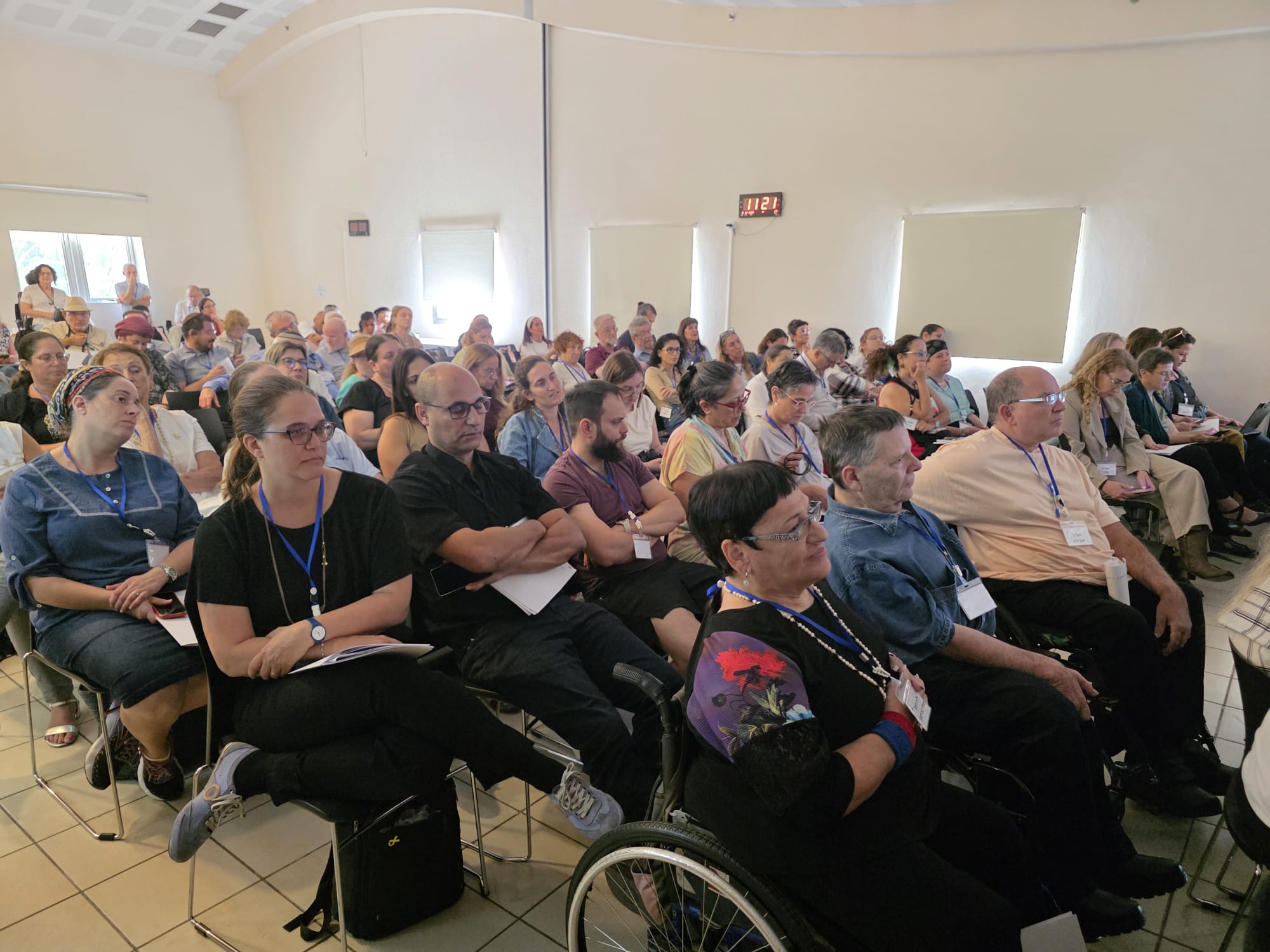
As a step toward addressing these challenges, and learning how to close the gap between legislative intentions and reality for our citizens, a conference “Advancing Tomorrow: Accessibility of Health Services for People with Disabilities in Times of Emergency,” was recently held in Ra’anana at Beit Issie Shapiro with the “For Health – Leading for the Health of People with Disabilities” Forum.
The conference highlighted existing barriers, explored innovative solutions, and called for collaboration among government bodies, civil society, disability organizations, and academia— under the guiding principle of “Nothing about us without us.”
With nearly 1 in 5 people in Israel living with a disability, we cannot afford to wait for the next emergency to act.
We must work together now to make accessibility a real, effective part of everyday life—even in the most difficult times, when every minute can affect life and quality of life.
December 3rd is International Day for People with Disabilities. It’s the perfect time for us to recommit to our critical, national moral obligation toward one of the most vulnerable sectors of our society.
—