
Now comes the hard part in Gaza
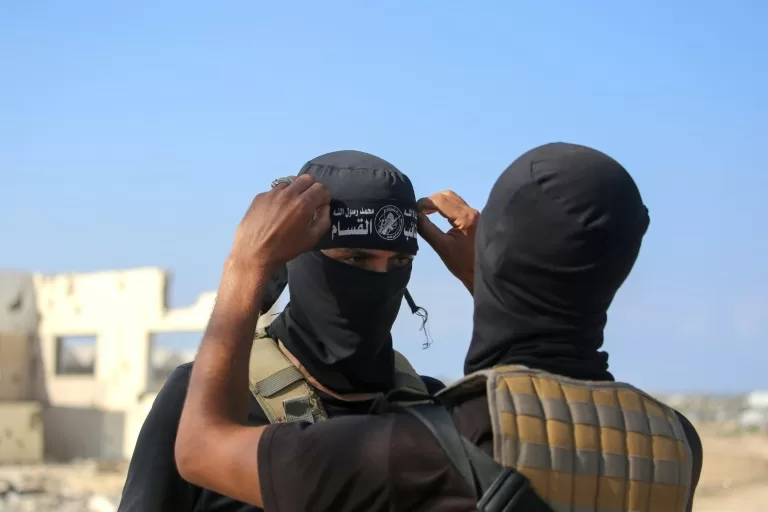
The living hostages are home and the IDF has redeployed to agreed-upon lines in Gaza, completing the initial phase of US President Donald Trump’s 20-point peace plan. Although excluded by diplomatic hardball from the signing ceremony in Sharm el-Sheikh, Israel has accepted the entire agreement (after obtaining some critical amendments). Hamas has loudly refused to do so. Any doubts about its determination to retain its arms and military grip on Gaza were dispelled the moment the IDF pulled back: Hamas lost no time taking control of the streets, boasting of 7000 new recruits and brutally settling scores with rivals. It’s good to be back, Hamas is telling us.
The question on many minds is not whether Hamas will ultimately accept extinction – a peaceful Hamas being oxymoronic – but whether Israel will return to war when Hamas ignores terms it never agreed to. Israel will not. Not because Trump will forbid it, though he may. And not because the Israeli public is exhausted and the IDF is overextended, which they are. But because Prime Minister Benjamin Netanyahu knows it would be pointless.
Yes, Israel’s freedom of action in Gaza has been curtailed by danger to the hostages and, prior to Trump, by an increasingly hostile US administration. But after two years of war, most of Gaza is in ruins and tens of thousands of Hamas fighters have been eliminated. In reality, Israel pulled few of its military punches. Yet throughout the war, Hamas has resurged wherever and as soon as the IDF pulled out – infiltrating hospitals, stealing aid, and recruiting new fighters from an inexhaustible supply of male youth. Israel fought a conventional war and Hamas cannot be conventionally defeated – only eradicated.
That’s due not only to the terror organization’s maniacal fanaticism but also to the broad popular support it continues to enjoy. Notwithstanding its tyrannical rule and the destruction it invited by invading Israel two years ago, much of the population prefers it to any alternative and shares its genocidal aims. Civilians willingly shield Hamas, guard hostages, pose for “Pallywood” propaganda photos, protect fighters, hide their weapons, and supply endless new recruits. Though at war against Hamas, Israel has in fact been battling the entire Gazan population – including the civilians it is obligated to protect under international law and its own moral creed.
Short of expelling the population or committing Hamas-style atrocities, therefore, fully cleansing Gaza of Hamas might be a practical impossibility. Recognizing this, Israel’s government may hope at least for a free hand to act against a mortal enemy that refuses to disarm. The IDF regularly enters Area A of Judea and Samaria to arrest suspected terrorists or destroy weapon factories, and since October 7, 2023, hundreds of raids and thousands of arrests have thwarted escalating terrorist efforts. Can similar freedom to operate in Gaza prevent Hamas from reconstituting as a threat?
Not easily. Area A, where Palestinian forces have primary security responsibility, has a population density less than 1/3 that of Gaza. That allows IDF forces to strike surgically without encountering widespread resistance through endless urban warrens. Greater IDF and civilian casualties in Gaza are inevitable and key to Hamas’s strategy.
Moreover, Palestinian security forces grudgingly cooperate with Israeli counterparts because Hamas existentially threatens the Palestinian Authority (PA). Mahmoud Abbas owes his presidency for life to the IDF. Quarantined from Israeli population centers by the separation barrier and busied with a modestly productive private economy, Palestinians in Judea and Samaria can exist in an uneasy but durable status quo with their hated Israeli neighbors. Unsatisfying though it may be to messianic peace processors, that status quo has stood the recent test of time.
The Gazan population, by contrast, is more youthful, less productive, and better able to act on its genocidal impulses. Other than the occasional enterprising merchant selling the head of a slain Israeli for big money, there is no productive economy in Gaza, which subsists on foreign handouts and outsources basic governmental functions to the UN. There is no political alternative to Hamas rule because Gazans don’t want one. Foreign peacekeepers, even if Arab, will either become Hamas auxiliaries or meet the grisly fate of the PA in 2007.
Israel’s experience and success in Judea and Samaria cannot simply be transferred to Gaza. The topographic, demographic, and military challenges are of a different order.
So what is the way forward under Trump’s peace plan? Etiquette demands a ritual curtsy to visions of peace, prosperity, and security for Israelis and Palestinians alike. Fortunately, the plan itself is not predicated on fantasy. It demands the disarmament of Hamas and the demilitarization of Gaza. Trump himself has repeated those demands. Instead of returning to large-scale “kinetic operations” that won’t eliminate Hamas, however, Israel should further withdraw to lines that are defensible at low cost and low risk, and prevent any reconstruction or the entry of foreign peacekeepers until Hamas complies with the obligations imposed on it.
Though it never will, its supporters in Qatar, Egypt, and Turkey will feverishly strive to define compliance down so Hamas can re-establish its terror state. Egypt longs for its cherished smuggling profits, knows that any exodus of radical Palestinians into Sinai will further inflame that already restive region, and sees Hamas as a useful albatross around Israel’s military. Turkey and Qatar openly support Hamas and its aims – Turkey with thuggish rhetoric and Qatar as quietly persistent advocate, insidious fixer, and pretend mediator.
Israel must resist their efforts and retain control of the Philadelphi Corridor and Rafah Crossing, which will allow it to prevent or at least mostly suppress arms smuggling via tunnel, truck, or drone. Under Hamas, virtually every structure in Gaza was a weapons depot, tunnel entrance, command center and/or sniper base. Preventing their reconstruction for the benefit of Hamas (and by countries dedicated to its survival) will limit the terrorists’ ability to restore a fortress. Developing intelligence networks and secret alliances with clans that compete with Hamas for power and money will allow the IDF – with more drones, fewer boots, and greater challenge – to disrupt and destroy emerging capabilities.
It won’t be easy. But in the best case, Hamas ultimately gives up or is smothered by rivals. More realistically, Israel establishes limited but perhaps gradually expanding Hamas-free zones it can contain under local leadership – exactly as the 20-point peace plan envisions. Whether that leads to the eventual end of Hamas or merely its tractable containment, it offers at least the possibility of a sustainable status quo disliked by all but accepted by most.