
Numbers, Waiting, and a Whispered Prayer
Remember when medical tests came wrapped in a certain kind of mystery?
You went to the lab, rolled up your sleeve, watched the vials fill, and then… you waited. Days later, perhaps a week later, your doctor would finally call. Or you’d sit in an office, trying to read the expression on his or her face before a single word was spoken. And then, almost always, you would hear some version of the same reassuring phrase: “Everything looks fine.”
That was it. No numbers. No charts. No color-coded warnings. Just trust.
Today I find myself in a very different world.
I’ve recently been diagnosed with two medical conditions. Thankfully, neither has produced any serious symptoms. But both require regular monitoring—every three to four months—through routine lab work. Each round of testing is meant to answer a simple but weighty question: Have the numbers changed?
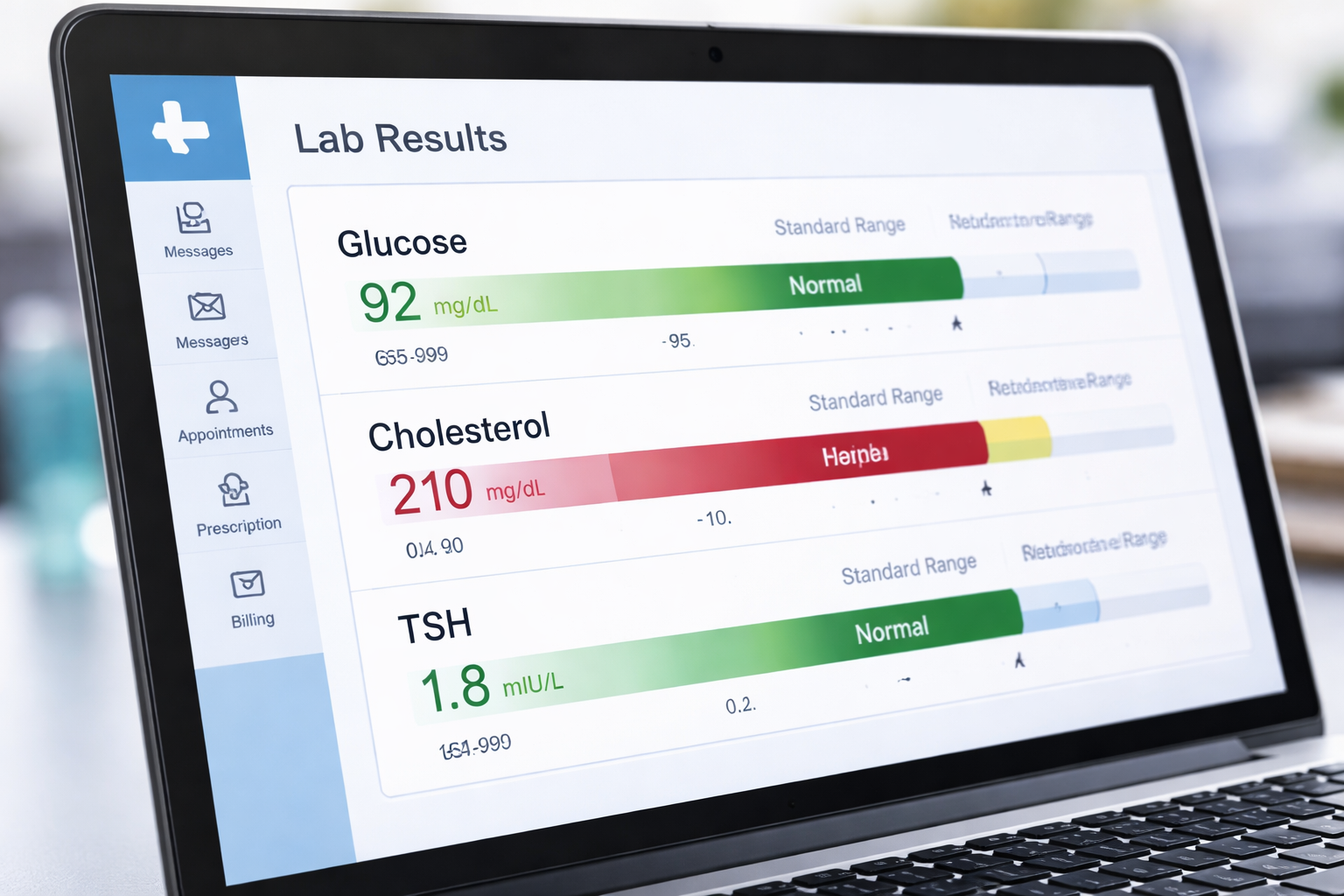
Like most people today, I receive my results through an online portal—MyChart. Within 24 to 48 hours after the blood is drawn, I get a notification: “Your test results are available.”
And that’s when the emotional roller coaster begins.
Those 24 to 48 hours can feel like an eternity. I try to distract myself, to go about my normal routine, but there’s always a quiet hum of anxiety beneath the surface. It’s the waiting—the not knowing—that gnaws at you. I can’t fully explain it, but even though the wait is now shorter than it was in the pre-internet days, the anxiety is greater.
Then comes the moment itself. The message appears. The results are ready.
Before I click, I pause.
I take a breath. Sometimes I even say a short prayer—that the numbers haven’t changed dramatically, that whatever I see will be manageable, that there will be something I can do if it isn’t.
And then I click.
The screen fills with data—rows of numbers, medical terminology, and those now-familiar colored indicators. Green is good. Red is not. It’s a strangely simple system for something so complex: your health reduced to a spectrum of colors.
When the results fall within the green range, there’s an immediate wave of relief. A quiet exhale. Maybe even a moment of gratitude.
But when something appears in red—or even edges too close to it—the questions begin. What does this mean? How serious is it? What caused it? What happens next?
And, like so many others, I then turn to the internet.
Within minutes, I can access a vast universe of medical information. Some of it is helpful. Some of it is terrifying. Often, it’s hard to tell the difference.
A mildly elevated number can suddenly seem ominous when you read about all the conditions it might indicate—many of them rare, some of them severe. It’s a classic case of too much information, too quickly, without context or guidance.
I’ve come to realize that this is one of the great paradoxes of modern medicine: we are more informed than ever before, yet often more anxious.
To be clear, there is much to celebrate about this new reality. Patients today are empowered in ways that previous generations could not have imagined. We have direct access to our medical data. We can track trends over time. We can educate ourselves, ask informed questions, and actively participate in decisions about our care.
In many situations—especially during hospital stays—this level of involvement is not just helpful, it’s essential. Patients and their families often need to advocate for themselves to ensure that nothing falls through the cracks in an increasingly complex healthcare system.
I’ve experienced this firsthand, and I value the ability to engage meaningfully with my doctors. In fact, I’ve found that after reviewing my results and doing some research, I am often on the same page as my physicians when we eventually speak.
And yet…
There was something undeniably comforting about the old way.
There was a kind of peace in not knowing every detail. In trusting that the experts would interpret the data, weigh the nuances, and tell you what you needed to know—no more, no less.
Today, that buffer is gone.
We see everything. Instantly. Raw and unfiltered.
And we are left to process it on our own—at least for a little while—before a doctor has the chance to call, explain, and reassure.
In that gap between information and interpretation, anxiety thrives.
Adding to this phenomenon is an entire subculture that has emerged around medical transparency. There are people who publicly share their lab results online—posting videos, tracking their numbers, inviting others into their personal health journeys. Some of these channels have hundreds of thousands of followers.
In a way, it’s not surprising.
It taps into the same instinct that draws people to reality television. There is something compelling—almost irresistible—about watching real-life drama unfold. Even when it feels intrusive. Even when it feels like something we shouldn’t be watching.
It’s the same reason people slow down to look at a car accident. You don’t want to see it—but you can’t quite look away.
Health, after all, is deeply human. It’s universal. We all recognize ourselves, or our fears, in someone else’s story.
But it also raises an important question: just because we can see everything, does that mean we should?
I don’t have a simple answer.
What I do know is that there must be a balance.
We should absolutely encourage patients to be informed, engaged, and proactive. An educated patient is a stronger, more confident participant in their own care.
But we also need to acknowledge the emotional weight of information—and the value of professional interpretation.
Doctors are not just gatekeepers of data; they are translators of it. Hopefully, they understand context, probability, and nuance in ways that Google searches cannot replicate. They know when something is truly concerning—and when it only appears that way on paper.
Perhaps what we need is not less information, but better timing. Or better framing. Or simply more guidance in how to receive and process what we see.
Until then, I suspect many of us will continue this quiet ritual:
The waiting.
The notification.
The deep breath.
The small prayer.
And the click.
In that moment—alone with our screens, staring at numbers that feel far more personal than they ought to—we are navigating something profoundly modern: the intersection of knowledge, technology, and the fragile, yet hopeful, human heart.