
NY Jewish Groups Rally Against Antisemitism at UN Headquarters
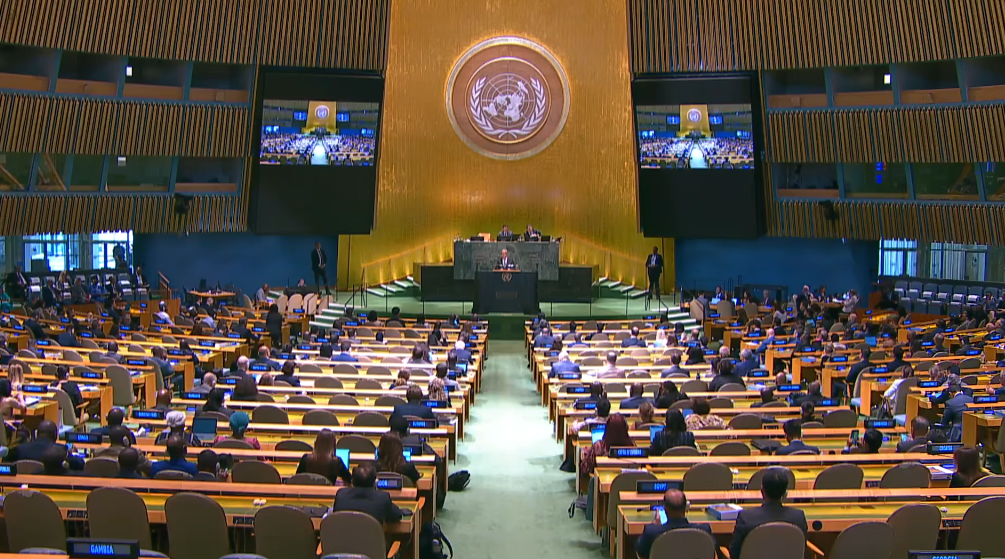
At a time when antisemitism is once again taking up alarming space in the streets, institutions, and public debate, New York’s leading Jewish organizations will unite in a major protest on September 23, in front of the United Nations headquarters during the UN General Assembly.
The goal of the rally is clear: to urge world leaders to take decisive action to stop the rising wave of antisemitism. By bringing together different organizations, religious streams, and political perspectives, the mobilization aims to send a message that transcends differences and borders: combating hatred against Jews is a responsibility of society as a whole and an indispensable commitment to democracy and human rights.
Institutions participating include the UJA-Federation of New York, the Jewish Community Relations Council, the Anti-Defamation League (ADL) — partner of the Brazilian Israelite Confederation (CONIB) — the American Jewish Committee, the Conference of Presidents, the Union for Reform Judaism, the United Synagogue of Conservative Judaism, Yeshiva University, the Israeli-American Council, and StandWithUs.
The breadth of the call is itself a demonstration of strength and unity. In a community marked by diverse traditions, ideas, and positions, different segments will stand side by side to defend a common principle: no form of prejudice against Jews can be normalized or tolerated.
Since the terrorist attacks of October 7, 2023, much of the Jewish and pro-Israel mobilization in New York has focused on demanding the release of hostages kidnapped by Hamas. Over time, however, the community’s agenda has expanded in response to an increasingly troubling reality.
The rise in antisemitic incidents, protests outside Jewish institutions, and campaigns targeting individuals identified as Zionists have made everyday security a central concern for community leaders. According to data released in June, antisemitic attacks accounted for about 60% of all hate crimes recorded by the New York Police Department (NYPD) in May. In the first five months of the year, 152 incidents against Jews were registered — figures that underscore the gravity of the situation.
More recently, anti-Zionist demonstrations have even surfaced in strictly local controversies, such as housing and real estate disputes in Manhattan. This phenomenon has raised alarms among community leaders: conflicts with no direct connection to the Middle East risk incorporating Israel, Zionism, or Jews as targets and justifications for hostile rhetoric.
It is precisely in this context that the September 23 rally takes on special significance. By choosing the UN headquarters as the stage, New York’s Jewish community intends to bring its concerns to the heart of international debate and remind leaders gathered at the General Assembly that the fight against antisemitism cannot be delayed, relativized, or conditioned by political circumstances.
The mobilization also represents a call to responsibility. When prejudice is not confronted, it finds new spaces, new languages, and new pretexts to spread. Recognizing its signs and responding firmly is essential to prevent intolerance from turning into violence.
In front of the UN, diverse voices from the Jewish community will unite around a single message: antisemitism is not solely a Jewish problem. It is an attack on the values of coexistence, freedom, pluralism, and democracy that must safeguard all societies.
More than a protest, the rally will be a demonstration of unity and an appeal for the world not to remain silent in the face of growing hatred.
Source: Celia Bensadon (Brazilian Israelite Confederation)