
Connecting Israel to the world through language, culture and technology
Wearing Change: When AI, Hebrew and Social Activism Come Together

What if a simple T-shirt could start a conversation that might otherwise never take place?
Every year, on November 25, the world marks the International Day for the Elimination of Violence Against Women. The date commemorates the Mirabal sisters, three Dominican political activists murdered in 1960. In 1999, the United Nations officially designated November 25 as an international day dedicated to raising awareness of violence against women.
Decades later, the need for change remains urgent. What has changed, however, are some of the tools we have at our disposal to make our voices heard.
Artificial intelligence is one of them.
As a Hebrew language educator, an educational entrepreneur, and a social activist, I am particularly interested in the intersection of education, technology, culture, and social responsibility.
Recently, I had the privilege of participating in an Israeli initiative called Wear the Change (ללבוש שינוי, Lilbosh Shinui), which brings together fashion, art, artificial intelligence, and social activism.
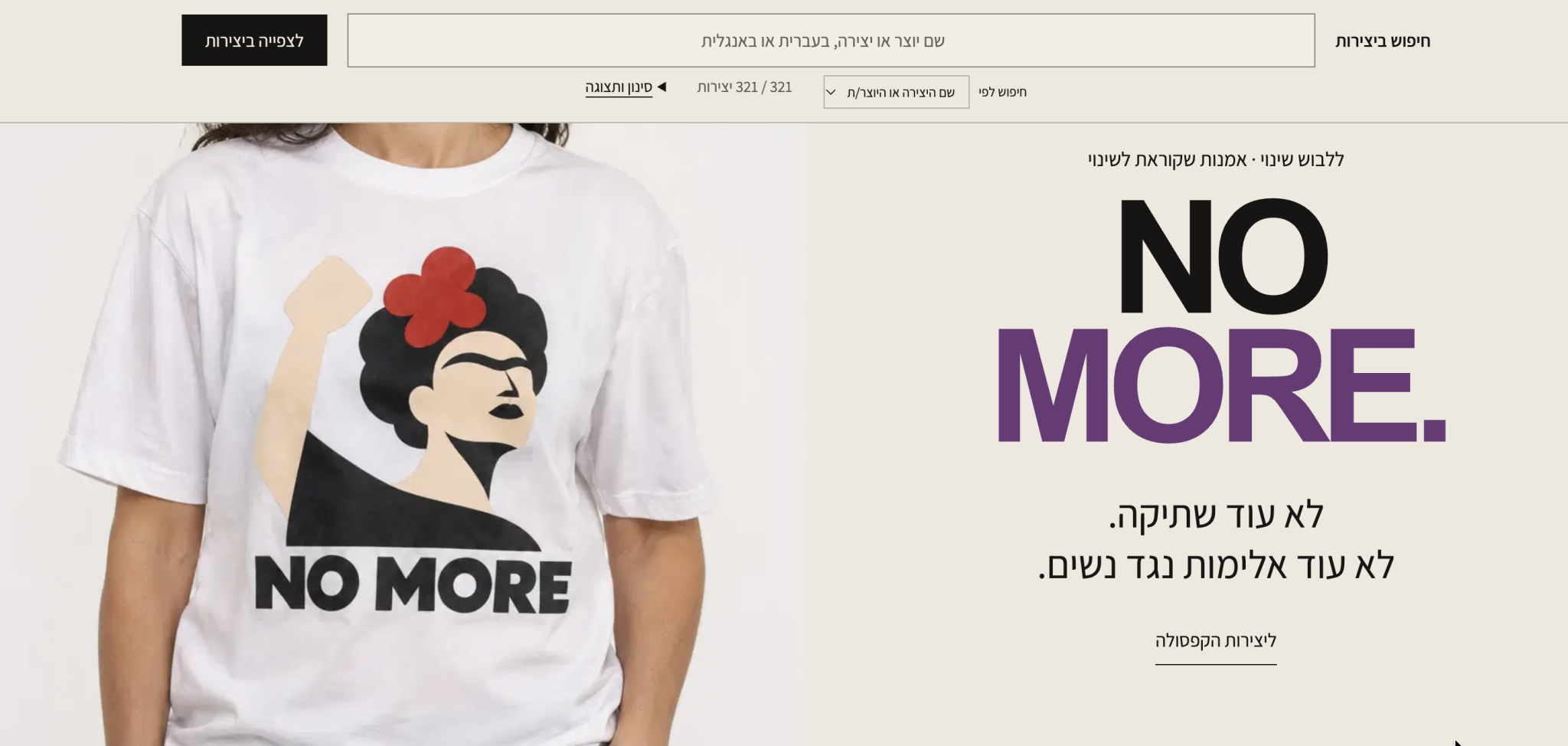
Initiated by Rinat Keinan, founder and editor of GenAI magazine, in collaboration with Generative AI for Good, led by Shiran Mlamdovsky Somech, and a community of AI designers, the project has brought together more than 300 unique T-shirt designs carrying messages against violence toward women.
The designs were presented at a special exhibition at the Refrigerator Gallery in Tel Aviv on November 20, with proceeds from T-shirt sales benefiting the Michal Sela Forum, an Israeli nonprofit dedicated to preventing domestic violence and saving women’s lives.
What I particularly appreciate about this initiative is its ambition to take the conversation beyond a single awareness day and make it part of our everyday lives through something as ordinary as a T-shirt.
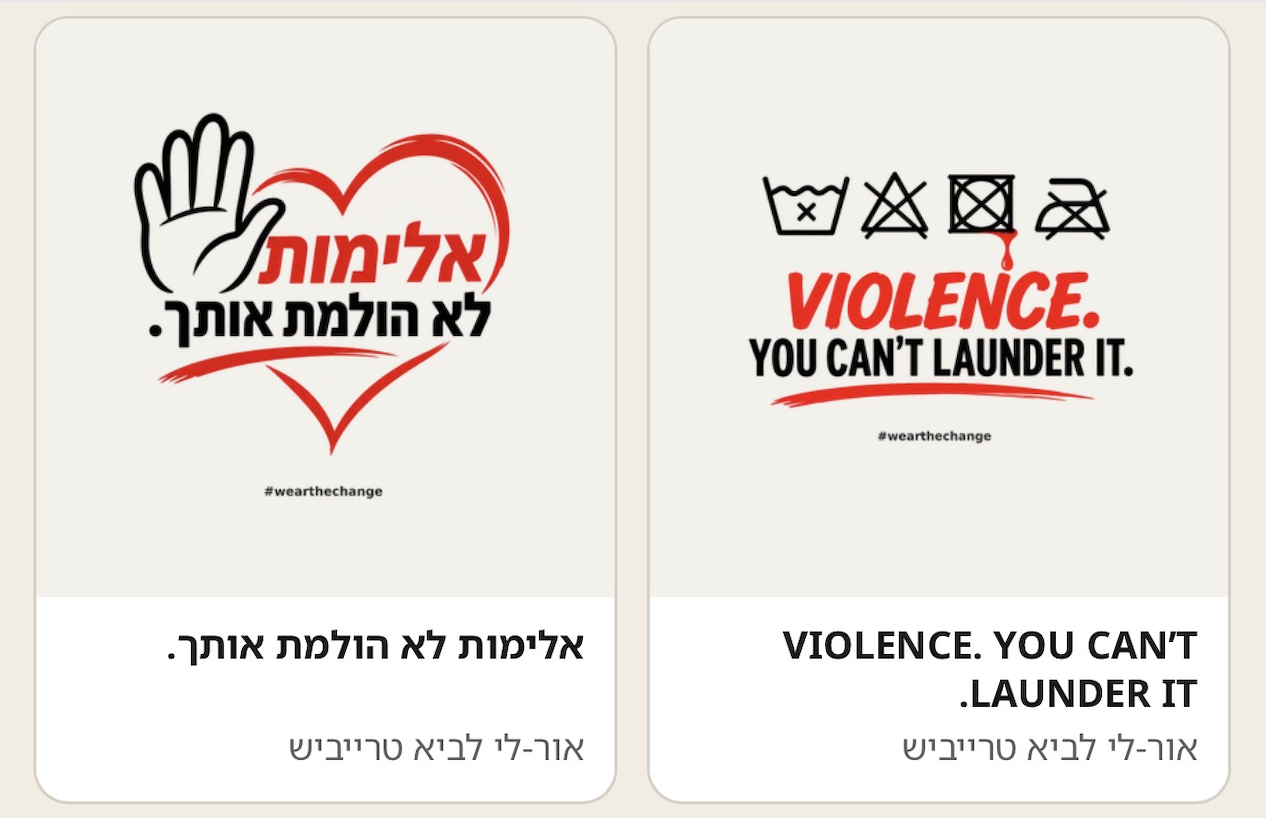
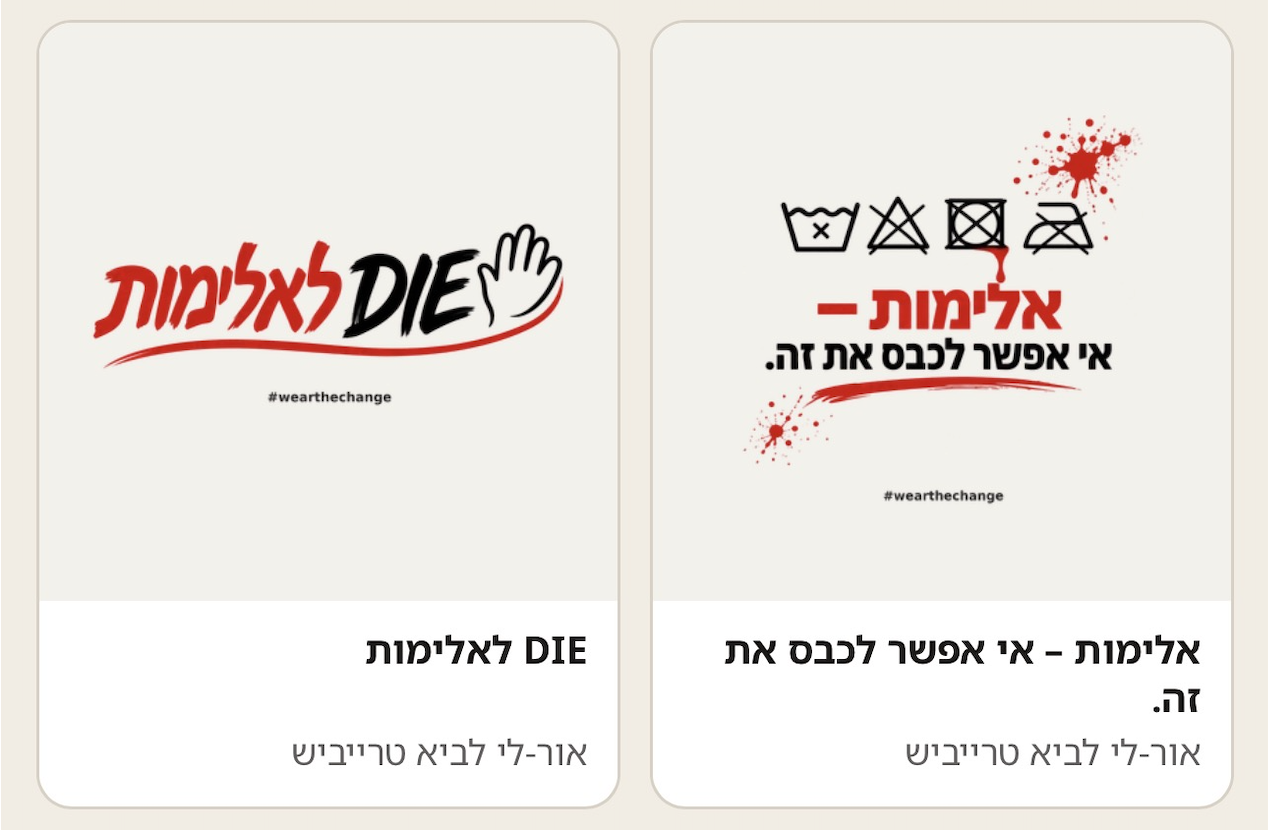
I contributed four designs to the initiative. As someone who loves language, I naturally found myself drawn to wordplay, double meanings, and the relationship between language and visual expression.
One of my designs reads אלימות לא הולמת אותך (Alimut lo holemet otach/otacha), meaning “Violence doesn’t suit you.” In Hebrew, holemet refers to something being suitable or fitting, particularly in the context of clothing, while also echoing the verb meaning “to strike.”
Two other designs, in Hebrew and English, incorporate familiar laundry care symbols: אלימות, אי אפשר לכבס את זה (Alimut, ee efshar lechabes et zeh) and “Violence. You can’t launder it.” The message is that violence cannot be washed away, disguised, or made acceptable.
My fourth design combines the English word DIE with the Hebrew expression די לאלימות (Dai la’alimut), meaning “Enough with violence.” The Hebrew word dai sounds like the English word die, creating an intentional double meaning that reminds us of the potentially fatal consequences of violence.
AI helped me bring these ideas to life. The message, however, was mine.
Much of today’s conversation about artificial intelligence focuses on productivity, innovation, and economic growth. Yet I find its potential for social good equally compelling.
Generative AI allows people without a professional background in design to turn their ideas into visual statements, participate in public conversations, and contribute to social initiatives.
Paradoxically, the same technology can also facilitate digital harassment, perpetuate gender stereotypes, and generate nonconsensual intimate images.
This is why AI literacy must go beyond learning how to write effective prompts. It must include ethical judgment, empathy, critical thinking, and social responsibility. In the classroom, for instance, this means asking students not just “What image can AI generate?” but “Whose perspective is represented, and could this visual unintentionally reinforce harmful stereotypes?”
Technology amplifies whatever human intentions we feed into it, making it all the more crucial to anchor its use in empathy and social responsibility.
As a Hebrew language educator based in Los Angeles, I immediately saw an opportunity to bring this Israeli initiative into my own classroom, not only as a language learning experience but also as an opportunity to explore Israeli culture.
Social activism is a visible part of Israeli public life. In Israel, public space often doubles as a canvas for social and political dialogue: protest signs, bumper stickers, graphic T-shirts, street art, and grassroots campaigns offer a fascinating window into how people express their beliefs, challenge social norms, demonstrate solidarity, and call for change.
For learners of Hebrew as a second language, these authentic cultural expressions offer an opportunity to explore contemporary Israeli society beyond textbooks, holidays, and traditional cultural symbols.
They also invite students to compare how social activism is expressed in Israel with how it is expressed in their own communities, discovering both cultural differences and shared human values.
Inspired by Wear the Change, my students and I will be designing T-shirts carrying messages against violence and promoting respect, equality, dignity, and personal safety.
Rather than simply asking students to generate an attractive image, I want them to engage in an authentic, real-world language task.
They will explore Israeli social awareness campaigns, interpret their messages, discuss cultural and linguistic choices, create their own Hebrew slogans, use AI to develop visual designs, exchange feedback, and present their creations to an audience beyond the classroom.
The activities will be adapted to their age and language proficiency, with sensitivity to the subject matter and without asking students to share personal experiences.
This is what meaningful project-based language learning can look like in the age of artificial intelligence. Language, culture, creativity, technology, and social responsibility come together around a shared purpose.
As language educators, we often ask what our students can do with the language they are learning. Perhaps we should also be asking:
What do our students want to say to the world, and how can we help them say it in the language they are learning?
Of course, a T-shirt will not end violence against women. Neither will an AI-generated image or a classroom project. These cannot replace prevention, legal protection, accountability, or meaningful support for women experiencing violence.
But a T-shirt can start a conversation. Education can challenge harmful attitudes. And awareness, when accompanied by action, can contribute to meaningful social change.
If we are going to teach the next generation how to use artificial intelligence, let us also teach them how to use it for good.
And if we are going to teach them another language, let us give them something meaningful to say.
How do you bring social responsibility and AI into your learning environment or community? Share your ideas and initiatives in the comments below!
Enough with violence. Not just on November 25. Not just on a T-shirt. Every day.
Read more about the Wear the Change initiative on Ynet and the International Day for the Elimination of Violence Against Women.
To visit the project page and order a T-shirt to support the Michal Sela Forum project, click here: Wear the Change Magazine
To view all the designs, click here: YouTube Short
#WearTheChange #972education #langchat #languageEducation #HebrewEducation #AIForGood #SocialActivism #EdTech
Related Topics
Related Posts