
October 7 at Three: From Kibbutz to Flight FZ1073
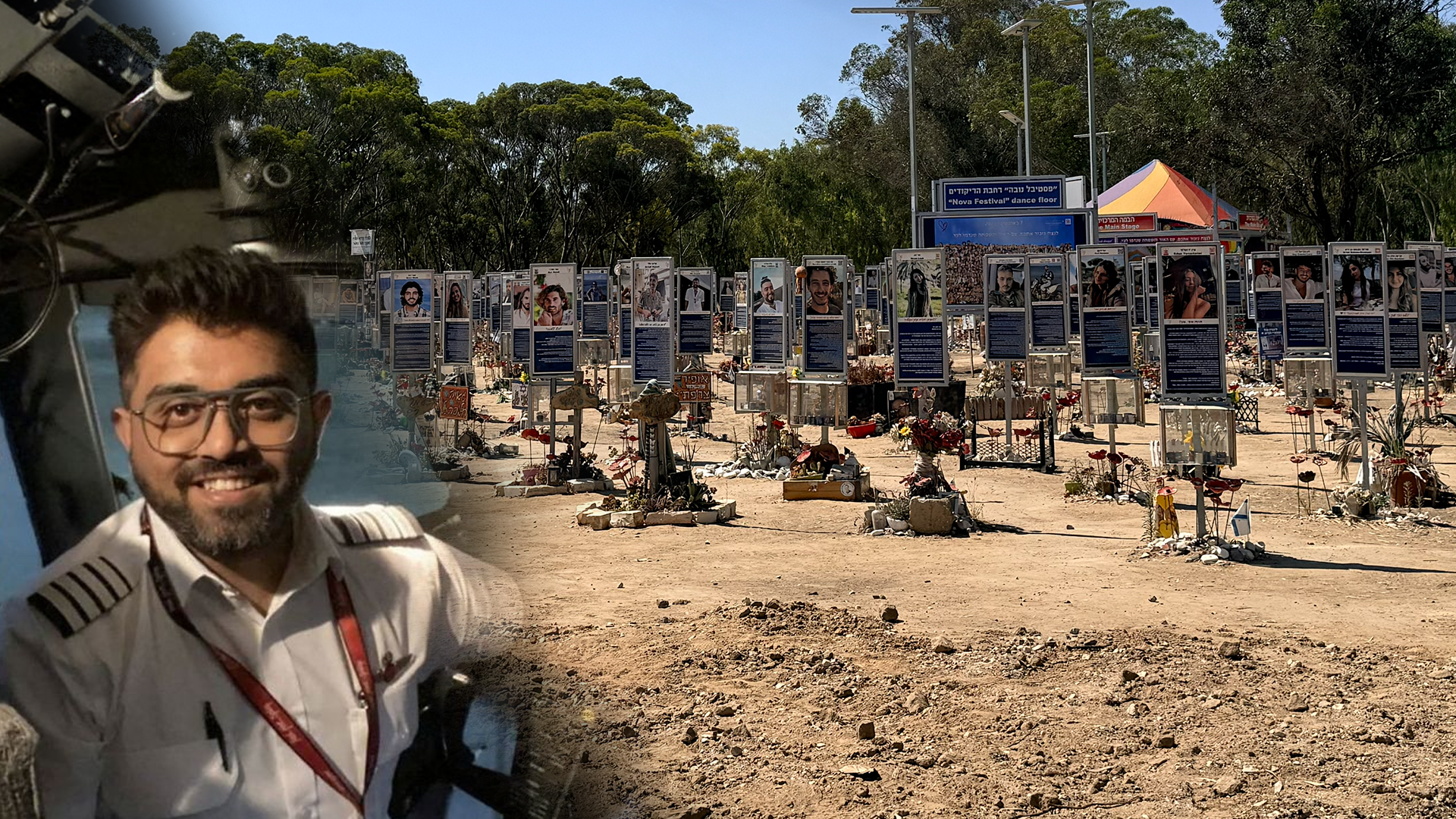
Three years after Hamas terrorist attack, the threat to Israelis has followed them from the kibbutz to the embassy, the synagogue, the beach and, last week, the cockpit.
On the morning of October 7, 2023, the most important objects in southern Israel were doors. In Be’eri, Nir Oz and Kfar Aza, parents pressed their bodies against the steel doors of their safe rooms and gripped the handles while Hamas terrorists with rifles and gasoline worked on the other side. Some doors held. Many did not. By nightfall, about 1,200 people were dead and 251 had been dragged into Gaza. A country built on the promise that Jews would never again be defenceless discovered that they will need to fight everyday.
Three years on, Israel remembers that day as a changed country. The hostages have come home, the living to their families and the dead to their graves. The Tel Aviv plaza where families kept vigil is becoming Memory Square. It would be comforting to believe October 7 now sits safely in the past, a single day of horror sealed behind glass. It does not. That morning was not an ending but an opening, and the front line it drew runs wherever an Israeli or a Jew happens to be standing.
Consider the map. Hezbollah terrorists fired on the Galilee for more than a year and returned to the fight this spring. Iran, which spent decades waging war through proxies, began firing ballistic missiles at Israeli cities directly. It did so in 2024, again in 2025, and on a far larger scale once open war erupted in February. Each time, families went back into shelters like the ones that had failed or saved their neighbours on October 7.
Then the hunt went global. In November 2024, Israeli soccer fans were chased through the streets of Amsterdam. That same month Rabbi Zvi Kogan, who ran a kosher grocery in Dubai, was abducted and murdered in the Emirates. In May 2025, two young employees of Israel’s embassy in Washington, a couple on the verge of engagement, were shot dead outside a Jewish museum. On Yom Kippur that year, congregants in Manchester barricaded their synagogue door against an attacker; two of them did not survive. On the first night of Hanukkah, gunmen opened fire on a menorah lighting at Sydney’s Bondi Beach and killed at least 15 people, among them a 12-year-old child.
For every attack that succeeded, others were stopped. Israel’s security services say Iranian intelligence twice smuggled an Israeli businessman into Iran, where his handlers asked him to help assassinate the prime minister, the defense minister or the head of the Shin Bet. A Hezbollah drone struck the prime minister’s home in Caesarea. Mexican and American agencies dismantled a Quds Force plot to kill Israel’s ambassador to Mexico. Plots directed by Tehran were foiled in Greece, Cyprus and Germany, and Australia expelled Iran’s ambassador. In August came reports that Iranian operatives had targeted the prime minister’s son in Florida. The pattern is unmistakable. The target is not a policy. It is a people.
Which brings us to September 30, and a cockpit high above the desert. Flydubai flight FZ1073 left Dubai for Tel Aviv with 174 passengers, most of them Israelis, on a route made possible by the Abraham Accords. Partway through the flight, the co-pilot, attacked the captain with the cockpit’s emergency axe, and the jet plunged some 17,000 feet. Israeli fighter jets scrambled.
The wounded captain, Smit Machchhar, an Indian from Gujarat with 17 years of flying behind him, did the one thing that mattered. Fighting, bleeding and barely able to stand, he crawled to the cockpit door and unlocked it. Passengers and crew forced their way in and overpowered the attacker, and off-duty pilots brought the plane down safely in Tabuk, Saudi Arabia. The co-pilot, an Omani identified as Hamam al-Hammami, had reportedly been barred from flying in Oman over concerns about extremist views. Prime Minister Benjamin Netanyahu called it “a highly severe security incident” and saluted the captain’s “extraordinary bravery.” The UAE’s attorney general has since called it what it was: a terrorist act.
The symmetry is hard to ignore. Three years ago, survival meant a door held shut against people who had come to kill. Last week, it meant a door thrown open by a man who chose to save.
The first door holds the lesson Israel has absorbed most deeply since October 7: its safety cannot be outsourced, and the hatred aimed at Jews respects no border, no holiday and no altitude. The second holds the lesson it can least afford to forget. An Indian captain, an Emirati official who named the act for what it was, a Saudi airport that took the plane in, and Israeli passengers who rushed the cockpit beside the crew show what a region that refuses terror looks like when it works together.
India should recognise this story more readily than most. It knows what it means to be targeted by men who cross borders to terrorise and murder civilians. In Mumbai in 2008, Pakistani terrorists also stormed the city’s Chabad House, and last year the terrorists came to Pahalgam, selectively murdering Hindu tourist in Jammu and Kashmir’s high Himalayas. That is why October 7 cannot be filed away as someone else’s history.
At 6:29 on this anniversary morning, the minute Hamas terrorists began firing rockets three years ago, Israelis remember the doors that did not hold. They should. But remembrance is not only grief; it is a choice about what to carry forward. From this third year, carry the image of a wounded Indian crawling toward a cockpit door, and opening it. Hamas wanted October 7 to teach Israel that it stands alone; three years later, a wounded Indian in a cockpit proved otherwise.