
Gratitude | Purpose | Renewal
October 7: The Courage That Rises When the World Falls
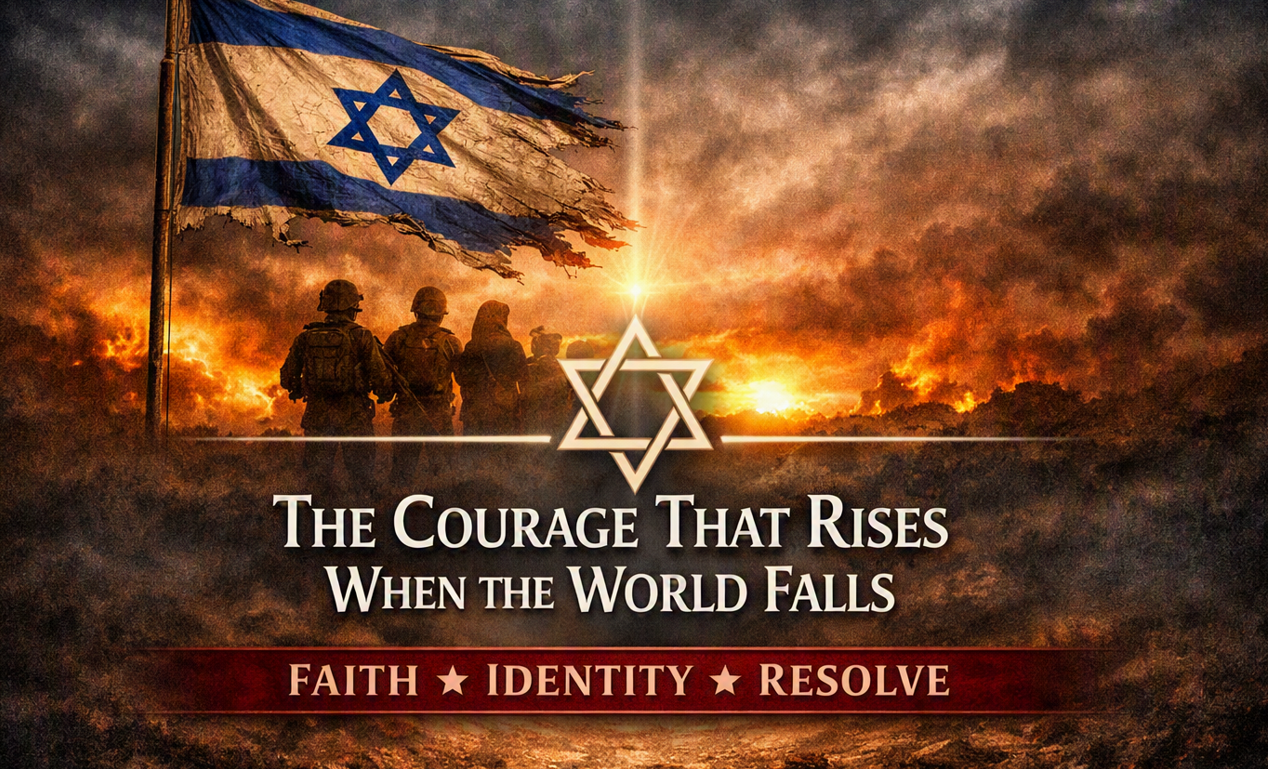
AI generated illustration
An exploration of faith, identity, and the quiet resolve that emerged in the aftermath
When the World Became Unrecognizable
There are moments in Jewish history when the ground beneath us gives way, when the moral order collapses in an instant. October 7 was such a moment. It was not only an assault on innocent lives. It was an assault on the very idea that human beings are bound by conscience. The brutality of that day tore through families, communities, and the Jewish soul itself, leaving behind a silence that felt ancient and newly born at the same time. The shock was not merely political or military. It was existential. It forced the Jewish people to confront questions that emerge only when the world becomes unrecognizable.
Jewish thought has never turned away from these questions. It has carried them with honesty and reverence. The first response of the Jewish soul is not philosophical speculation. It is the recognition that suffering demands a spiritual reckoning. The verse declares, “The Lord is close to the brokenhearted”- Psalm 34:18, a truth that does not explain tragedy but enters it. It affirms that divine presence does not retreat from human pain. It draws nearer. October 7 forced the Jewish people to rediscover that even in the darkest moments, the search for G‑d begins with the belief that the divine stands beside those who grieve.
The Questions That Rose From the Silence
Rabbi Meir Soloveichik teaches that divine hiddenness is not abandonment. It is responsibility. It was a different kind of struggle, one born from a world that had suddenly become morally unrecognizable. “Your way was in the sea, Your path in the mighty waters” – Psalm 77:19, a reminder that divine presence can be concealed within chaos yet still guide those who seek it.
This wrestling did not ask for clarity. It asked for courage. It asked for the willingness to stand before G‑d with questions that had no immediate answers. October 7 awakened a search that was not gentle. It was urgent. It was the search of a people who refused to let suffering sever their covenant. In that search, the Jewish soul discovered that faith is not the absence of struggle. It is the decision to bring struggle into the presence of G‑d.
Courage in the Ashes of Certainty
Rabbi Jonathan Sacks taught that faith is a form of moral leadership. It is the refusal to surrender the future to those who thrive on fear. October 7 forced countless Jews to confront this truth with painful clarity. The verse declares, “Be strong and let your heart take courage, all who hope in the Lord” – Psalm 31:24, a reminder that courage is not born from certainty. It is born from companionship. It is born from the belief that G‑d stands beside those who choose hope when despair seems easier.
This understanding transforms the meaning of resilience. It reveals that Jewish strength is not merely survival. It is leadership. It is the decision to rise after tragedy and insist that goodness will not be erased. October 7 awakened that voice within the Jewish soul. It summoned a courage that did not wait for the world to become safe. It acted because the world was unsafe. In choosing faith, the Jewish people affirmed that darkness would not define their future, and that the moral vision carried through generations would continue to guide them forward.
“When October 7 broke the world open, it uncovered a spiritual courage that suffering could not silence”
What Suffering Reveals About the Soul
Rabbi Joseph Dweck teaches that suffering forces the Jewish soul to confront its inner landscape with honesty. Pain strips away the layers that usually protect us from our deepest questions. It reveals what we truly believe, what we truly value, and what we truly fear. October 7 created such a moment. It pushed countless Jews into an emotional and spiritual space where ordinary language felt insufficient. In that space, Rabbi Dweck’s insight becomes essential. He explains that suffering does not weaken the Jewish soul. It clarifies it. It uncovers strength that was dormant, conviction that was quiet, and purpose that had not yet been fully claimed. “Teach me Your way, O Lord, and lead me in a straight path” – Psalm 27:11, a plea for guidance that emerges precisely when the world feels unstable.
This understanding transforms the meaning of pain. It reveals that suffering is not only an external event. It is an internal revelation. It forces a reckoning with identity, responsibility, and the covenant that binds the Jewish people to G‑d. October 7 awakened that reckoning. It summoned a depth of introspection that many had not expected, yet urgently needed. Rabbi Dweck’s teaching shows that the Jewish soul does not emerge from suffering diminished. It emerges awakened. It discovers that faith is not the retreat from pain. It is the decision to bring that pain before G‑d with honesty, dignity, and hope.
The Strength That Does Not Fade
Jewish strength has never been measured by circumstance. It has been measured by the ability to stand in darkness and still affirm the presence of G‑d. The verse declares, “The Lord is my rock and my fortress and my deliverer” – Psalm 18:2, a statement that does not arise from ease. It arises from courage. It teaches that the presence of G‑d can become a source of stability even when the world feels unsteady. October 7 forced the Jewish people to confront this truth with painful clarity. Yet it also revealed a resilience that cannot be explained by history alone. It is the resilience of a people who believe that strength comes from G‑d, and that such strength does not falter.
This truth carries the Jewish soul forward. It reveals why despair never becomes the final chapter of Jewish history. The covenant does not promise a life without trials. It promises that G‑d walks with His people through every trial. The verse teaches, “My flesh and my heart may fail, but God is the strength of my heart” – Psalm 73:26, a reminder that renewal is not a retreat from hardship. It is the emergence of new resolve within it. October 7 tested the foundations of Jewish faith, yet the response affirmed a truth carried through generations. The Jewish people rise because their strength is not their own. It is drawn from G‑d, and it is renewed each time they choose hope over fear, dignity over despair, and purpose over uncertainty.
Related Topics
Related Posts